Company stories
How did Apple become so successful?
Apple succeeded by making computers easier to use, then recovering from a deep crisis with a much simpler product line. After Steve Jobs returned in 1997, the iMac, iPod, iPhone and App Store built on each other. Apple's own stores, software and services helped turn single devices into a connected family of products.
By BookPounce | Updated
How did Apple get started?
Apple Computer Company began on April 1, 1976, as a partnership between Steve Jobs, Steve Wozniak and Ronald Wayne. Wayne left eleven days later. The business incorporated on January 3, 1977. Mike Markkula, who had met the founders in late 1976, invested money and wrote the business plan. [1]
The breakthrough was the Apple II, which appeared in April 1977 with color graphics and eight expansion slots. [1] Its friendly design aimed at use in homes, schools and offices. A floppy disk drive in 1978 and the VisiCalc spreadsheet in 1979 helped make it a blockbuster. [2]
That mix is worth noticing. Good hardware mattered, but so did a reason to buy it. A spreadsheet gave business users a practical job for the machine. Expansion slots let owners add to it as their needs grew.
Investors noticed too. Apple went public on December 12, 1980, at 22 dollars a share and raised more than 100 million dollars. [1] In a few years, the young company had a hit product, outside capital and a well known name. What it did not yet have was a guarantee that the next product would work.
What did the Macintosh change, and what went wrong?
In December 1979, Jobs visited Xerox PARC and saw a graphical user interface, where you point at things on screen instead of typing commands. Apple's first consumer computer with this approach, the Lisa, arrived in 1983 at 9,995 dollars and failed in the market. [1]
The Macintosh followed in January 1984. It cost about a quarter as much as the Lisa and brought the mouse and on-screen windows to many more people. [1] It shaped how Apple saw itself: a company that tries to make powerful tools feel simple.
Good ideas did not settle the business problems. Chief executive John Sculley demoted Jobs in April 1985, and Jobs resigned that September to start a new company called NeXT. [1]
By the 1997 fiscal year, Apple was in serious trouble. Net sales fell 28 percent to about 7.1 billion dollars, and the company lost about 1 billion dollars. Apple linked the sales drop mainly to weaker demand and customer worries about its direction. It had also lost 816 million dollars the year before. [3]
This part of the story matters. Apple's later success was not a straight line from a clever beginning. The company came close enough to failure that it had to rethink what it sold and how it worked.
How did Apple recover after 1997?
Apple bought NeXT in February 1997, which brought Jobs back and gave Apple software it could build a new operating system on. [1][3] The company also cut jobs, moved more production to outside manufacturers, opened a US online store and began building computers to order. It decided that licensing its Mac software to clone makers cost more than it was worth. [3]
In August 1997, Microsoft agreed to buy 150 million dollars of non-voting Apple stock. It also committed to keep making Microsoft Office for the Mac. [4] For Mac buyers, that was a sign that essential software would still be there.
Then came focus. Apple reported that it had cut about 15 separate products down to three main product families. It dropped the Newton handheld line and reduced its printer and display range. [5]
The iMac, introduced in August 1998, aimed squarely at consumers and schools. In the final quarter of that fiscal year, it made up about a third of Mac units shipped. Apple reported net income of 309 million dollars for fiscal 1998, even though net sales were lower than the year before. [5]
The lesson is plain. Apple did not first grow its way out of trouble. It became smaller, clearer and cheaper to run, and then it had room to grow.
Why were the iPod, iTunes and Apple Stores so important?
In May 2001, Apple announced plans to open 25 retail stores in the United States that year. The first two opened on May 19 in Virginia and California. The stores let people try products, take them home and get help at the Genius Bar. [6]
That October, Apple presented the iPod. It held up to 1,000 CD-quality songs on a 5 GB drive and cost 399 dollars in the US. [7] The number of songs was easy to picture, which made the benefit easy to understand.
In April 2003, Apple opened the iTunes Music Store with more than 200,000 songs at 99 cents each and no subscription fee. [8] Now the company offered the player, the software that organized your music and a place to buy more of it.
This is a key pattern in Apple's rise. Each piece made the others more useful. A shopper could see the device in an Apple store, learn how it worked and fill it with music through Apple's software.
It also widened Apple's audience. You did not need to think of yourself as a computer enthusiast to want your music in your pocket. Apple was becoming a consumer electronics company as well as a computer maker.
How did the iPhone and App Store change Apple?
Apple announced the iPhone in January 2007. It presented one handheld product that combined a mobile phone, a touch controlled iPod and an internet communication device. [9] It went on sale on June 29, 2007. [1]
The App Store, which opened in July 2008, added another layer. Apple said it offered more than 800 apps at launch time, over 200 of them free, and recorded more than 10 million downloads in its first weekend. [10] Outside developers could now give the phone new uses that Apple did not have to invent itself.
The iPad followed in 2010, using Apple's first custom designed chip of its kind, the A4. Jobs died in October 2011, and Tim Cook had taken over as chief executive. [1]
The iPhone is now the center of the business. In fiscal 2025, Apple's total net sales were about 416 billion dollars. The iPhone brought in about 210 billion, or roughly half. Services brought in about 109 billion, or roughly a quarter. [11]
Those services include things such as advertising, the App Store and cloud services, which Apple named as the main sources of services growth that year. [11] A device sale can now be the start of continuing revenue.
What can you learn from Apple's success?
No single trick explains Apple. Still, the record shows a few patterns you can test against any company.
First, ease of use gave people a reason to choose its products, from the Apple II to the Macintosh. [1][2] But ease alone was not enough. The Lisa had a graphical interface and still failed at a very high price. [1]
Second, focus mattered during the recovery. Fewer product families meant fewer things to build, explain and support. [5]
Third, products worked together. Stores, devices, software and online shops reinforced one another over many years. [6][7][8][10]
Fourth, Apple kept investing. It reported about 34.6 billion dollars of research and development spending in fiscal 2025. [11] It also sells both directly and through partners. In 2025, its own stores, website and sales force produced 40 percent of net sales, while carriers and other resellers produced 60 percent. [11]
Be careful with neat explanations. Timing, partners, suppliers, rivals and thousands of employees all played parts. A story built only around one founder can miss much of this. Read more than one account, including books about engineering and manufacturing, and notice where the authors disagree.
Books to read
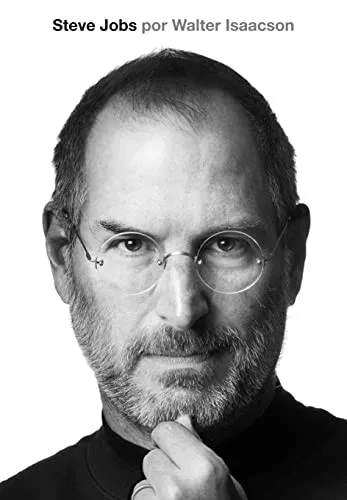
Steve Jobs
A long, readable biography that follows Jobs from childhood through Apple, NeXT, Pixar and the return to Apple. It suits you if you want one broad account with the people, products and conflicts in order. Remember that it centers on one person, so pair it with a book about teams.
iWoz
Wozniak tells the story in a casual first person voice, with Gina Smith. You get an engineer's view of early computing and the designs behind Apple's first machines. It suits readers who want to know what building those computers felt like, and who enjoy memoir more than business analysis.
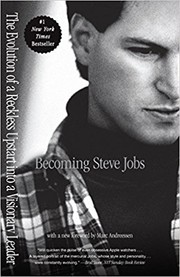
Becoming Steve Jobs
Written with Rick Tetzeli, this book asks how Jobs changed as a leader, especially during the years away from Apple. It is a good choice if you already know the outline and want to understand why the second period at Apple went so differently from the first.

Insanely simple
Segall worked with Jobs on Apple's advertising and uses that experience to explain how a taste for simplicity shaped decisions, names and marketing. It is short and practical. Pick it if you work in branding or product teams and want examples you can think about on Monday.
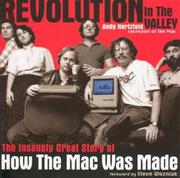
Revolution in the valley
Hertzfeld, a member of the original Macintosh team, collects short stories from inside the project. You see the deadlines, design choices, jokes and arguments up close. It suits readers who like primary accounts and want to dip in and out instead of following one long narrative.

Apple confidential 2.0
A detailed company history packed with timelines, anecdotes and the missteps that glossier accounts can pass over. It is especially useful for the years between the Macintosh and the recovery. Choose it if you like facts in compact pieces. Its coverage stops before the iPhone era.
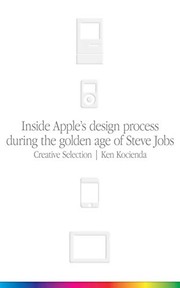
Creative Selection
A former Apple software engineer explains how ideas became working features through demos, feedback and repeated refinement, including work on the iPhone keyboard. It suits designers, developers and product managers who care more about how work gets done than about boardroom drama.

After Steve
A journalist's account of Apple after Jobs, built around Tim Cook and designer Jony Ive. You get a view of how the company's priorities and culture shifted as it grew. Read it if you want the later chapters, and weigh its interpretation as one reporter's argument.

Apple in China
McGee examines how Apple's manufacturing became closely tied to China and what that has meant for both. It suits readers interested in supply chains, strategy and geopolitics. It adds a side of Apple's success that product and founder stories often treat only briefly.
Questions readers ask
Who founded Apple?
Apple Computer Company was founded on April 1, 1976, as a partnership of Steve Jobs, Steve Wozniak and Ronald Wayne. Wayne left eleven days later. Mike Markkula, who met the founders in late 1976, then invested and wrote the business plan before the company incorporated in January 1977.
Did Apple almost go bankrupt?
Apple was in serious financial trouble in the late 1990s, though it did not file for bankruptcy then. It lost 816 million dollars in fiscal 1996 and about 1 billion dollars in fiscal 1997. It then cut costs, narrowed its products and reported a profit of 309 million dollars for fiscal 1998.
Did Microsoft save Apple?
Microsoft helped, but it was one part of the recovery. In August 1997 it agreed to buy 150 million dollars of non-voting Apple stock and to keep making Office for the Mac. Apple also cut costs, simplified its product line and launched the iMac the following year.
What product made Apple so successful?
Different products mattered at different times. The Apple II established the company, the iMac supported its recovery and the iPod widened its audience. Today the iPhone is the largest by sales. It brought in about 210 billion dollars in fiscal 2025, roughly half of Apple's total net sales.
What is the best book to read first about Apple?
Start with Walter Isaacson's Steve Jobs if you want a broad and readable account. Choose iWoz if the early engineering interests you most. For how products were actually built, try Creative Selection by Ken Kocienda. Reading two of them gives you a more balanced picture than relying on one.
Sources
- Apple@50 Timeline. Computer History Museum. Accessed 2026-11-28.
- The Apple II (Revolution: Personal Computers). Computer History Museum. Accessed 2026-11-28.
- Apple Computer Form 10-K for fiscal 1997. U.S. Securities and Exchange Commission. Accessed 2026-11-28.
- Microsoft and Apple Affirm Commitment To Build Next Generation Software for Macintosh. Microsoft. Accessed 2026-11-28.
- Apple Computer Form 10-K for fiscal 1998. U.S. Securities and Exchange Commission. Accessed 2026-11-28.
- Apple to Open 25 Retail Stores in 2001. Apple Newsroom. Accessed 2026-11-28.
- Apple Presents iPod. Apple Newsroom. Accessed 2026-11-28.
- Apple Launches the iTunes Music Store. Apple Newsroom. Accessed 2026-11-28.
- Apple Reinvents the Phone with iPhone. Apple Newsroom. Accessed 2026-11-28.
- iPhone App Store Downloads Top 10 Million in First Weekend. Apple Newsroom. Accessed 2026-11-28.
- Apple Inc. Form 10-K for fiscal 2025. U.S. Securities and Exchange Commission. Accessed 2026-11-28.