Company stories
How did McDonald's become so successful?
McDonald's succeeded by pairing a fast, simple kitchen system with disciplined franchising. The McDonald brothers designed the system. Ray Kroc spread it from 1955, enforced consistent standards, and used real estate to earn rent as well as royalties. Franchisees added popular ideas such as the Big Mac, while the company kept control of the brand.
By BookPounce | Updated
Who built the first McDonald's system?
The story starts with two brothers, Richard and Maurice McDonald. In 1940 they opened a drive-in in San Bernardino, California. It served barbecue, used carhops, and put food on china plates [3].
In 1948 they made a bold change. They closed the restaurant and let the carhops go. A few months later they reopened with what they called the Speedee Service System [3]. The menu was short. Customers walked up to order. The kitchen worked like an assembly line, and prices dropped sharply [3]. The hamburger at the centre of that small menu cost 15 cents [4].
Think about what this did. A short menu means fewer ingredients to buy and fewer steps to learn. Staff can repeat the same tasks until they are quick at them. Speed lets you serve more people, and more sales make a low price easier to sustain.
So the first source of success was not advertising or size. It was a better way to run one restaurant. The brothers also shaped the look of the brand. Richard McDonald drew a golden arch design in 1952, and it first appeared on a restaurant in 1953 [3].
What did Ray Kroc change?
Ray Kroc sold milkshake mixers. He visited the brothers in 1954 and saw that their restaurant could be copied across the country [4]. He became their franchising agent. His first McDonald's opened in Des Plaines, Illinois, on April 15, 1955 [2]. In 1961 he bought out the brothers for $2.7 million [2][4].
Kroc did not invent the kitchen system or franchising itself. His strength was turning a good restaurant into a repeatable business [2].
One choice mattered a lot. Many franchisors of the time sold rights to large territories. Kroc sold franchises one store at a time. An owner who wanted another restaurant had to earn it, which gave the company more control over quality [2].
The early terms were modest. The franchise fee was $950. Franchisees paid 1.9 percent of gross sales, with 1.4 points going to Kroc's side and 0.5 to the brothers [2]. With a small share of sales as income, Kroc gained when restaurants sold more food, so he had a strong reason to help each one do well. The thin share also left the young company short of room, which is where property came in.
Why is real estate so important to McDonald's?
In 1956 Kroc set up Franchise Realty Corporation. The idea, which Kroc credited to finance executive Harry Sonneborn, was for the company to control the land and buildings and lease them to the people running the restaurants [2]. That created rental income on top of royalties.
The same logic still drives the business. According to the 2025 annual report, McDonald's generally owns the land and building, or holds a long-term lease on them, under its conventional franchise arrangement. Franchisees pay for equipment, signs, seating and decor. They pay rent and royalties based on a percentage of sales, with a minimum rent, plus initial fees [1].
You can see the effect in the numbers. At the end of 2025 there were 45,356 McDonald's restaurants, and about 95 percent were franchised [1]. Sales across all of them reached $139.4 billion, while the company's own revenue was $26.9 billion [1]. The gap exists because a franchised restaurant's sales belong to the franchisee. The company records the rent, royalties and fees.
Those franchised restaurants produced about $13.9 billion in margin in 2025, roughly 90 percent of the company's total restaurant margin dollars [1].
How did McDonald's keep food consistent?
A chain only works if you trust that the next visit will match the last one. Kroc set strict guidelines for preparation, portion sizes, cooking methods and packaging. His core principles were quality, service, consistency and value [2].
Rules need teaching. Fred Turner joined in 1956 as a grill operator. He wrote the company's first training manual in 1958 and started the Hamburger University training program in 1961. He later became president, chief executive and chairman [2].
This turned know-how into something that could travel. A new owner did not have to guess how to run a grill or organise a shift. The method was written down and taught.
Supply matters too. Today McDonald's and its franchisees buy food, packaging and equipment from many independent suppliers. The company checks food safety and quality through audits, including unannounced checks for some higher-risk foods [1]. The annual report describes franchisees, suppliers and employees as a "three-legged stool" [1]. The picture is simple: each group depends on the other two. If one leg is weak, the customer notices, whether the problem began in a field, a factory or a kitchen.
How did franchisees help McDonald's grow?
Central rules did not stop new ideas. Some of the best known came from people running restaurants.
Jim Delligatti, a franchisee in the Pittsburgh area, pushed the company for a bigger burger from 1965. He was allowed to test one, and the double-decker went on sale in Uniontown, Pennsylvania, in 1967. McDonald's launched the Big Mac nationally in 1968 [5].
Breakfast followed a similar path. Herb Peterson, who ran a McDonald's in Santa Barbara, showed Kroc an egg sandwich in 1972. It became the Egg McMuffin [6]. This opened a new part of the day for restaurants that already had buildings, kitchens and staff. By 1981, breakfast made up 18 percent of McDonald's sales [6].
Money from investors also fuelled growth. The company went public in 1965. Shares were offered at $22.50 and reached $30 by the end of the first day [2].
The lesson is a balance. The company held firm on how food was made, yet stayed open to ideas from owners who watched customers every day. A good local idea could then spread through the whole system.
What keeps McDonald's strong today?
The company now operates in more than 100 countries [1]. Scale brings familiar advantages: a known name, many locations and the ability to spread new tools across a large system.
Convenience is a big part of it. The 2025 annual report counts nearly 29,000 drive-thru locations worldwide. Delivery was offered from nearly 41,000 restaurants, and loyalty programs ran in 70 markets [1]. The company also stresses value, with everyday low prices, meal bundles and digital offers, and it focuses on core items such as the Big Mac and its fries [1].
Success does not mean the model is free of debate. Writers have questioned fast food's effects on work, farming, health and local culture. Historians have also studied what franchising meant for particular communities. The books below include admiring, critical and academic views, so you can weigh them yourself.
If you want one takeaway for your own business, look at how the parts fit together. A simple product made the system teachable. Teaching made franchising workable. Franchising brought growth, and property gave the company a steady way to earn from it.
Books to read

Grinding It Out
Kroc tells the story in his own voice, from selling mixers to building a national chain. You get his view of franchising, standards and persistence. Read it as a founder's memoir, not a neutral history. It suits readers who want a quick, personal starting point.

Ray & Joan
Napoli follows Ray Kroc and Joan Kroc, including what happened to the fortune the business created. It reads like a biography more than a management book. Choose it if you care about the people behind the company and enjoy narrative nonfiction.

Drive-Thru Dreams
Chandler looks at American fast food as a whole, so you can see McDonald's beside its rivals and within everyday culture. The approach is lively and accessible. It suits readers who want context on why this kind of restaurant took hold.

Fast Food Nation
This is a critical investigation of the fast food industry, including its labour practices and food supply. It helps you see costs that company histories may pass over. Read it alongside a founder or company account. Some details reflect the period when it was written.

Golden arches east
Edited by Watson, this collection studies McDonald's in East Asia through anthropology. It shows how customers in different places used and reshaped the restaurant experience. Choose it if you are curious about global expansion and local culture, and you are comfortable with academic writing.
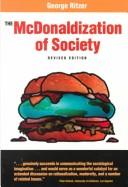
The McDonaldization of Society
Ritzer uses the fast food restaurant as a model for studying efficiency, predictability and control across modern life. It is a work of sociology, not a company history. It suits students and readers who want to question what a highly standardised system gains and loses.
Questions readers ask
Did Ray Kroc found McDonald's?
Not the first restaurant. Richard and Maurice McDonald opened their San Bernardino drive-in in 1940 and designed the fast service system in 1948. Kroc became their franchising agent in the 1950s, opened his first McDonald's in Des Plaines in 1955, and bought out the brothers in 1961. He built the national company.
Is McDonald's a real estate company or a restaurant company?
It is a restaurant business in which property plays a major role. Under its conventional franchise arrangement, the company generally owns or leases the land and building, then collects rent and royalties from the franchisee. The rent depends on restaurants selling food, so the property income and the restaurant operation are closely linked.
How does McDonald's make money from franchises?
Franchisees pay rent and royalties based on a percentage of sales, with specified minimum rent, plus initial fees. They also pay for equipment, signs, seating and decor. The company earns money from its own restaurants too. In 2025, franchised revenues were $16.5 billion and company-operated sales were $9.7 billion.
What was the Speedee Service System?
It was the McDonald brothers' 1948 redesign of their restaurant. They cut the menu down, replaced carhop service with walk-up ordering, prepared food in an assembly-line style and lowered prices sharply. The aim was to serve food quickly and in the same way each time. Kroc kept this approach as he expanded.
What can a small business learn from McDonald's?
Start by making one operation work well. Keep the offer clear, write down how each task is done, and train people to do it. Think about how you earn money when partners succeed. Also leave room for ideas from people close to customers. These are lessons to test, not guarantees of success.
Sources
- McDonald's Corporation Form 10-K for fiscal year 2025. U.S. Securities and Exchange Commission. Accessed 2026-11-28.
- Raymond "Ray" Kroc. University of New Hampshire, Peter T. Paul College of Business and Economics. Accessed 2026-11-28.
- The First McDonald's Location Turns 80. The Henry Ford. Accessed 2026-11-28.
- How McDonald's Became a Fast-Food Giant. HISTORY. Accessed 2026-11-28.
- Big Mac debuts. HISTORY. Accessed 2026-11-28.
- McDonald's Breakfast History: The Egg McMuffin Origin Story. TIME. Accessed 2026-11-28.