Company stories
How did Toyota become the world's leading carmaker?
Toyota grew by making cars with less waste and fixing problems at their source. It built its production system over decades, survived a 1950 crisis, learned from Ford, then expanded with models like the Corolla and Prius and with overseas plants. It passed General Motors in 2008 sales and led the world again in 2025.
By BookPounce | Updated
How did a loom maker start building cars?
Toyota's story begins with weaving. Sakichi Toyoda invented an automatic loom with a kind of judgment built into the machine, and Toyota traces its production ideas back to it [2]. He wanted to ease the work of his mother, who wove late into the night [2].
His son Kiichiro looked toward cars. In 1929 Kiichiro travelled overseas to study the American machine and car industries. On that trip he also signed a patent transfer agreement with Platt Brothers, a British company [1].
In 1933 Toyoda Automatic Loom Works set up an automotive division. The Model G1 truck appeared in 1935 and the Model AA car in 1936. Toyota Motor Co. became its own company in 1937, with Risaburo Toyoda as president and Kiichiro as vice president [1].
Kiichiro also planted an idea that would matter later. He argued for "just-in-time" supply. A car cannot be finished if even one part is missing, yet a company can pile up parts and still fail to build it [2]. In 1938 he brought a chain conveyor flow method, drawn from his loom work, to body assembly at the new Koromo plant [2]. The goal was a steady flow of work rather than large heaps of stock.
How close did Toyota come to failing?
Very close. By 1950, rising material costs and a gap between official and market prices had cut into Toyota's profits [1]. The company faced a cash crisis, and job cuts were on the table.
A labor dispute over layoffs broke out on April 9, 1950. Kiichiro Toyoda resigned as president on June 5 to take responsibility, and the dispute ended on June 10 [1]. Around the same time, sales moved into a separate company, Toyota Motor Sales, established that April [1].
That summer, managing director Eiji Toyoda went to the United States. He spent about six weeks studying Ford plants, including the huge River Rouge complex [4]. He later said the main gap with Ford was the scale of production rather than technology. He recalled Ford making 8,000 vehicles a day while Toyota made 40 [4].
Toyota also borrowed a practical habit. Another director, Shoichi Saito, trained at River Rouge later in 1950. He then introduced a suggestion system based on Ford's, which began in May 1951 and collected ideas from employees across the company [4].
The lesson for you as a reader: Toyota did not start from strength. It had to do more with very little, and that pressure shaped how it worked.
What is the Toyota Production System?
It is Toyota's way of organising work to remove waste. The company describes two main ideas [2].
The first is jidoka, which Toyota calls "automation with a human touch". A machine or a worker can stop the line when something goes wrong. This keeps faulty parts from moving on, and people no longer have to stand and watch each machine [2].
The second is just-in-time. You make only what is needed, when it is needed, and in the amount needed. Each process takes what it needs from the one before, which then replaces what was taken [2].
Kanban makes that work day to day. These are signals, often cards, that say which parts are needed, how many, where and when [3][5]. The idea drew on American supermarkets, which restocked what shoppers had bought. Taiichi Ohno, a Toyota executive, oversaw the factory version [5]. Toyota adopted kanban at all its plants in 1963, and by 1965 used it to collect parts from suppliers too [3].
Toyota also levelled production, spreading volumes and product types evenly so no process was overloaded [3]. Alongside this sits kaizen, or steady improvement. Toyota says work should first be mastered by hand and improved before it is automated [2].
How did Toyota win customers around the world?
Good factories needed cars that people wanted. The Corolla was the big one. The first came off the line in September 1966, and sales began in Japan that November [6]. By July 2013, global Corolla sales had passed 40 million [6]. It reached the United States in 1968 [7].
Toyota then built closer to its buyers. In 1984 it formed NUMMI, a joint venture with General Motors in Fremont, California [7]. About 85 percent of newly hired workers had worked at GM's old plant there, where daily absenteeism often reached 20 percent. In 1985, average attendance at NUMMI was 98 percent, and by 1987 the plant matched Toyota's quality [8]. This suggested the methods could work outside Japan.
More North American production followed, including Corolla output in Ontario and Camry output in Kentucky from 1988 [7]. In 1989 Toyota launched Lexus, its luxury brand, with the LS 400 and ES 250 [7].
Then came hybrids. The first Prius went on sale in Japan in December 1997 as the world's first mass-produced hybrid car. It roughly doubled the fuel economy of comparable gasoline performance, according to Toyota [9]. That early start gave the company long experience with a technology that still drives much of its sales.
When did Toyota become number one, and what has tested it?
In 2008 Toyota sold 8.97 million vehicles and General Motors sold 8.35 million. That ended GM's 77-year run as the world's top-selling automaker, even though Toyota's own sales fell that year [10].
Leading on volume did not protect Toyota from serious mistakes. In March 2014, the US Justice Department announced a $1.2 billion financial penalty. Toyota admitted that it had misled American consumers about two safety problems linked to unintended acceleration [11]. The agreement also required an independent monitor to review its safety communications [11]. It is a sobering chapter for a company known for stopping the line when something is wrong.
The scale today is large. In 2025, Toyota's group sold about 11.3 million vehicles, including its Daihatsu and Hino units. That was a record, and its sixth straight year as the top seller. Volkswagen Group came second with just under 9 million [12]. Hybrids made up 42 percent of sales at the parent company, while battery electric vehicles were 1.9 percent [12].
So why did Toyota succeed? No single trick explains it. A patient production system, hard lessons from 1950, popular and practical cars, plants near customers and an early bet on hybrids all played a part. "Leading" here means vehicles sold, not every possible measure.
Books to read
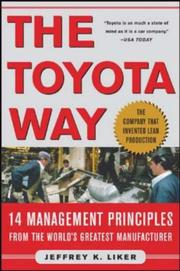
The Toyota Way
Start here if you want a clear overview. Liker organises Toyota's thinking into management principles and shows how they play out in daily work. It suits managers, students and curious readers who want to understand the habits behind the factory methods without needing an engineering background.
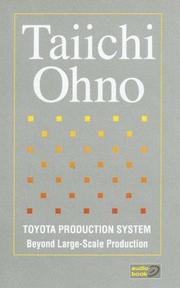
Toyota Production System
Read the ideas from one of the people who shaped them. Ohno explains why Toyota attacked waste and how just-in-time and kanban fit together. It is short and direct, and it suits readers who prefer a practitioner's own account to a later summary.
The machine that changed the world
Womack and his co-authors compare car makers around the world and popularised the term lean production. You get the wider industry picture, so you can see how Toyota's approach differed from traditional mass production. It suits readers interested in business history and strategy.
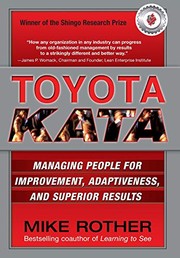
Toyota kata
Rother looks past the visible tools to the routines of improvement and coaching behind them. You will find practical patterns for tackling a problem one step at a time. It suits team leads and managers who want to try these ideas in their own workplace.

Toyota under fire
This book looks at how Toyota handled the global financial crisis and the recall troubles that followed. Read it alongside official records, since Liker has long studied Toyota closely and favourably. It suits readers who want to see the company under pressure.

The evolution of a manufacturing system at Toyota
Fujimoto asks how Toyota's capabilities actually developed, and weighs planning against trial, error and circumstance. It is a detailed academic study, best for researchers, advanced students and readers who already know the basics and want a more careful explanation than success slogans offer.
Questions readers ask
Who founded Toyota?
Kiichiro Toyoda led the move into cars, building on the loom business associated with his father, Sakichi Toyoda. An automotive division opened in 1933. When Toyota Motor Co. was established in 1937, Risaburo Toyoda was president and Kiichiro was vice president. Kiichiro later served as president and resigned in 1950 during a labor dispute.
What makes the Toyota Production System different?
It aims to make only what is needed, when it is needed, and in the amount needed. It also lets machines or workers stop production when something is abnormal, so defects do not travel down the line. Kanban signals control the flow of parts, and teams keep improving the work over time.
Did Toyota copy Ford?
Toyota learned from Ford, but it did not simply copy it. Eiji Toyoda studied Ford plants in 1950, and Toyota introduced a suggestion system based on Ford's in 1951. Toyota was working at a far smaller scale, and it developed its own methods, such as kanban, over the following years.
Is Toyota still the world's biggest carmaker?
By vehicles sold, yes, based on full-year 2025 results. Toyota's group, including Daihatsu and Hino, sold about 11.3 million vehicles, while Volkswagen Group sold just under 9 million. It was Toyota's sixth straight year in first place. Rankings by revenue, profit or market value are different measures and may give other answers.
Has Toyota had major safety problems?
Yes. In 2014 the US Justice Department announced a $1.2 billion financial penalty. Toyota admitted that it had misled American consumers about two safety issues related to unintended acceleration. The company also agreed to an independent monitor who would review its safety-related public statements and reporting practices.
Sources
- The Beginnings. Toyota Motor Corporation. Accessed 2026-11-28.
- Toyota Production System. Toyota Motor Corporation. Accessed 2026-11-28.
- 75 Years of Toyota: just-in-time and the kanban system. Toyota Motor Corporation. Accessed 2026-11-28.
- 75 Years of Toyota: modernization of facilities. Toyota Motor Corporation. Accessed 2026-11-28.
- Toyota manufacturing 25 objects: ordering bike. Toyota UK Magazine. Accessed 2026-11-28.
- Toyota Corolla: World's Most Popular Car. Toyota Motor Corporation. Accessed 2026-11-28.
- Company History. Toyota USA Newsroom. Accessed 2026-11-28.
- Cultural Transformation at NUMMI. MIT Sloan Management Review. Accessed 2026-11-28.
- 75 Years of Toyota: vehicle lineage, first-generation Prius. Toyota Motor Corporation. Accessed 2026-11-28.
- General Motors fell behind Toyota in 2008. NBC News. Accessed 2026-11-28.
- Manhattan U.S. Attorney Announces Criminal Charge Against Toyota Motor Corporation and Deferred Prosecution Agreement With $1.2 Billion Financial Penalty. US Department of Justice. Accessed 2026-11-28.
- Toyota keeps top auto crown. RTE News. Accessed 2026-11-28.