Engineering
How do bridges stay up?
Bridges stay up by passing their own weight, and the weight of everything crossing them, into the ground. Their parts do this by squeezing (compression), stretching (tension) and bending. Beams, arches, trusses and cables arrange these forces differently, while piers, abutments and anchorages hold the final push or pull.
By BookPounce | Updated
What forces does a bridge have to handle?
A bridge has one basic job. It must carry weight across a gap and deliver that weight safely to the ground. Engineers call the weight of the bridge itself the dead load. Traffic, people and trains are the live load. Wind, temperature changes and earthquakes push and pull on it too.
Inside the structure, two forces matter most. Compression squeezes a material and tries to shorten it. Tension stretches it and tries to make it longer. Bending combines the two. Picture a plank across a stream. When you stand in the middle, the plank sags. Its top surface is squeezed and its bottom surface is stretched.
Materials respond differently to these forces. Stone and plain concrete resist squeezing well but are much weaker when stretched. Steel is strong both ways. That is why concrete often has steel bars set inside it where tension will occur.
So when you look at any bridge, ask two questions. Which parts are being squeezed, and which are being stretched? Then follow the load from the deck, which is the surface you travel on, down to the earth. If every part along that path is strong and stiff enough, and the ground holds, the bridge stands.
How do beam and truss bridges work?
The beam bridge is the simplest kind. A flat span rests on supports at each end, like your plank across the stream. It carries vertical loads by bending [2]. The supports, called piers or abutments, are pressed downward and pass the load to the ground.
Bending sets a limit. A longer beam bends more and also has more of its own weight to carry. Making it deeper helps, but a solid deep beam is heavy. Engineers can add more piers, or they can use a smarter shape.
That shape is often a truss. A truss is an open framework of members arranged in triangles. Instead of relying on one solid piece to bend, it shares the load as tension and compression along its members [2]. Triangles are useful because a triangle cannot change shape unless one of its sides changes length or a joint fails [2].
In a simple truss span under a downward load, the top chord is squeezed and the bottom chord is stretched. The diagonal and upright members may be in either state, depending on which way they are set [2].
You get much of the depth of a big beam without all the solid material. Many railway bridges use this idea, and you can often trace the triangles from the riverbank.
Why is an arch so strong?
An arch turns a downward load into compression that travels along its curve. The load moves from stone to stone, or rib to rib, until it reaches the supports at each end. Because stone handles squeezing well, people could build long-lasting arches long before steel existed.
There is a catch. The arch does not only press down on its foundations. It also pushes outward. The foundations must stop both vertical settling and sideways sliding [1]. If the supports spread apart, the curve flattens and the arch can fail. Firm rock or heavy abutments do the holding.
A famous real example is the Iron Bridge over the River Severn in Shropshire, England. It was completed in 1779, designed by Thomas Farnolls Pritchard and built under Abraham Darby III [5]. It spans about 30 metres and used 378 tons of cast iron [5].
Its builders were working with a new bridge material, so they borrowed from an older craft. Some of its parts are connected with joints taken from carpentry, such as dovetails [6]. The shape still follows the old arch logic: cast iron is good in compression, and the curve puts it to work that way.
How do suspension and cable-stayed bridges span such long gaps?
A suspension bridge hangs its deck from curved main cables. The cables are in tension. They rest over tall towers, which are in compression, and end in anchorages that resist the cables' powerful pull [3][7]. You can think of it as an arch turned upside down.
The Golden Gate Bridge in San Francisco, completed in 1937, shows the scale. Its main span is 4,200 feet (1,280 metres) [3]. Each of its two main cables is about 36 inches thick and holds 27,572 galvanized steel wires [3]. The cables put a load of 61,500 tons on each tower, and each anchorage weighs 60,000 tons [3].
It is also built to move. The official figures allow for the middle of the main span to shift sideways by up to 27.7 feet in wind [3]. Movement within design limits is not a sign of failure.
A cable-stayed bridge looks similar but works more directly. Straight, slanted cables run from the towers to the deck. The cables are in tension, and the towers carry the forces down to the foundations in compression [1]. There are no great draped cables running from shore to shore.
Why did the Tacoma Narrows Bridge fall down?
Holding up weight is only part of the problem. A bridge must also stay stable when wind flows around it. The first Tacoma Narrows Bridge, a suspension bridge in Washington State, collapsed on November 7, 1940 [4].
Its deck was very shallow and narrow for its length. The solid side girders were just 8 feet deep, and the ratio of deck depth to main span width was extreme compared with earlier practice. An earlier proposal had used a 25 foot deep open truss for stiffness [4].
The deck had been moving up and down. On the day of the collapse, a cable band slipped, and the motion changed into twisting. The twisting then fed itself in the wind and grew until the structure broke apart [4]. Engineers have continued to debate details of the cause [4].
The lesson was clear. Long, light bridges need to be studied for aerodynamics, not only for weight. Wind tunnel testing of bridge models became standard practice afterwards [4].
For you, the takeaway is simple. Strength and stiffness are different things. A structure can be strong enough to carry its traffic and still be too flexible to behave well.
What keeps a bridge standing for decades?
A good design allows for change. Materials expand when warm and shrink when cool. If a bridge could not move, that change would build up stress inside it. Expansion joints leave planned gaps, and bearings on the piers and abutments let parts shift safely [8]. The bump you feel when driving onto some bridges is often one of these joints.
Engineers also design with a margin. They size parts to carry more than the loads they expect, because materials vary, traffic changes and no calculation is perfect. They think about what happens below the water too. Flowing water can wash soil away from around a foundation, which is called scour.
Then comes inspection. In the United States, federal rules set a standard routine inspection interval of no more than 24 months [9]. Some bridges in worse condition must be checked every 12 months, and some that meet set criteria may go longer [9]. Inspectors look at the deck, the structure above the supports, the supports themselves and scour risk.
So a bridge stays up through more than its shape. It depends on sound design, suitable materials, firm ground, careful construction and people who keep looking for damage and repair it.
Books to read

Built
A working structural engineer shows how people have solved problems of height, span, water and ground. The stories are personal and accessible, with bridges among many kinds of structure. It suits readers who want to know what engineers actually think about, including young people considering the profession.

Bridges
A compact book focused squarely on bridges. Blockley explains the main forms and how forces flow through them, and also considers bridges as things people look at and live with. It suits readers who want a more structured account of the engineering without taking on a university textbook.

The Great Bridge
The story of building the Brooklyn Bridge, told through the Roebling family, the workers and the politics around them. You see how foundations, cables and human decisions come together on a real project. It suits readers who enjoy long narrative history and want engineering with people at the centre.
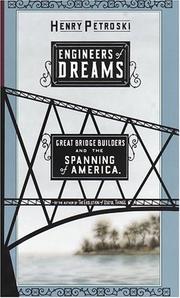
Engineers of Dreams
Petroski follows leading American bridge builders and the major spans they shaped. The book shows how personality, money, rivalry and failure affected design choices, including thinking around Tacoma Narrows. It suits readers who already know the basic bridge types and want the history behind well-known structures.
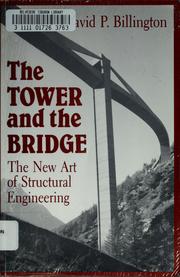
The tower and the bridge
Billington argues that structural engineering can be an art of its own, guided by efficiency, economy and elegance. He examines the work of notable engineers in iron, steel and concrete. It suits readers ready to think carefully about why some bridges look right as well as stand firm.
Questions readers ask
What is the strongest type of bridge?
No single type is strongest in every setting. The right choice depends on the span, the loads, the ground, the materials, the cost and the site. An arch suits firm supports. A truss uses material efficiently. Suspension and cable-stayed designs help cross wide gaps. Engineers compare these conditions before choosing a form.
Why are triangles used in bridges?
A triangle holds its shape unless one of its sides changes length or a joint gives way. A four-sided frame with loose joints can fold into a slanted shape. By arranging members in triangles, a truss stays stable and carries loads mainly as pushes and pulls along each member, with less reliance on bending.
Why do suspension bridges move?
Suspension bridges are long and flexible, so wind, traffic and temperature change their position. Designers calculate this movement and allow for it. The Golden Gate Bridge, for example, is designed for large sideways deflection at mid-span. The concern is movement that keeps growing or goes beyond what the structure was designed to handle.
How are bridge towers and piers built in water?
Crews need a stable way to reach ground that can carry the load. Depending on the site, they may drive or drill long piles, build a temporary enclosure called a cofferdam and pump it out, or sink a large hollow box called a caisson. The foundation is then built up above the water.
Why do bridges have gaps in the road surface?
Those gaps are usually expansion joints. A bridge grows slightly longer when it warms and shorter when it cools. Joints give it room to move, and bearings at the supports help it slide or rotate. Without a way to move, stresses could build up and damage the structure over time.
Sources
- Bridge. Encyclopaedia Britannica. Accessed 2026-11-28.
- Truss bridge. Encyclopaedia Britannica. Accessed 2026-11-28.
- Design and Construction Statistics. Golden Gate Bridge, Highway and Transportation District. Accessed 2026-11-28.
- Tacoma Narrows Bridge history: Lessons from failure. Washington State Department of Transportation. Accessed 2026-11-28.
- Iron Bridge. American Society of Civil Engineers. Accessed 2026-11-28.
- History of Iron Bridge. English Heritage. Accessed 2026-11-28.
- Suspension bridge. Encyclopaedia Britannica. Accessed 2026-11-28.
- How do expansion joints help bridges respond to hot and cold temperatures?. Encyclopaedia Britannica. Accessed 2026-11-28.
- 23 CFR 650.311, Inspection interval. Legal Information Institute, Cornell Law School. Accessed 2026-11-28.