Engineering
Why did the Tacoma Narrows Bridge collapse?
The Tacoma Narrows Bridge collapsed on November 7, 1940, because its narrow, shallow, flexible deck was unstable in wind. After a cable band slipped, the deck began twisting. The moving deck drew energy from the steady wind, which made each twist larger. This self-excited motion, called torsional flutter, tore the bridge apart.
By BookPounce | Updated
What happened on the day the bridge fell?
The bridge opened on July 1, 1940 [6]. It was already known for moving up and down in the wind, which earned it the nickname Galloping Gertie.
On the morning of November 7, strong southwest winds hit the deck from the side. The wind measured 38 miles per hour at 7:30 and 42 about two hours later [2]. Professor F. B. Farquharson of the University of Washington arrived to watch and film the motion [2].
Then the movement changed. The mid-span cable band on the north cable slipped, and the up and down waves turned into a twisting motion [1]. One side of the roadway rose while the other fell. By about 10:07 the twisting was severe [2].
At 11:02 a 600 foot section of the center span broke free and fell into the water below [2]. The only life lost was Tubby, a dog left in a car on the bridge [8].
Why was the deck so vulnerable to wind?
The main span was 2,800 feet long, but the deck was only 39 feet wide between the cables [3]. That is a width to span ratio of about 1 to 72. The Golden Gate Bridge's ratio was 1 to 47 [3].
The deck was also very shallow. It was stiffened by solid plate girders just 8 feet deep [3]. An earlier design by state engineer Clark Eldridge had used an open truss 25 feet deep [3]. Engineers who later reviewed that design believe it would have stayed stable in the winds that destroyed the finished bridge [1].
These choices caused two problems. First, a light, narrow, shallow deck bends and twists easily. Second, a solid girder does not let wind pass through. The air has to flow over and under it, so the deck can behave a little like an aircraft wing [1].
The slender design saved money and looked elegant [6]. It also left very little resistance to twisting.
What is torsional flutter, in plain words?
Torsion means twisting. Flutter means a motion that feeds itself. Picture the deck tilting slightly. The tilt changes how air flows around it. Large swirls of air, called vortices, form above and below the deck [9]. If they arrive with the right timing, they push the deck further in the direction it is already moving.
The deck then swings back, tilts the other way, and gets another push. When the wind adds more energy in each cycle than the structure can absorb, the swings grow.
The key point is where the timing comes from. The wind did not need to pulse in a steady rhythm. The bridge's own movement organised the forces acting on it. Engineers call this self-excitation.
According to the Washington State Department of Transportation, vortex shedding started the twisting, and torsional flutter then built it up until the bridge failed [1]. The twisting repeated about every 5 seconds, or 12 times a minute [9].
Was it caused by resonance?
Not in the simple textbook sense. Resonance happens when an outside force repeats at close to an object's natural frequency. A child on a swing is the familiar example: small pushes at the right moment build a large swing.
For decades, many accounts said the wind did exactly this to the bridge [6]. In 1991, K. Y. Billah and R. H. Scanlan published a paper challenging how physics textbooks told the story [5].
One tempting idea is that swirls peeling off the deck matched its rhythm. The numbers do not fit. At 42 miles per hour, the expected natural rate of vortex shedding was about 1 cycle per second. The bridge was twisting at about 0.2 cycles per second [4].
So the wind was not simply tapping the bridge in time. The twisting deck created and timed its own vortices [4]. You can still say resonance played a part in a loose sense, but self-excited flutter explains much more.
What did investigators conclude?
A board of engineers, Othmar Ammann, Theodore von Karman and Glenn Woodruff, reported to the Federal Works Agency in March 1941. It pointed to the random action of turbulent wind. It also highlighted the bridge's great flexibility, the way the deck acted like an aerofoil, and how poorly these aerodynamic forces were understood [1].
That last point matters. Designers of the time focused on traffic loads and sideways wind pressure. They largely ignored the way wind could drive a deck up and down [1]. Leading designers relied on deflection theory, which suggested that long suspension bridges could be much lighter and more flexible. The collapse showed its limits [1].
Earlier bridges had suffered from wind too, but those lessons had faded from memory [1]. Scientists have kept studying the failure, and the Washington State Department of Transportation notes that experts still do not fully agree on every detail of the cause [1].
How did the collapse change bridge design?
The replacement bridge opened in 1950 [6]. Its deck sits on a deeper and wider open truss instead of a shallow solid girder. Long slots covered with steel grating let air pass up and down through the roadway. Hydraulic dampers help absorb motion [7].
Testing changed as well. Wind tunnel studies at the University of Washington helped engineers understand the failure and shape the new design [7]. Wind tunnel testing of preliminary designs became a requirement for federally funded bridges [1].
The wider lesson applies to any engineer. A design can be strong enough to carry its weight and traffic, yet still fail because of how it moves. You need to check stiffness, damping and airflow, not only strength.
It is also a warning about success. When each new design is a little slimmer than the last and nothing goes wrong, it is easy to assume the trend is safe. A force you have not been checking can become the one that matters most.
Books to read

Catastrophe to Triumph
This is the pick if you want to stay with Tacoma itself. It follows the bridges of the Tacoma Narrows, from the failure of the first to what was built afterward. It suits readers who care about the people, the place and the decisions as much as the physics.

To engineer is human
Petroski explains why failure is central to good design. You get a clear, friendly way to think about how engineers learn from things that break, with no heavy maths. It suits curious readers and students who want the bigger idea behind collapses like this one.
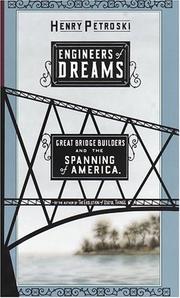
Engineers of Dreams
This history of great American bridge builders shows the culture that shaped long suspension spans. You meet the engineers, their ambitions and their rivalries. It suits readers who want to know why talented people could favour slender designs and miss a serious risk.

Design paradigms
Petroski uses historical case studies to examine errors in engineering judgment. It is useful if you want to move past what broke and ask how design thinking went wrong. Engineering students and working designers will get the most from its patterns and warnings.

Wind effects on structures
This technical text treats wind loading and the response of structures in depth, including aeroelastic behaviour such as flutter. Expect equations and engineering vocabulary. It suits advanced students and practising engineers who want the analysis behind the popular story. Look for a recent edition.
Questions readers ask
Did anyone die in the Tacoma Narrows Bridge collapse?
No person died in the collapse. The only life lost was Tubby, a dog that had been riding in reporter Leonard Coatsworth's car. Coatsworth left the car and got off the moving bridge. Professor F. B. Farquharson tried to rescue the dog, but Tubby bit him, and the dog went down with the roadway [2][8].
How strong was the wind when the bridge collapsed?
It was windy, but this was not a hurricane. Readings were 38 miles per hour at 7:30 in the morning and 42 miles per hour about two hours later [2]. The bridge failed because its shape and flexibility let a moderate, steady wind drive a growing twisting motion, not because the wind simply pushed it over.
Why was the bridge called Galloping Gertie?
The nickname came from the way the deck rippled up and down in the wind, even before the day it failed. That vertical motion was different from the violent twisting on November 7. The twisting started after a cable band slipped at mid-span, and it was the motion that destroyed the bridge [1].
Could the collapse have been prevented?
A stiffer, deeper and more open deck would very likely have helped. Engineers who reviewed Clark Eldridge's earlier design, with a 25 foot deep truss, believe it would have stayed stable in the winds that destroyed the finished bridge [1]. That judgment benefits from hindsight, since designers in 1940 had a limited grasp of bridge aerodynamics.
Sources
- Tacoma Narrows Bridge history: Lessons from failure. Washington State Department of Transportation. Accessed 2026-11-28.
- Tacoma Narrows Bridge history: Collapse. Washington State Department of Transportation. Accessed 2026-11-28.
- Tacoma Narrows Bridge history: The 1940 bridge. Washington State Department of Transportation. Accessed 2026-11-28.
- Tacoma Bridge Failure: a Physical Model. arXiv. Accessed 2026-11-28.
- Resonance, Tacoma Narrows bridge failure, and undergraduate physics textbooks (Billah and Scanlan, 1991). American Journal of Physics. Accessed 2026-11-28.
- This Month in Physics History: Collapse of the Tacoma Narrows Bridge. American Physical Society. Accessed 2026-11-28.
- Tacoma Narrows Bridges. American Society of Civil Engineers. Accessed 2026-11-28.
- Tacoma Narrows Bridge collapse, HistoryLink essay 5048. HistoryLink. Accessed 2026-11-28.
- The Tacoma Narrows Bridge collapse. Physics Today, American Institute of Physics. Accessed 2026-11-28.