Faith and traditions
What are the best books to understand Hinduism as a beginner?
Start with Kim Knott's Hinduism, a short overview, or Ed Viswanathan's Am I a Hindu?, which works through common questions. Then read R. K. Narayan's Ramayana and Mahabharata for the great stories, and Barbara Stoler Miller's Bhagavad Gita. When you want more depth, move to Patrick Olivelle's Upanishads and Gavin Flood's introduction.
By BookPounce | Updated
What should you know about Hinduism before you pick a book?
Hinduism is a family of traditions more than a single system. It has no founder, no one holy book and no single body of doctrine, so belief and practice vary widely [4]. One family may worship Vishnu, another Shiva, and another the Goddess. Others think of ultimate reality in impersonal terms [4].
The name itself has an interesting past. The word "Hindu" does not appear in traditional literature from before the colonial period, and it likely comes from the Persian form of sindhu, linked to the Indus river [1].
It is also a living faith on a large scale. There were nearly 1.2 billion Hindus in 2020, and about 95 percent of them lived in India [8].
What does this mean for your reading? No single book can speak for every Hindu. A good plan is to pair an overview with the texts and stories themselves. The overview gives you a map. The texts let you hear the tradition in its own voice. As you read, notice who is writing: a believer, a translator or a historian. Each one helps you in a different way.
Which ideas help you most as a beginner?
A few words come up again and again. Learn them early and every book gets easier.
In Hindu thought, brahman names the ultimate or underlying reality. Atman names the self. Some teachers in the Upanishads say the two are one, while others do not, and the question is still debated [2].
Karma is the idea that your morally meaningful choices have consequences. Hindus share this idea with Buddhists and Jains, so it does not define Hinduism by itself [1]. Samsara is the cycle of birth and rebirth. Moksha is liberation from that cycle [9].
You will also meet the four aims of human life. Dharma is duty or right conduct. Artha is material prosperity. Kama is pleasure. Moksha is liberation. Not every school of thought accepted all four [1].
Philosophy has many voices too. By convention, there are six classical schools that accept the authority of the Vedas, including Yoga and Vedanta [1]. You do not need to master them now. Just know that careful argument and disagreement are part of the tradition. If two books explain an idea differently, they may be following different schools.
What are the main Hindu sacred texts?
Hindu tradition often speaks of two broad groups. Shruti, meaning what is heard, is the most revered body of literature. It is regarded as revelation, heard and passed on by ancient sages [10]. It includes the Vedas and the texts attached to them, among them the Upanishads [10].
Smriti, meaning what is remembered, is credited to human authors. It includes the epics and the Puranas [11]. Shruti holds the higher authority, yet Smriti texts have often had a wider influence on everyday religious life [11].
The Vedas are the foundational texts, and the word veda means knowledge [1]. The Upanishads form the final section of the Vedic collections. They ask about the self, reality, death and how to live well. The major ones are usually dated to about 700 to 300 BCE [2].
For a first reading, you do not have to start with the oldest material. Ancient hymns and ritual texts can feel hard without background. Many beginners find it easier to enter through a story or through the Bhagavad Gita, and then work back to the Upanishads. That is the order suggested on this page, though you can follow your own curiosity.
Should you start with the Bhagavad Gita or the epics?
The Bhagavad Gita is part of the Mahabharata. It has 700 verses in 18 chapters [5]. It is set on a battlefield just before a war between relatives. The warrior Arjuna hesitates to fight, and Krishna, his cousin and charioteer, answers him. Krishna is understood as an avatar of Vishnu [3]. Their conversation explores paths often called the yogas of action, devotion and knowledge [3].
The Mahabharata around it is huge, with nearly 100,000 couplets in 18 sections. Tradition credits it to the sage Vyasa, though scholars doubt that one person wrote it all [7]. It tells of the rivalry between two sets of cousins, the Pandavas and the Kauravas [7].
The Ramayana is the other great epic. In Hindu tradition, the poet Valmiki composed it. The Sanskrit text has some 24,000 couplets in seven books [6]. It tells how Rama goes into exile, how the demon king Ravana abducts Sita, and how Rama wins her back [6].
If you love stories, begin with the Ramayana. If you have a question about duty and action on your mind, begin with the Gita. Either way, a short retelling of the Mahabharata will show you where the Gita fits.
In what order should you read these books?
Here is a simple path. Take it slowly, and skip ahead if something pulls you.
First, get your bearings. Read Knott if you like a compact, academic overview. Read Viswanathan if you prefer questions and answers in everyday language.
Second, meet the stories. Narayan's Ramayana is a gentle place to begin. His Mahabharata comes next and prepares you for the Gita. Both are shortened prose retellings, so treat them as a doorway and not as the full epics.
Third, read the Gita in Miller's translation. Go one chapter at a time. Write down the questions Arjuna asks, and see how Krishna answers each one.
Fourth, go deeper. Olivelle's Upanishads takes you to the discussions of self and reality. Flood's introduction then ties history, texts, worship and philosophy together.
Books are only one way in. If you can, listen to how Hindu friends or neighbours describe their own practice. Visit a temple respectfully if visitors are welcome. You may find that festivals, family customs and devotion teach you things a page cannot. Different households do things differently, and that variety is worth noticing.
Books to read

Hinduism
Part of the Very Short Introduction series, this compact overview introduces key texts, ideas and practices, and asks how Hinduism is understood today. It suits you if you want a clear map in a few sittings, with a scholar's eye on questions of identity and interpretation.
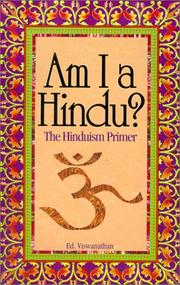
Am I a Hindu?
This primer uses a question and answer format to cover beliefs, customs and symbols that newcomers often wonder about. It suits readers who like plain talk and want to dip in by topic. Read it as one Hindu author's explanation, alongside a more academic overview.
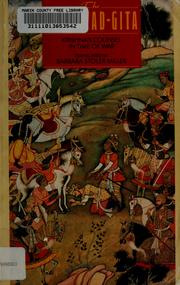
The Bhagavad-gita
Miller, a Sanskrit scholar, translates the dialogue between Krishna and Arjuna into clear English verse, with helpful explanatory material. It suits you if you want to read the text itself without a long commentary between you and the words. Take one chapter at a time.

Upaniṣads
Olivelle's translation in the Oxford World's Classics series brings you the principal Upanishads with an introduction and notes. It suits readers who are curious about brahman, atman and rebirth and want to see how ancient teachers and students discussed them. Read slowly and use the notes.
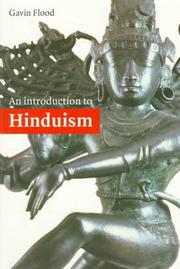
An introduction to Hinduism
Flood traces Hindu traditions from their early history through the major devotional movements, ritual and philosophy. It reads like a university textbook, so it asks for more patience. It suits you after the basics, when you want context, careful terms and pointers for further study.
Questions readers ask
Which book should I read first to understand Hinduism?
Start with Kim Knott's Hinduism if you want a short, balanced overview. Choose Ed Viswanathan's Am I a Hindu? if you would rather read answers to everyday questions. If stories draw you in more than explanations, begin with R. K. Narayan's Ramayana and add an overview afterwards.
Is there one holy book in Hinduism, like a Hindu Bible?
No. Hinduism has several sacred texts instead of one. The Vedas, including the Upanishads, are regarded as revealed scripture. The epics, the Puranas and other works belong to the remembered tradition. The Bhagavad Gita, which sits within the Mahabharata, is widely read, but it does not replace the others.
Can a beginner read the Bhagavad Gita without background?
Yes, you can. It is short, with 18 chapters, and it takes the form of a conversation. You will get more from it if you first learn the setting from a retelling of the Mahabharata and understand words like dharma, karma and moksha. Reread chapters that feel dense.
Should I read the Vedas first because they are the oldest?
You do not need to. The Vedas are foundational, but their ancient hymns and ritual material can be hard to follow without context. Begin with an overview, a story or the Gita. Then read the Upanishads, which form the final section of the Vedic collections and discuss self and reality.
Are retellings of the Ramayana and Mahabharata good enough?
They are a good first step. A retelling gives you the characters, the main events and the moral questions in a manageable length. It also leaves much out and reflects the choices of its writer. Later, you can try a fuller translation or explore how different regions tell the same story.
Sources
- Hindu Philosophy. Internet Encyclopedia of Philosophy. Accessed 2026-11-28.
- Upaniṣads. Internet Encyclopedia of Philosophy. Accessed 2026-11-28.
- Bhagavad Gītā. Internet Encyclopedia of Philosophy. Accessed 2026-11-28.
- Hinduism (Students). Britannica. Accessed 2026-11-28.
- Hinduism: The Bhagavadgita. Britannica. Accessed 2026-11-28.
- Ramayana. Britannica. Accessed 2026-11-28.
- Mahabharata. Britannica. Accessed 2026-11-28.
- Hindu population change. Pew Research Center. Accessed 2026-11-28.
- Hinduism: Karma, samsara, and moksha. Britannica. Accessed 2026-11-28.
- Shruti. Britannica. Accessed 2026-11-28.
- Smriti. Britannica. Accessed 2026-11-28.