Finance and the economy
What is hyperinflation, and why does it happen?
Hyperinflation is extremely fast price growth, usually defined as more than 50 percent a month. It typically happens when a government cannot cover its spending through taxes or borrowing and creates money instead. People then lose trust in the currency and spend it quickly, which pushes prices up even faster until policy changes.
By BookPounce | Updated
What counts as hyperinflation?
Inflation is a sustained rise in the general level of prices. Hyperinflation is the extreme case. Economists usually save the word for periods when prices rise by more than 50 percent in a month [1]. This threshold is linked to the economist Phillip Cagan, who studied these episodes in the 1950s [4].
Fifty percent a month is far bigger than it may sound, because each rise builds on the last. If that pace lasted a full year, something that cost 100 at the start would cost about 13,000 at the end.
Not everyone draws the line in the same place. One International Monetary Fund (IMF) explainer uses 1,000 percent or more a year [2]. Some research looks at a wider group of very high inflations, above 100 percent a year [4].
The difference matters when you read the news. A country with painful inflation of 40 percent a year is in serious trouble, but it is not in hyperinflation by any of these measures. Always check which period a number covers. A monthly rate and a yearly rate tell very different stories.
Why does hyperinflation happen?
The immediate engine is very fast growth in the amount of money, usually because a government is creating it to pay large bills [1]. The deeper cause is often a budget that does not add up. Spending stays far above revenue, and the central bank fills the gap [3].
Why would a government do this? Raising taxes is slow and unpopular, and lenders may refuse to lend. Creating money is quick. It also works like a hidden tax, because the money already in your pocket buys less. The economist Michael Salemi puts it bluntly: "Hyperinflations are very large taxation schemes." [1]
The trouble often begins with a heavy strain on public finances. War is one example, when military goals take priority over stable prices [3]. In Zimbabwe, large budget deficits financed by the central bank led to hyperinflation [7].
Supply shocks, strong demand and expectations can also push prices up [2]. These forces explain many ordinary inflations. On their own, they are a different thing from a currency collapse driven month after month by new money.
Why do prices spiral once it starts?
Money works because you expect others to accept it tomorrow at a similar value. Hyperinflation breaks that expectation.
When you think prices will jump next week, you spend today. You swap cash for food, tools, land or foreign currency. Everyone else does the same. Money changes hands faster, and that adds more pressure on prices [1][6].
The government then faces its own problem. People hold less of the currency, so each new batch of money buys the state less [1]. If it still needs to pay its bills, it may create even more.
Expectations feed into contracts and wages too [2]. Workers ask for higher pay to keep up. Sellers raise prices before their costs arrive. Some people turn to barter, and some use a foreign currency instead [1].
This wastes time and effort. You queue, trade and rush when you could be working or planning. Saving in the local currency stops making sense, and long-term agreements become very hard to write, because nobody knows what the money will be worth.
What happened in Germany, Hungary and Zimbabwe?
Germany is the best known case. War borrowing had already expanded the money supply. After 1918 the state kept relying on debt, and in 1923 the occupation of the Ruhr led to heavy money printing to fund passive resistance [6]. By October 1923, taxes covered only about 1 percent of government spending [6].
The exchange rate shows the speed. One US dollar cost an average of 47,670 marks in May 1923. By 20 November it cost 4.2 trillion marks. A kilogram of bread went from 163 marks in January to 233 billion marks in November [6].
Hungary holds the record. At its peak in 1946, monthly inflation reached 41.9 quadrillion percent, and prices doubled about every 15 hours. Wartime destruction and heavy money creation lay behind it, and a new currency, the forint, replaced the old pengo [5].
Zimbabwe is a more recent example. In 2008, estimated annual inflation reached about 500 billion percent at one point [2]. The local currency lost its value, and the economy had switched fully to foreign currency, mainly the US dollar, by late 2008 [7].
Who loses and who gains?
People who hold money, or are owed fixed amounts of it, lose the most. In Germany this included pensioners, civil servants, people living on investment income, savings account holders and owners of war bonds [6]. A sum that once represented years of careful saving could become almost worthless.
Borrowers could gain, because they repaid old debts with money that had lost value. The German state, many business owners and many farmers benefited in this way [6]. Banks and insurers, on the other hand, lost much of their capital [6].
The government also collects value from everyone who holds its currency. This is the inflation tax [1]. It falls hardest on people who cannot move quickly into goods, property or foreign money.
The gains and losses are not planned fairly or voted on one by one. They depend on what you own, what you owe and how your income adjusts. Two families with similar lives before the crisis can come out of it in very different positions. That is one reason these episodes leave long social and political memories.
How does hyperinflation end?
The standard answer is that the government must make a believable promise to stop the rapid growth of money [1]. Words alone rarely do it. People need to see that the reason for creating money has gone away.
Thomas Sargent, who studied European hyperinflations of the 1920s, argued that budget reform matters as much as money reform. In his account, an independent central bank that will not finance deficits is a key part of the change [1].
IMF research on countries with inflation above 1,000 percent a year points the same way. Inflation can fall quickly under well designed policy, and early, strong action on the budget is central. Output usually recovered within one to two years [8].
Sometimes a country introduces a new currency, as Hungary did with the forint [5]. Sometimes it adopts a foreign one, which is often called dollarization [1]. A new banknote by itself does not fix a budget gap. Zimbabwe kept fiscal discipline after dollarizing in late 2008, but large deficits returned in 2016 [7].
Books to read
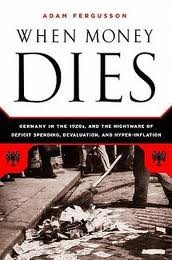
When money dies
A readable account of the German, Austrian and Hungarian collapses after the First World War. It shows how daily life changed as money failed, through the experience of people who lived it. Start here if you want the human story before the economics.
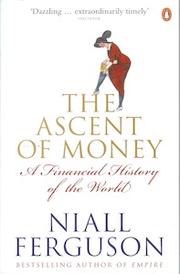
The ascent of money
A broad history of finance, covering money, credit, bonds, shares and insurance. It helps you see where currencies and government debt fit in the wider system. Pick it if terms like bond or central bank still feel unfamiliar and you want some background first.
Money mischief
Friedman uses episodes from monetary history to show how changes in money can shape prices and politics. You get a clear statement of the monetarist view from one of its best known voices. Read it alongside other accounts, since economists still debate parts of it.
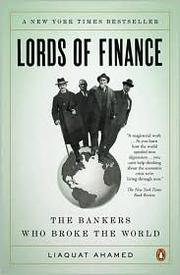
Lords of finance
The story of four central bankers between the First World War and the Great Depression, including the head of Germany's Reichsbank. It shows how war debts, gold and personal judgement shaped policy. Good for readers who want to see decisions from inside central banks.
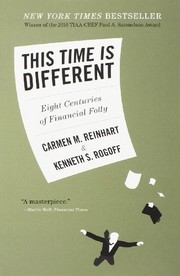
This time is different
Written with Kenneth Rogoff, this book surveys centuries of financial crises, including government defaults and bouts of high inflation. It relies on long data series and charts. It suits readers who want to compare many countries and spot patterns across them.
Monetary Regimes and Inflation
A comparative study of inflation under different monetary systems, with close attention to hyperinflations, their links to budget deficits and the reforms that ended them. It is more technical than the narrative histories and rewards readers who already know basic economics.

The Great Disorder
A very detailed scholarly history of German politics, economy and society during the inflation years from 1914 to 1924. It is long and demanding. Choose it if you are researching the period or want to test simpler explanations against a full account.
Questions readers ask
What is the difference between inflation and hyperinflation?
Inflation is a sustained rise in the general level of prices, and it can be mild. Hyperinflation is extreme and fast, usually more than 50 percent a month. At that speed, money stops working well as a store of value, and people try to spend or exchange it as soon as they receive it.
Does printing money always cause hyperinflation?
No. Hyperinflation is tied to very rapid and continuing money growth, usually used to cover a large gap in government finances. Money creation also happens in normal economies. What matters includes how fast it grows compared with the economy, why it is being created, and whether people believe it will stop.
What was the worst hyperinflation in history?
Hungary in 1946 is the record case. At the peak, monthly inflation reached 41.9 quadrillion percent and prices doubled about every 15 hours. Wartime destruction had damaged the country's ability to produce, and heavy money creation followed. Hungary then replaced its old currency, the pengo, with the forint.
What happens to debts during hyperinflation?
A debt fixed in the local currency loses real value as prices soar, so borrowers can gain and lenders can lose. The result depends on contracts and law. Debts linked to prices or written in a foreign currency may not shrink this way. In 1920s Germany, many borrowers repaid with badly devalued marks.
Can a new currency stop hyperinflation?
A new currency can be part of the solution, but it is rarely enough alone. If the government still spends far more than it can raise and asks the central bank to cover the gap, the new money can lose trust too. Lasting reform usually deals with the budget and central bank rules.
Sources
- Hyperinflation, by Michael K. Salemi. Econlib, The Concise Encyclopedia of Economics. Accessed 2026-11-28.
- Inflation: Prices on the Rise, by Ceyda Oner. International Monetary Fund, Finance and Development. Accessed 2026-11-28.
- The fiscal roots of hyperinflation: a historical perspective. Banque de France. Accessed 2026-11-28.
- Modern Hyper- and High Inflations, by Fischer, Sahay and Vegh. National Bureau of Economic Research. Accessed 2026-11-28.
- What Is Hyperinflation?. Britannica Money. Accessed 2026-11-28.
- Inflation, 1914-1923. Historisches Lexikon Bayerns. Accessed 2026-11-28.
- Zimbabwe: IMF staff report, 2020. International Monetary Fund. Accessed 2026-11-28.
- Lessons From High Inflation Episodes for Stabilizing the Economy in Zimbabwe. International Monetary Fund. Accessed 2026-11-28.