Faith and traditions
What are the best books to understand Christianity?
Start with Mere Christianity by C. S. Lewis or Simply Christian by N. T. Wright for core beliefs. Then read Diarmaid MacCulloch's A History of Christianity for the long story, and Alister McGrath's Christian Theology for the ideas. Read one of the four Gospels alongside them, so you meet Jesus in the primary text.
By BookPounce | Updated
Which book should you read first?
Your best first book depends on the question you are asking.
If you want to know what Christians believe and why, begin with Mere Christianity. C. S. Lewis writes as a believer who is making a case. He uses everyday pictures and focuses on ground that many churches share.
If you want a newer introduction, try Simply Christian by N. T. Wright. It moves from common human longings, such as the wish for justice and beauty, to the Christian account of God, Jesus and the Spirit.
If you want to understand Catholic life in particular, pick up Catholicism by Robert Barron. For Eastern Christianity, go to The Orthodox Church by Timothy Ware.
If you care most about history, start with Diarmaid MacCulloch. It is a very large book, so you may prefer to read it in parts.
Keep one thing in mind. Many books about Christianity are written from inside a particular tradition. That is a strength, because you hear how believers understand their own faith. It also means you should read more than one voice before you settle on a picture of the whole.
What do Christians believe about Jesus?
Christianity centres on Jesus. In Christian teaching he is the Son of God and the second person of the Trinity, one God who is Father, Son and Holy Spirit. Christians hold that his death redeems humankind [2].
One of the early summaries appears in Paul's first letter to the Corinthians. Paul says he is passing on what he received: that Christ died for sins, was buried, was raised on the third day and then appeared to his followers [5]. For Christians, the resurrection is the heart of their hope.
Jesus' teaching matters just as much to daily practice. According to the Gospel of Mark, when a scribe asked which commandment came first, Jesus named love of God with your whole being, and then "You shall love your neighbor as yourself" [4].
The Gospel of Luke records the parable of the prodigal son. A younger son wastes his inheritance and comes home ashamed. His father runs to embrace him and holds a feast, while the elder brother struggles to join in [9]. Many readers find this short story a clear window into Christian ideas of mercy and forgiveness.
How should you read the Bible alongside these books?
The Bible is the sacred scripture of Christianity, and the part that tells of Jesus and the early church holds a special place [2]. It helps to know that the Bible is a library of books and not a single volume written at one sitting.
A Catholic Bible lists 46 books before the Gospel of Matthew, and 27 books from Matthew to the end [3]. Other Christian traditions differ on which of the earlier books belong, so check which edition you are holding.
You do not need to start at page one. Many newcomers begin with a Gospel. Mark is a good choice if you want a brisk account of Jesus' life. Luke includes the parable of the prodigal son [9]. John is more reflective. After a Gospel, read Acts for the story of the first followers, then a letter such as Romans or 1 Corinthians.
Choose a modern translation that you find readable. A study edition with notes will explain places, customs and links between passages. Notes often reflect the views of their editors, so notice who prepared them.
Read slowly. A short passage with one good question usually teaches you more than many chapters read in a hurry.
Why are there Catholic, Orthodox and Protestant churches?
Britannica names three major groups within Christianity: the Roman Catholic Church, the Eastern Orthodox churches and the Protestant churches [2]. Each has its own account of faithfulness, authority and worship.
Early Christians met in councils to settle major questions. The Council of Nicaea opened in 325. The creed many churches know as the Nicene Creed is an expanded form linked to the Council of Constantinople in 381. It confesses the Son as "consubstantial with the Father", meaning of the same being [6].
In 1054, the patriarch of Constantinople and the envoys of Pope Leo IX excommunicated each other. Disputes had built up for centuries, including over the authority of the pope. This date became the symbol of the split between Eastern and Western Christianity [7].
The Protestant Reformation came later in the West. Its traditional starting date is 31 October 1517, when Martin Luther is said to have posted his Ninety-five Theses in Wittenberg [8].
Ware helps you see the story from an Orthodox point of view. Barron presents Catholic faith. McGrath's Christianity's Dangerous Idea follows the Protestant story.
How large and varied is Christianity today?
Christians numbered about 2.3 billion in 2020, or 28.8 percent of the world's population, according to Pew Research Center. That made Christianity the largest religious group in the study [1].
It is also widely spread. In 2020, about 31 percent of Christians lived in sub-Saharan Africa, about 24 percent in Latin America and the Caribbean, and about 22 percent in Europe. Sub-Saharan Africa had passed Europe as the region with the most Christians [1].
This matters when you choose books. Many well known introductions in English come from British or American authors. They can be excellent, yet they may say little about how faith is lived in Lagos, Manila, Sao Paulo or Kerala.
After your first two or three books, look for writers from other places and churches. A broad history is a good bridge, because it shows how the faith moved across languages and cultures over many centuries.
You can also learn by listening. If you have Christian friends or neighbours, ask what a festival, a prayer or a passage means to them. Their answers will give your reading a human face.
What is a simple reading plan?
You can build a solid picture in four steps.
First, read the Gospel of Mark or Luke. Write down what surprises you and what you do not understand.
Second, read Mere Christianity or Simply Christian. Compare what the author says with what you saw in the Gospel.
Third, choose history or theology. MacCulloch tells you what happened and how churches changed. McGrath's Christian Theology explains the main doctrines and the debates around them.
Fourth, read from inside one tradition that is new to you, using Ware, Barron or McGrath's history of Protestantism.
When you want an official statement of Catholic teaching, the Catechism of the Catholic Church is available on the Vatican website. It is arranged in four parts: the profession of faith, the celebration of the Christian mystery, life in Christ and Christian prayer [10]. Use it as a reference and look up topics as they come.
There is no deadline. One chapter a few times a week is a good pace. If a book feels too heavy, set it aside and return after a shorter one.
Books to read
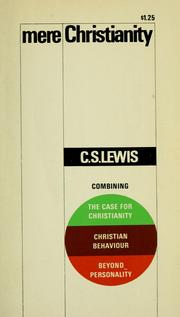
Mere Christianity
A warm, direct case for the beliefs Lewis saw as common to Christians, which grew out of wartime radio talks. You get clear arguments and homely examples in short chapters. It suits curious readers, doubters and new believers. Remember that it argues for the faith and does not survey every church.

Simply Christian
Wright begins with longings many people share, including justice, relationships and beauty, then explains how Christians speak about God, Jesus, the Spirit and the life of the church. It suits readers who want a modern, friendly introduction written by a biblical scholar who is also a churchman.
Catholicism
Barron, a Catholic priest who later became a bishop, introduces Catholic belief through Jesus, Mary, the saints, art, architecture and prayer. You get a sense of how doctrine and worship fit together. It suits readers who want to understand Catholic faith as a believer presents it.
The Orthodox Church
A respected introduction to Eastern Orthodoxy in two broad movements: its history, then its faith and worship. Ware explains councils, icons, liturgy and prayer with care. It suits readers who know something about Western churches and want to understand the Christian East. Look for a recent revised edition.

Christianity's Dangerous Idea
McGrath traces Protestantism from the sixteenth century onward, centred on the idea that believers may read and interpret the Bible for themselves. You learn why Protestant churches are so varied. It suits readers who enjoy history and want to connect the Reformation with churches today.
Christian theology
A textbook that walks you through the history of Christian thought and its main doctrines, such as God, the Trinity, Jesus, salvation and the church. It sets out differing positions clearly. It suits students and patient readers who want to understand the debates and not only one answer.
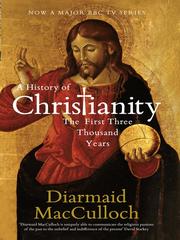
A history of Christianity
A very large history that begins before Jesus, in the Greek, Roman and Jewish worlds, and follows the churches across continents into modern times. You see Eastern, Western, African and Asian stories together. It suits committed readers. Some editions carry the subtitle The First Three Thousand Years.
Questions readers ask
What is the best book on Christianity for a complete beginner?
Mere Christianity by C. S. Lewis is a strong first choice if you want core beliefs explained in plain language. Simply Christian by N. T. Wright is a good newer alternative. Both are written by Christians, so pair either one with a Gospel and, later, a history of the churches.
Should I read the Bible before reading books about Christianity?
You can do both together. Read one Gospel, such as Mark or Luke, while you read a short introduction. The Gospel lets you meet Jesus as the text presents him. The introduction explains terms and ideas that may be unfamiliar. You do not need to finish the whole Bible first.
Which book explains the history of Christianity best?
For depth and breadth, try A History of Christianity by Diarmaid MacCulloch. It covers many regions and churches over a very long span. It is demanding, so read it by section if you like. For the Protestant story alone, Alister McGrath's Christianity's Dangerous Idea is a more focused choice.
What should I read to understand the differences between churches?
Read at least one book on each tradition that interests you. Timothy Ware's The Orthodox Church introduces Eastern Orthodoxy. Robert Barron's Catholicism presents Catholic faith. Alister McGrath's Christianity's Dangerous Idea follows Protestantism. Reading them side by side shows you what is shared and where the churches differ.
Sources
- How the Global Religious Landscape Changed From 2010 to 2020. Pew Research Center. Accessed 2026-11-28.
- Christianity. Encyclopaedia Britannica. Accessed 2026-11-28.
- Books of the Bible. United States Conference of Catholic Bishops. Accessed 2026-11-28.
- Mark 12:28-31 (NRSVUE). Bible Gateway. Accessed 2026-11-28.
- 1 Corinthians 15:3-8 (NRSVUE). Bible Gateway. Accessed 2026-11-28.
- Jesus Christ, Son of God, Saviour: 1700th Anniversary of the Ecumenical Council of Nicaea (325-2025). International Theological Commission, Holy See. Accessed 2026-11-28.
- East-West Schism. Encyclopaedia Britannica. Accessed 2026-11-28.
- Reformation. Encyclopaedia Britannica. Accessed 2026-11-28.
- Luke 15:11-32 (NRSVUE). Bible Gateway. Accessed 2026-11-28.
- Catechism of the Catholic Church. Holy See. Accessed 2026-11-28.