Faith and traditions
What are the best books on Buddhism for beginners?
Start with Walpola Rahula's What the Buddha Taught for a clear, compact explanation of core teachings. Add Thich Nhat Hanh's The Heart of the Buddha's Teaching for daily practice, or Shunryu Suzuki's Zen Mind, Beginner's Mind for Zen. When you want early scripture, read Bhikkhu Bodhi's anthology, In the Buddha's Words.
By BookPounce | Updated
Which Buddhism book should you read first?
For most new readers, What the Buddha Taught by Walpola Rahula is a strong first choice. It is short, orderly and focused on ideas. You get the main teachings before you meet the many schools, texts and practices that grew around them.
Your reason for reading can change the answer. If you want something warm and practical, begin with Thich Nhat Hanh's The Heart of the Buddha's Teaching. If you want plain modern language with little special vocabulary, try Steve Hagen's Buddhism Plain and Simple. If you learn best through story, Old Path White Clouds tells the life of the Buddha as a long, gentle narrative.
A simple reading order works well. First, read one short introduction. Next, read a book from a living tradition that interests you. Then read some scripture in translation, such as the Dhammapada. Finally, pick up a fuller academic survey by Peter Harvey or Rupert Gethin to see how the pieces fit.
You do not need to finish all nine. Two or three books read slowly will give you a sound start. Keep a notebook for new terms, because Pali and Sanskrit words often appear side by side, such as Dhamma and Dharma.
Who was the Buddha, and what do these books assume you know?
Buddhism looks back to Gautama, called the Buddha, or the awakened one. Modern scholars identify him as the founder of the tradition. His dates were long given as about 560 to 480 BCE, but many scholars now hold that he died around 405 BCE [1].
The traditional account says he came from a family of some wealth and power in the Shakya clan. He left home to seek an answer to suffering, studied with other wandering ascetics, and attained awakening. He then spent the remaining 45 years of his life teaching [1].
It helps to know how his words reached us. The texts that report his teaching were not written down until several centuries after his death [1]. Good introductions are open about this. They separate what a tradition tells, what its texts say and what historians can show.
You will also meet stories of the Buddha's birth, struggle and awakening told with vivid detail. Read them as Buddhists have received them, as sacred narrative that carries meaning. A book such as Old Path White Clouds lets you take in that story as a whole. A survey such as Gethin's or Harvey's is the place to look for historical and scholarly context.
What are the core teachings to look for?
Most introductions begin with the Four Noble Truths. In simple terms, there is suffering, it has an origin, it can cease, and there is a path to its cessation [1]. The Pali word often translated as suffering is dukkha. Some translators choose other words, such as stress [2].
According to the discourse known as Setting the Wheel of Dhamma in Motion, the Buddha taught these truths to five monks near Varanasi. He described a middle way that avoids both sensual indulgence and self-affliction [2].
That middle way is the Noble Eightfold Path: right view, right resolve, right speech, right action, right livelihood, right effort, right mindfulness and right concentration [2]. Notice that meditation is only part of it. How you speak, act and earn your living matter too.
Another key idea is non-self, called anatman in Sanskrit. It questions the sense of a fixed self behind your experience. Scholars still debate exactly how far this denial goes [1]. Karma and rebirth also belong to the Buddha's teaching, and the early texts treat them seriously [1]. A good beginner book will explain these ideas patiently, without turning them into slogans.
How do Theravada, Mahayana and Vajrayana books differ?
Buddhism is a family of traditions, so it helps to notice where an author stands.
Theravada, whose name is often rendered as the Way of the Elders, is the major form of Buddhism in Sri Lanka, Myanmar, Thailand, Cambodia and Laos [5]. It follows the Pali canon. Rahula's introduction and Bodhi's anthology are natural places to meet this tradition.
Mahayana arose in India around the start of the common era. It gives a central place to the bodhisattva, one who seeks awakening and works to help other beings reach it. Zen and Pure Land are among its well known forms [6]. Suzuki's talks come from Japanese Zen. Thich Nhat Hanh was a Vietnamese Zen teacher whose books draw widely on Buddhist sources.
Vajrayana, also called Tantric Buddhism, developed in India and became especially important in Tibet [7]. The list below leans toward general, Theravada and Zen titles. If Tibetan Buddhism is your main interest, use Harvey or Gethin for background first, then look for a teacher or author within that tradition.
No single book speaks for every Buddhist. Reading across two traditions shows you what they share and where their emphasis differs.
Should you read Buddhist scriptures as a beginner?
Yes, in small portions and with a good guide. The Pali canon of the Theravada tradition is called the Tipitaka, meaning three baskets. Its parts are the Vinaya on monastic discipline, the Sutta collection of discourses and the Abhidhamma, which offers further doctrinal analysis [3]. Other Buddhist traditions also treasure texts beyond this collection, including the Mahayana sutras [6].
The full canon is very large, so most people begin with a selection. The Dhammapada is a favorite starting point. It has 423 verses in 26 chapters, and many are brief sayings about conduct and the mind [4]. You can read one chapter at a sitting and return to it often.
For longer discourses, In the Buddha's Words arranges passages from the Pali canon by theme, with introductions that explain what you are about to read. It asks more of you than a popular introduction, but it lets you hear the early texts for yourself.
Compare translations when a line puzzles you. Translators make real choices about words such as dukkha, mindfulness and self. Read slowly, note your questions and, if you can, discuss them with a teacher or a local Buddhist community.
Books to read

What the Buddha taught
A compact, orderly account of core teachings by a Sri Lankan monk and scholar. You get the Four Noble Truths, non-self and meditation explained directly, with attention to early Pali sources. It suits readers who want clear ideas first and a Theravada point of view.

Buddhism plain and simple
A short book in everyday English that focuses on awareness and seeing your experience clearly. It keeps ritual and technical vocabulary to a minimum. It suits curious or skeptical readers, though you will want another book for history and the variety of traditions.

The Dhammapada
A translation of one of the best loved Buddhist scriptures, made up of short verses on the mind, conduct and freedom. It lets you meet a primary text without a huge commitment. It suits slow, reflective reading, one chapter or even one verse at a time.
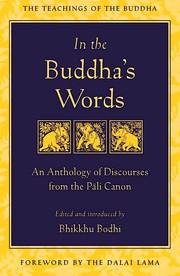
In the Buddha's words
An anthology of discourses from the Pali canon, arranged by theme with helpful introductions. You move from ordinary life and ethics toward meditation and deeper insight. It suits readers who have finished one introduction and now want to read early scripture with careful guidance.

The foundations of Buddhism
A thoughtful academic introduction to the ideas and practices shared across much of Buddhism, with close attention to the Buddha, scripture, the path and philosophy. It suits readers who like precise explanations and want to understand why the teachings fit together as they do.
Questions readers ask
Can I read Buddhist books if I am not a Buddhist?
Yes. Many people read them to understand a major religious and philosophical tradition, to learn about meditation, or to understand friends and neighbors. Read with respect, notice which tradition the author speaks from, and remember that practice, community and ritual matter to many Buddhists alongside ideas.
What is the best book for learning about Zen?
Zen Mind, Beginner's Mind by Shunryu Suzuki is a good place to start. Its short talks focus on sitting practice and the attitude you bring to it. If the style feels puzzling, read a general introduction first, such as Buddhism Plain and Simple by Steve Hagen.
Is there one holy book in Buddhism?
No single volume serves all Buddhists. Theravada Buddhists look to the Pali canon, called the Tipitaka, which is a large collection in three divisions. Mahayana traditions also revere many sutras of their own. The Dhammapada is a short, popular text that many beginners read first.
Do I need to meditate to understand these books?
No. You can understand the main ideas by reading carefully. Still, Buddhist traditions often present study, ethical conduct and meditation as supporting one another. If you try meditation, start gently and consider learning from an experienced teacher or a local group that can answer your questions.
Which book is best for the life of the Buddha?
Old Path White Clouds by Thich Nhat Hanh is a readable choice that tells the story as a flowing narrative with teachings woven in. It is a retelling from within the tradition, not a critical history. Pair it with Gethin or Harvey for scholarly context.
Sources
- Buddha. Stanford Encyclopedia of Philosophy. Accessed 2026-11-28.
- Dhammacakkappavattana Sutta: Setting the Wheel of Dhamma in Motion (SN 56.11), translated by Thanissaro Bhikkhu. Access to Insight. Accessed 2026-11-28.
- Pali canon (Tipitaka). Encyclopaedia Britannica. Accessed 2026-11-28.
- Dhammapada. Encyclopaedia Britannica. Accessed 2026-11-28.
- Theravada. Encyclopaedia Britannica. Accessed 2026-11-28.
- Mahayana. Encyclopaedia Britannica. Accessed 2026-11-28.
- Buddhism: Vajrayana (Tantric or Esoteric) Buddhism. Encyclopaedia Britannica. Accessed 2026-11-28.