Faith and traditions
What are the best books about the Norse gods and goddesses?
Start with Neil Gaiman's Norse Mythology or Kevin Crossley-Holland's The Norse Myths for readable retellings. Then read the Poetic Edda and Snorri Sturluson's Prose Edda, the two main written sources. For background, choose John Lindow's reference guide, H. R. Ellis Davidson's study, or Neil Price's history of the Vikings.
By BookPounce | Updated
Which Norse mythology book should you read first?
Pick your first book by how you like to read.
If you want stories that move quickly, start with Neil Gaiman's Norse Mythology. It is a modern author's retelling, so enjoy it as one telling among many.
If you want retellings with more help around them, choose Kevin Crossley-Holland's The Norse Myths. It suits adults and older teenagers who want to know where a story comes from after they finish it.
If you are reading with children, look for the D'Aulaires' illustrated book. It was first published as Norse Gods and Giants, and you may also find it as D'Aulaires' Book of Norse Myths.
After one retelling, move to the Eddas. You will already know the main names, so the older style will feel much less strange. You will also start to notice what a modern writer added, trimmed or smoothed over.
Leave the reference and history books until you have questions. They are most useful when you want to check a name, compare versions of a story, or learn how people in the Viking Age lived and worshipped.
Still unsure? Read a few pages of two retellings in a library or bookshop. Keep the one whose voice makes you want to turn the page. The best first book is the one you will actually finish.
Who are the main Norse gods and goddesses?
The tradition speaks of two groups of gods, the Aesir and the Vanir [5].
Odin is presented as the supreme god, linked with war and the dead. He rules Valhalla, the hall of the slain, and gave one eye for a drink from Mimir's well [1].
Thor was the most popular of the gods. He rides a chariot drawn by goats, makes thunder and lightning, and fights giants with his hammer Mjollnir [1].
Freyja is goddess of love, fertility and a form of magic called seid. Her twin brother Frey is linked with good harvests [1].
Frigg is Odin's wife [2]. Loki comes from the giants but lives in Asgard, the home of the gods. He is clever, hard to trust, and often tricks gods and giants alike [1].
The stories also tell of Baldr, a noble god killed by an arrow, and of Ragnarok, the final battle at the end of the world [2]. A good book will show you how these figures connect, since few of them make sense alone.
As you read, notice who helps whom, who makes promises and who breaks them. Following those ties will help you remember the names far better than memorising a list.
What are the Poetic Edda and the Prose Edda?
These are the two most important written sources for the old Nordic religion [2].
The Poetic Edda, also called the Elder Edda, is a body of Old Norse poems. Its key manuscript, the Codex Regius, was written in Iceland around 1270 and holds 29 poems that scholars commonly group under that name [4]. The manuscript is now cared for by the Arni Magnusson Institute in Iceland [6].
The Prose Edda, or Younger Edda, comes from Snorri Sturluson, an Icelandic poet, historian and chieftain who lived from 1179 to 1241. He wrote it around 1220 as a handbook for poets. It explains poetic forms and retells many myths that the poems only hint at [3].
Read them side by side if you can. The poems are compact and often puzzling. Snorri is more orderly and easier to follow. Choose an edition with notes and a name index, because one god or object may appear under several names. Translations differ in tone, so sample a page before you buy.
How much do we really know about Norse belief?
Less than many retellings suggest. Both Eddas were written down by Christians in the early medieval period. The National Museum of Denmark notes that they do not always tell us how the Vikings themselves saw their gods [2].
Other evidence helps. It includes skaldic poetry (a style of Old Norse court verse), rune stones, early legal texts, and accounts by Arabic travellers and western European Christians. The museum describes our knowledge as a patchwork drawn from many places, periods and people [2].
This matters when you choose books. A retelling gives you the story. A scholarly book tells you which text the story comes from, what is uncertain, and where writers have filled gaps.
When a book makes a confident claim about what every Viking believed, look for the source behind it. Lindow, Davidson and Price are good next steps if you want to move from the tales to the people and the evidence. Older studies are still worth reading, but remember that research has continued since they appeared.
What reading order works best?
Try a simple path in four steps.
First, read one retelling from start to finish. Gaiman or Crossley-Holland will give you the shape of the stories and the main characters.
Second, read Snorri's Prose Edda. You will meet many of the same tales in a much older form.
Third, take on the Poetic Edda slowly. Read one poem at a sitting, then check the notes. Reading a few lines aloud can help you hear the rhythm.
Fourth, pick a study that answers your own questions. Use Lindow when you want to look up a god, place or object. Choose Davidson for a connected account of the myths and beliefs. Choose Price when you want the wider world of the Vikings.
You do not need all eight books. Two or three can take you a long way: one retelling, one Edda and one guide. Keep a short list of names as you go. It makes the family ties and old quarrels much easier to follow.
Feel free to change the order. If one god or story catches your interest, follow it across your books and compare how each one tells it.
Books to read
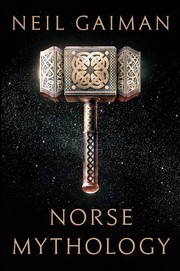
Norse Mythology
A lively, plain-spoken retelling that takes you from the making of the worlds to Ragnarok. It suits first-time readers who want story before study. Treat it as a modern author's version, then compare your favourite tales with the Eddas to see how the telling changes.
The Norse Myths
Retellings of the myths with an introduction and notes that point you back to the sources. It is a good choice if you want the pleasure of a story collection and also some guidance on where each tale comes from.
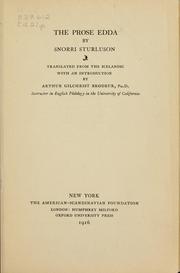
The Prose Edda
Snorri's medieval handbook is where many familiar stories are set out in order. It suits readers who know the main names and want an older telling. Choose a modern translation with notes, and check whether it is complete or abridged.

The Poetic Edda
Larrington's translation brings you the poems about gods and heroes with explanatory notes. Read it when you want to get close to the source material. The verses can be dense, so take one poem at a time and use the notes freely.

Norse mythology
A reference guide to gods, heroes, rituals and beliefs, with entries you can dip into as questions come up. Keep it beside the Eddas while you read. It suits students, writers and curious readers who want to check a name or story carefully.

Children of Ash and Elm
A broad history of the Vikings by an archaeologist, with close attention to how they understood themselves and their world. Choose it when you want to meet the people behind the myths. It is long and detailed, and it rewards slow, patient reading.
Questions readers ask
Is Neil Gaiman's Norse Mythology accurate?
It is a modern retelling, so read it as storytelling and not as a scholarly edition. It is a friendly way to learn the characters and main tales. To see what the older texts say, compare it with the Poetic Edda and Snorri Sturluson's Prose Edda, using editions with notes.
Should I read the Poetic Edda or the Prose Edda first?
Most beginners will find the Prose Edda easier, because Snorri explains and orders the stories in prose. The Poetic Edda is made of poems that often assume you already know the people and events. Read a retelling, then Snorri, then the poems for a smoother path.
What is a good Norse mythology book for children?
The D'Aulaires' illustrated book is a strong place to start. Its large pictures help young readers follow the gods, giants and creatures. Some myths include violence, death and trickery, so you may want to read a few pages first or share the stories aloud and talk about them together.
Which book is best for learning about Norse goddesses?
Start with John Lindow's Norse Mythology, where you can look up figures such as Freyja and Frigg one by one. Then read the stories about them in the two Eddas. The surviving tales do not treat every goddess in equal detail, so expect some short entries and open questions.
Sources
- The Viking gods. National Museum of Denmark. Accessed 2026-11-29.
- The old religion. National Museum of Denmark. Accessed 2026-11-29.
- Snorri Sturluson. Encyclopaedia Britannica. Accessed 2026-11-29.
- Codex Regius. Encyclopaedia Britannica. Accessed 2026-11-29.
- Germanic religion and mythology: Mythology. Encyclopaedia Britannica. Accessed 2026-11-29.
- New electronic edition of the Codex Regius of the Poetic Edda. Arni Magnusson Institute for Icelandic Studies. Accessed 2026-11-29.