Faith and traditions
What are the best books about Zoroastrianism and the Parsis?
Start with Jenny Rose's Zoroastrianism or Mary Boyce's Zoroastrians. For the scriptures, read Prods O. Skjærvø's The Spirit of Zoroastrianism or M. L. West's Hymns of Zoroaster. For the Parsis of India, try Jesse S. Palsetia's history, T. M. Luhrmann's The Good Parsi, and Rohinton Mistry's novel Such a Long Journey.
By BookPounce | Updated
What should you know before choosing a book on Zoroastrianism?
Zoroastrianism is a faith with roots in ancient Iran. It looks to the prophet Zarathustra, also called Zoroaster. Its supreme deity is Ahura Mazda, a name usually understood as Wise Lord. In Zoroastrian teaching, a good spirit stands against an evil one, and the ethical call is often summed up as good thoughts, good words and good deeds [1].
Dates are a good test of any book you pick up. Britannica gives the traditional dates for Zarathustra as about 628 to 551 BCE [3]. Many scholars now place him far earlier, and one reference article puts him between 1800 and 1000 BCE [1]. A careful author will tell you that the question is debated and explain which view they follow.
It also helps to know the names of the texts. The Avesta is the main body of scripture. Within it, the Gathas are 17 hymns traditionally attributed to Zarathustra. They sit inside the Yasna, the main liturgical text [1]. Good introductions explain these terms early, so you do not need them all before you begin.
Which introduction should you read first?
If you want one clear starting point, choose Jenny Rose's Zoroastrianism, published as an introduction to the faith. The scholar Arash Zeini, in a Five Books interview, calls it the best introduction then available. Zeini points to its balance of theology, philosophy and lived practice [4].
Mary Boyce's Zoroastrians: Their Religious Beliefs and Practices is the other natural choice. It follows the religion from before Zarathustra to modern times. Zeini praises it as one of the first books to present Zoroastrianism within its historical settings [4]. It asks a little more of you than Rose does, but it rewards slow reading.
S. A. Nigosian's The Zoroastrian Faith is not on this list, so you can keep your shelf short with these two. Read Rose first if you are curious about how Zoroastrians live and think today. Read Boyce first if you like history told in order, from early beginnings onward.
As you read, notice where the authors disagree. Scholars work from texts composed and written down across very long spans of time. The Avesta was passed on orally for centuries before it was written, probably in the Sasanian period of 224 to 651 CE [1]. That leaves real room for different readings.
Where can you read the Zoroastrian scriptures themselves?
After an introduction, spend time with the texts. Prods O. Skjærvø's The Spirit of Zoroastrianism arranges passages by theme, including creation, the end of things and ethics. It draws on the Avesta, Middle Persian writings and inscriptions of the ancient Persian kings [4]. This makes it easy to follow one idea across different periods.
M. L. West's Hymns of Zoroaster is a translation of the Gathas in readable English. Zeini notes that West's views are not widely accepted by specialists in Iranian studies, though they offer a useful counterweight [4]. Read it with that in mind.
Mary Boyce's Textual Sources for the Study of Zoroastrianism is a sourcebook for readers who want a wider range of documents in one place.
Translation matters here. The Gathas have been translated more often than any other part of the Avesta. Translators have generally treated them as Zarathustra's own work, with the last hymn, Yasna 53, usually assigned to followers [5]. If a line moves or puzzles you, compare two versions before you decide what it means. Differences between translators are normal, and they often show you where the hardest questions lie.
Who are the Parsis, and which books tell their story?
Parsis are Zoroastrians of the Indian subcontinent, descended from people who left Iran. Their founding story, the Qessa-e Sanjan, tells of a voyage to Gujarat and the founding of a settlement at Sanjan, where a great sacred fire was consecrated. The text was composed around 1600, and the legend places the migration in the tenth century [2]. Historians read it with care, since it uses legendary material that gives Parsi practice a sense of historical roots [6].
Later, many Parsis moved to Bombay to trade. They worked in shipbuilding, cotton, opium, textiles and banking [2].
For that history, read Jesse S. Palsetia's The Parsis of India, which looks closely at how the community kept its identity in Bombay. It is a scholarly book, best after an introduction.
T. M. Luhrmann's The Good Parsi is an anthropologist's study of Parsis after the end of British rule. It asks how a community that prospered in the colonial era came to see itself afterwards.
Rohinton Mistry's novel Such a Long Journey gives you something the histories cannot: the daily life, worries and humour of a Parsi family in Bombay. It is fiction, so enjoy it as a story and not as a reference work.
How do Zoroastrian practices appear in these books?
You will meet a few practices again and again, and knowing them makes reading easier.
The first is initiation. Parsis call it Navjote, and Iranian Zoroastrians call it Sedreh-Pushi. The child or new member receives a sacred shirt, the sudreh, and a cord, the kushti. The kushti goes three times around the waist, recalling good thoughts, good words and good deeds [7].
The second is fire. Zoroastrian houses of worship are often called fire temples. In Zoroastrian understanding, worship is directed to Ahura Mazda, and the fire is not itself the object of worship [8].
The third is community. The two long-standing groups are the Iranian Zoroastrians, with centres such as Yazd and Kerman, and the Parsis, centred around Mumbai [1]. Their customs and histories are related but not identical, so check which group an author is describing.
Numbers also shape modern Parsi writing. India's census counted 69,601 Parsis in 2001 and 57,264 in 2011, according to the Government of India [9]. Questions about marriage, children, conversion and continuity are sensitive ones. Look for books that let community members speak in their own terms, and be wary of any account that treats a living people as a relic.
Books to read
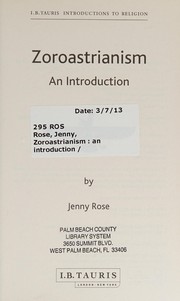
Zoroastrianism
A clear first book, published as an introduction to the faith. Rose connects ideas with lived practice and follows how Zoroastrians have understood their religion in different times and places. It suits you if you are starting from zero and want both history and present-day life without heavy specialist language.
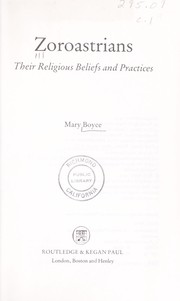
Zoroastrians, their religious beliefs and practices
A historical account that runs from before Zarathustra to modern communities, by a leading scholar of the subject. You get a firm sense of how beliefs and rituals developed over time. It suits readers who like a chronological story and are ready for detail, names and some scholarly argument.

The spirit of Zoroastrianism
An anthology arranged by theme, with passages from the Avesta, Middle Persian literature and royal inscriptions. It lets you read what the sources say about creation, ethics and the end of things. It suits students and general readers who want primary texts with guidance and fairly literal translation.

Hymns of Zoroaster
A readable English translation of the Gathas, the hymns at the heart of Zoroastrian scripture. West reads them as the work of Zarathushtra and notes links with early Greek thought. It suits readers who want the poetry itself, and who remember that other specialists interpret several points differently.

Textual sources for the study of Zoroastrianism
A sourcebook that gathers translated material for study, edited by Boyce. Use it to check what an introduction claims against the documents behind it. It suits students, teachers and serious readers who already know the basic terms and want to work directly with evidence from different periods.

The Parsis of India
A focused history of the Parsi community and how it preserved its identity in Bombay. You learn about the social, legal and religious questions that shaped community life in a growing colonial city. It suits readers who want archival history and already have a basic picture of the faith.

The good Parsi
An anthropological study of Parsis in India after British rule. Luhrmann explores how members of a once highly successful colonial elite spoke about themselves and their future. It suits readers interested in identity, empire and social change. Read it as one scholar's interpretation of a particular time.
Such a long journey
A novel about Gustad Noble, a Parsi bank worker in Bombay whose family life and loyalties come under strain. You meet prayers, neighbours, quarrels and humour from inside a household. It suits readers who learn best through story and want a human picture alongside the histories.
Questions readers ask
What is the best book on Zoroastrianism for beginners?
Jenny Rose's Zoroastrianism is a strong first choice. It introduces history, ideas and living practice in one volume, and the scholar Arash Zeini has recommended it highly. If you prefer a story told in historical order, start with Mary Boyce's Zoroastrians: Their Religious Beliefs and Practices instead, then return to Rose.
What is the holy book of Zoroastrianism?
The main scripture is the Avesta. It includes the Yasna, a liturgical text that contains the Gathas, which are hymns traditionally attributed to Zarathustra. Much of the wider Zoroastrian literature also survives in Middle Persian. For a guided selection in English, try The Spirit of Zoroastrianism by Prods O. Skjærvø.
What is the difference between Parsis and Zoroastrians?
Zoroastrian describes a follower of the religion. Parsi describes a particular Zoroastrian community of the Indian subcontinent, whose ancestors came from Iran. So Parsis are generally understood as Zoroastrians, but not every Zoroastrian is a Parsi. Iranian Zoroastrians, for example, have their own history and customs.
Do Zoroastrians worship fire?
Zoroastrians explain that they do not worship fire itself. Prayer is directed to Ahura Mazda, the Wise Lord. Fire has a central and honoured place in worship, and houses of worship are often called fire temples, where a sacred flame is kept. Introductions by Rose or Boyce give you the wider setting.
Is there a good novel about Parsi life?
Yes. Rohinton Mistry's Such a Long Journey follows Gustad Noble and his family in Bombay. It shows household life, friendship, faith and political pressure with warmth and humour. Because it is fiction, pair it with a history such as Jesse S. Palsetia's The Parsis of India if you want documented background.
Sources
- Zoroastrianism (Worldmark Encyclopedia of Religious Practices, by William Darrow). Gale, via Encyclopedia.com. Accessed 2026-11-29.
- Parsis (Encyclopedia of Religion, by Jamsheed K. Choksy). Gale, via Encyclopedia.com. Accessed 2026-11-29.
- Zarathustra. Encyclopaedia Britannica. Accessed 2026-11-29.
- The best books on Zoroastrianism, recommended by Arash Zeini. Five Books. Accessed 2026-11-29.
- Gathas ii. Translations. Encyclopaedia Iranica. Accessed 2026-11-29.
- Parsi Communities i. Early History. Encyclopaedia Iranica. Accessed 2026-11-29.
- Initiation into the Faith. The Pluralism Project, Harvard University. Accessed 2026-11-29.
- A Visit to a Dar-e-Mehr. The Pluralism Project, Harvard University. Accessed 2026-11-29.
- Declining Parsi Population in the Country. Press Information Bureau, Government of India. Accessed 2026-11-29.