Faith and traditions
What are the best books to understand Islam?
Start with Malise Ruthven's Islam: A Very Short Introduction, then read the Qur'an in M. A. Abdel Haleem's English translation. Add Martin Lings on the Prophet's life, Karen Armstrong for a short history, and The Vision of Islam for belief and practice. For deeper study, try Jonathan Brown and Shahab Ahmed.
By BookPounce | Updated
Which book should you read first to understand Islam?
If you are new to the subject, begin with a short overview. Malise Ruthven's Islam: A Very Short Introduction gives you the main terms, debates and background in a small space. Once you have that map, the longer books are much easier to follow.
It helps to know a few basics before you open any of them. The Arabic word islam means surrender, in the sense of surrender to the will of God, called Allah in Arabic [1]. A Muslim is a person who makes that surrender. In Islamic belief, Muhammad is the last of God's prophets [1].
A good order for most readers has four steps. First, read an introduction. Second, read the Qur'an itself, slowly and with notes. Third, read about the life of the Prophet. Fourth, read history, so you can see how Muslim societies grew and changed across many centuries.
You do not need to finish all nine books below. Pick the question you care about most. If you want to know what Muslims believe, choose The Vision of Islam. If you want to know what happened and when, choose Armstrong or Ansary.
Should you read the Qur'an, and which translation?
Yes. Books about Islam are useful, but the Qur'an is the text at the centre of the faith. Muslims regard it as the word of God, revealed in Arabic [2]. For that reason, a translation is understood as an aid to meaning and not as a replacement for the Arabic original [2].
The Qur'an has 114 chapters, called surahs. Apart from the short opening chapter, they are arranged roughly from longest to shortest [3]. This surprises many first-time readers. The book does not run as one story from beginning to end, so you do not have to read it like a novel.
M. A. Abdel Haleem's translation, published by Oxford University Press, is a clear place to start. It uses modern English and includes an introduction, short summaries and notes [4]. These help you see the setting of a passage and how its themes connect.
Try reading the opening chapter first, then some of the short chapters near the end. After that, move to longer ones such as the chapters on Joseph or Mary. Keep a notebook for questions. A Muslim friend, teacher or local mosque may be glad to talk them through with you.
Who was Muhammad, and what can you read about the Prophet's life?
Muhammad was born in Mecca, in western Arabia, and lived from about 570 to 632 [5]. According to Islamic tradition, he received his first revelation in 610 through the angel Gabriel [5]. In 622 he and his followers moved from Mecca to Medina. This migration, the hijra, marks the start of the Islamic calendar [5].
For a full life story, read Muhammad: His Life Based on the Earliest Sources by Martin Lings. It follows early Arabic accounts closely and reads as a continuous narrative. It presents events with reverence, in a way that stays close to how the tradition tells them. If you want a historian's critical weighing of each report, pair it with an academic study.
Muslims also look to the Sunnah, the practice and example of the Prophet. Reports of what he said and did are known as hadith [6]. Each report traditionally carries a chain of narrators along with its text [6]. Scholars have long studied these chains to judge how reliable a report is. Jonathan Brown's Misquoting Muhammad is a strong next step if you want to understand how such texts are read and argued over.
What do Muslims believe and practise?
Five practices are often called the Pillars of Islam. They are the profession of faith (shahadah), daily prayer (salat), almsgiving (zakat), fasting during Ramadan (sawm) and pilgrimage to Mecca (hajj) [7]. Learning these gives you a practical picture of how faith shapes a day, a year and a lifetime.
Muslims are not all alike. The two largest branches, Sunni and Shia, first differed over who should lead the community after the Prophet's death. Shia Muslims hold that leadership rightly passed to Ali, Muhammad's cousin and son-in-law [8]. Over time, differences in theology and practice also developed [8].
You will also meet Sufism, the mystical side of Islam, which seeks direct personal experience of God [9]. Poetry, remembrance of God and the guidance of teachers play a part in many Sufi paths.
The Vision of Islam by Sachiko Murata and William C. Chittick is a thoughtful guide here. It is organised around practice, faith and spiritual excellence, so you see how law, theology and inner life fit together. It asks more of you than a short introduction, and it rewards slow reading.
Which books explain Islamic history and the wider Muslim world?
Islam is a living faith on a very large scale. Pew Research Center estimates there were about 2.0 billion Muslims in 2020, around 26% of the world's population [10]. About 59% lived in the Asia-Pacific region, and Indonesia had the largest number, about 240 million [10]. So a picture drawn only from the Arab world will miss a great deal.
Karen Armstrong's Islam: A Short History is a compact route from the time of the Prophet to the modern period. Tamim Ansary's Destiny Disrupted tells world history as it looks from the Islamic world, in a friendly, storytelling voice. Reza Aslan's No god but God follows the origins and development of the faith and offers the author's own argument about its future.
Shahab Ahmed's What Is Islam? is the most demanding book on this list. It asks what we mean when we call an idea, an artwork or a way of life Islamic. Read it after you know the basics.
Every author writes from a point of view. Reading two or three side by side helps you notice where they agree, where they differ and why.
Books to read

The Qur'an
Abdel Haleem's translation puts the central scripture of Islam into clear, modern English, with an introduction and helpful notes. It suits first-time readers who want to meet the text directly. Read it slowly, a few passages at a time, alongside an introduction.
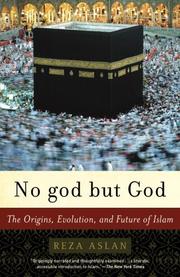
No god but God
A lively account of the origins and development of Islam, written for general readers. It suits you if you enjoy narrative and argument together. Keep in mind that Aslan makes a case about reform, so compare that view with other authors.
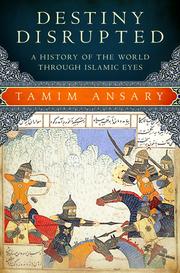
Destiny disrupted
Ansary retells world history from an Islamic vantage point in a warm, conversational voice. You see events that Western textbooks often treat briefly or from the other side. It suits readers who learn best through stories and want the wider historical picture.

The vision of Islam
Written by Sachiko Murata with William C. Chittick, this book explains practice, faith and spiritual excellence as parts of one whole. It suits students and serious readers who want to understand how Muslims have thought about their religion from within.

Misquoting Muhammad
Brown shows how Muslim scholars have interpreted scripture and the Prophet's words, and why hard passages stir debate. It suits you if you already know the basics and keep asking how a text becomes a ruling, a belief or a disagreement.

What Is Islam?
A long, ambitious study that questions narrow definitions of Islam. Ahmed draws on philosophy, Sufi thought, poetry and art to show variety and even contradiction within Muslim life. It suits advanced readers, graduate students and anyone ready for slow, challenging argument.
Questions readers ask
What is the best book about Islam for a complete beginner?
Malise Ruthven's Islam: A Very Short Introduction is a sensible first choice because it is brief and covers a wide range of topics. If you prefer a story, try Tamim Ansary's Destiny Disrupted. Then read the Qur'an in a clear English translation, so you meet the central text for yourself.
Can non-Muslims read the Qur'an?
Many non-Muslims read the Qur'an in translation to learn about Islam. Read with respect and an open mind, and use an edition with notes. Muslims may handle the Arabic text with particular care, including ritual cleanliness, so if someone gives you a copy, it is kind to ask how they would like it treated.
Where can I read about the life of Prophet Muhammad?
Martin Lings's Muhammad: His Life Based on the Earliest Sources is a detailed narrative that follows early Arabic accounts. It presents the life much as the tradition tells it. For critical historical questions, read an academic study alongside it and compare how each author handles the sources.
What is the difference between the Qur'an and hadith?
Muslims regard the Qur'an as the word of God revealed to Muhammad. Hadith are reports of what the Prophet said, did or approved. Hadith usually carry a chain of narrators, which scholars examine to judge reliability. Both shape Muslim belief and practice, but they are different kinds of text.
Which book on Islam is best for deeper study?
Try The Vision of Islam first if you want a structured account of belief and practice. Then move to Jonathan Brown's Misquoting Muhammad on interpretation. Shahab Ahmed's What Is Islam? is the most demanding choice here, and it is best read once you know the history and key terms.
Sources
- Islam. Encyclopaedia Britannica. Accessed 2026-11-28.
- Qur'an. Encyclopaedia Britannica. Accessed 2026-11-28.
- Surah. Encyclopaedia Britannica. Accessed 2026-11-28.
- The Qur'an (Oxford World's Classics). Oxford University Press. Accessed 2026-11-28.
- The Birth of Islam. The Metropolitan Museum of Art. Accessed 2026-11-28.
- Hadith. Encyclopaedia Britannica. Accessed 2026-11-28.
- Pillars of Islam. Encyclopaedia Britannica. Accessed 2026-11-28.
- Shi'i. Encyclopaedia Britannica. Accessed 2026-11-28.
- Sufism. Encyclopaedia Britannica. Accessed 2026-11-28.
- Muslim population change. Pew Research Center. Accessed 2026-11-28.