Finance and the economy
How do bonds work?
A bond is a loan you can trade. A government or company borrows money, usually pays set interest, and repays the face value on a maturity date. Until then, the bond can change hands at a market price. That price generally falls when interest rates rise and climbs when rates fall.
By BookPounce | Updated
What is a bond, in plain words?
A bond is a debt security. A government, company or public agency borrows money, and the person who holds the bond is the lender. In return, the issuer usually promises interest along the way and repayment at the end [1].
Three terms do most of the work. Par value, also called face value, is the amount repaid at the end. It is typically $1,000 for each bond in the US market [1]. The coupon is the yearly interest rate, quoted as a percentage of par. Maturity is the date when the issuer makes the last interest payment and returns the par value [1].
Say a $1,000 bond has a 4.5% coupon. It pays $45 a year, usually as two payments of $22.50 [1].
A bond differs from a share. A share makes you a part owner of a company. A bond makes you its creditor. If a company goes bankrupt, bondholders rank ahead of shareholders in claims on its assets, although that does not guarantee they get all their money back [9].
Bonds are often grouped by length. Short-term usually means one to three years, intermediate four to ten, and long-term more than ten [1].
How are new bonds sold?
An issuer first sets out what it wants to borrow and for how long. US Treasury securities show the process clearly because they are sold at public auctions with published rules.
The Treasury announces the amount, the dates and the terms. Investors then bid. A noncompetitive bidder agrees to accept whatever rate the auction produces. A competitive bidder names the rate or yield they will accept [4].
The Treasury fills the noncompetitive bids first. It then accepts competitive bids from the lowest rate upward until the whole offering is taken. Every successful bidder gets the same rate or yield as the highest one accepted [4]. On the issue date, the buyers pay and receive their securities [4].
Treasury notes run for 2, 3, 5, 7 or 10 years [6]. Treasury bonds run for 20 or 30 years. Both pay interest every six months at a rate fixed at auction [6][7].
After the first sale, a bond can be sold to someone else before it matures. The new holder collects the remaining payments. The price they pay is set by the market and can be above or below par [1].
Why do bond prices fall when interest rates rise?
Bond prices and interest rates generally move in opposite directions [1]. The reason is competition between old bonds and new ones.
Imagine you hold a $1,000 bond with a 6% coupon and ten years to run. A year later, similar new bonds pay 7%. A buyer would rather have $70 a year than your $60. To sell, you would likely need to accept less than $1,000 [2]. The lower price makes up for the smaller coupon.
The reverse also holds. If new rates drop below your coupon, your bond looks more attractive, and a buyer may pay more than face value [2].
Some bonds react more than others. Duration is a measure, stated in years, of how sensitive a price is to rate changes. As a rough rule, a bond with a duration of 10 would fall about 10% if rates rose by one percentage point, and rise about 10% if they fell by one point [2]. Longer maturities generally raise duration. Higher coupons generally lower it [2].
If you hold a bond to maturity and the issuer pays as promised, these swings along the way do not change the payments you receive [2].
What is the difference between a coupon and a yield?
The coupon is fixed by the bond's terms on a typical fixed-rate bond. The yield describes the return relative to a price, so it moves when the price moves.
The simplest version is current yield: the yearly coupon divided by the price [1]. Take a £100 bond that pays £5 a year. At £100, it yields 5%. If its price rises to £120, the same £5 works out to about 4.2% [8].
Current yield leaves something out. At maturity you get back par, not the price you paid. Yield to maturity estimates the overall return if you buy at the market price and hold to the end [1].
This explains the words premium and discount. A bond priced above par trades at a premium. One priced below par trades at a discount [1]. When the yield to maturity is higher than the coupon rate, the price is below par. When the yield is lower than the coupon rate, the price is above par. When the two match, the price equals par [5].
Yields matter beyond bond owners. Government bond yields act as a benchmark for other borrowing costs. When a central bank buys bonds, it pushes their prices up and long-term yields down [8].
What risks come with bonds?
A fixed payment schedule does not make a bond free of risk. FINRA, a US regulator of brokers, lists several kinds [3].
Credit risk, or default risk, is the chance that the issuer misses interest or fails to repay the principal. US Treasuries are generally considered free of default risk [3]. Rating agencies grade many other issuers. Bonds rated BBB or higher by S&P, or Baa or higher by Moody's, are called investment grade. Lower grades are called high-yield and carry more default risk [1].
Interest rate risk is the price effect described above. Inflation risk means your payments may buy less over time. A 5% coupon loses ground if prices rise 8% a year [3].
Call risk applies when the issuer has the right to repay early. This can happen when rates have fallen, much like a homeowner refinancing a mortgage. You then get your money back and may not find a similar return elsewhere [3].
Liquidity risk means you may struggle to find a buyer when you want to sell [3]. Bonds from other countries can add political risk and currency risk, since exchange rates can raise or shrink your return [3].
Where did government bonds come from?
Governments have borrowed for centuries, often to pay for war. The founding of the Bank of England is a well documented example.
In 1694, the English government needed money, largely for a war against France. Members of the public were invited to lend it £1.2 million. In return, the government would pay 8% interest, and the lenders became shareholders in a new company, the Bank of England [10].
The money was raised within 11 days from 1,268 people. The Bank received its Royal Charter on 27 July 1694 [10].
That arrangement was not the same as a modern bond that you can look up and trade on a screen. Still, it shows the basic bargain: savers provide money now, and a borrower promises payments later.
The link between central banks and government debt is still important. Today the Bank of England describes a bond as a kind of IOU that can be bought and sold in financial markets. It has bought large amounts of bonds to lower long-term interest rates, a policy called quantitative easing. Reducing those holdings again is called quantitative tightening [8].
Books to read
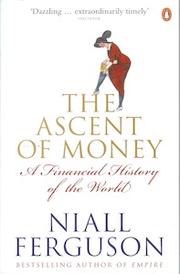
The ascent of money
A history of finance that places bonds beside banks, shares, insurance and property. You see why governments borrow and why bond markets came to carry political weight. It suits readers who learn best through stories and want the wider picture before studying any formulas.
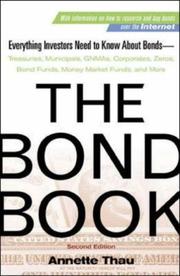
The Bond Book
A practical guide for individual readers that walks through how bonds are priced, what yield means and how the main types differ, including government, municipal and corporate debt. Choose it if you want patient explanations of the mechanics. Look for a recent edition, since market details change.
The Price of Time
A history and argument about interest itself, the price that sits underneath every bond. Chancellor looks at what happens when rates are held very low for a long time. It suits readers who know the basics and want a debate to think about, not a textbook.

Inside the yield book
A classic on bond mathematics, written with Martin L. Leibowitz. It shows how coupon, price, time and reinvested interest combine to shape a bond's return. It suits readers who are comfortable with numbers and want to understand yield far more precisely than a beginner guide allows.
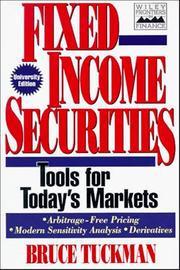
Fixed income securities
A textbook on how fixed income is valued and how rate risk is measured, including discount factors, yield curves and duration. It suits finance students and working professionals. Expect equations and steady effort, and pick up a later edition for coverage of current market practice.
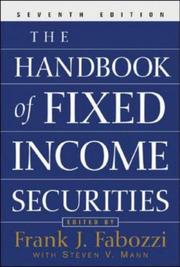
The Handbook of Fixed Income Securities
A large reference, edited by Fabozzi, with chapters on many kinds of debt and the methods used to analyse them. You do not need to read it from cover to cover. It suits students and practitioners who want one place to look up a specific topic.
Questions readers ask
Can you lose money on a bond?
Yes. If you sell before maturity after interest rates have risen, you may get less than you paid. If the issuer defaults, you may lose interest, principal or both. Inflation can also shrink what your payments buy, even when every payment arrives on time and in full.
What happens when a bond matures?
At maturity, the issuer makes the final interest payment and returns the par value, which is the face amount of the bond. The loan then ends. If you bought the bond for more or less than par, that difference affects your overall return, because repayment is based on par.
What is a callable bond?
A callable bond lets the issuer repay it before the maturity date, on terms set out when it is issued. Issuers may use this right when interest rates fall, so they can borrow again more cheaply. The holder gets repaid early and loses the later interest payments.
Is a higher bond yield always better?
No. A higher yield often reflects higher risk, such as a greater chance that the issuer will not pay. High-yield bonds, rated below investment grade, carry more default risk. Yield can also rise because the price has fallen, which may signal that buyers have become more worried.
What does a credit rating tell you about a bond?
A credit rating is an agency's opinion about how likely an issuer is to meet its payments. Higher grades point to lower expected default risk. A rating is not a guarantee, it can change over time, and it does not measure how much the price may move when interest rates change.
Sources
- Bonds. FINRA. Accessed 2026-11-29.
- Brush Up on Bonds: Interest Rate Changes and Duration. FINRA. Accessed 2026-11-29.
- Bonds: Risks. FINRA. Accessed 2026-11-29.
- How Auctions Work. TreasuryDirect, US Department of the Treasury. Accessed 2026-11-29.
- Understanding Pricing and Interest Rates. TreasuryDirect, US Department of the Treasury. Accessed 2026-11-29.
- Treasury Notes. TreasuryDirect, US Department of the Treasury. Accessed 2026-11-29.
- Treasury Bonds. TreasuryDirect, US Department of the Treasury. Accessed 2026-11-29.
- Quantitative easing. Bank of England. Accessed 2026-11-29.
- Investor Bulletin: What Are Corporate Bonds?. US Securities and Exchange Commission. Accessed 2026-11-29.
- Why was the Bank of England founded?. Bank of England Museum. Accessed 2026-11-29.