Medical conditions
Understanding Alzheimer's and dementia: the best books for families
Start with The 36-Hour Day by Nancy L. Mace and Peter V. Rabins for broad, practical guidance. Add Learning to Speak Alzheimer's for communication, Loving Someone Who Has Dementia for grief and stress, and Travelers to Unimaginable Lands to understand why caregiving feels so hard. Still Alice offers a fictional view from inside.
By BookPounce | Updated
What are dementia and Alzheimer's disease?
Dementia is a decline in thinking abilities that is serious enough to disrupt daily life. It can affect memory, language, problem solving and attention. It is not a normal part of aging [2].
Dementia is not one single disease. Alzheimer's disease is the most common form, and the World Health Organization (WHO) estimates that it accounts for 60 to 70% of cases. Other forms include vascular dementia, dementia with Lewy bodies and frontotemporal dementia. Mixed forms often occur, and the lines between types are not always clear [1].
Alzheimer's disease gradually affects thinking and memory, and in time makes everyday activities difficult. It progresses slowly, and symptoms can differ from person to person and from day to day [3].
Age is the strongest known risk factor [1]. Still, getting older does not mean you will get dementia. For your family, the useful first step is to separate the words. "Dementia" describes a set of changes. "Alzheimer's" names one cause of them. A clear diagnosis helps you choose which chapters, support groups and questions apply to your relative.
What changes might your family notice?
Early signs can be easy to explain away. The WHO lists forgetting recent events, misplacing things, getting lost while walking or driving, and losing track of time. Some people find it harder to follow a conversation, find a word, make a decision or finish a familiar task [1].
Memory is not always the first thing to change. Mood and behaviour can shift earlier. You might see anxiety, sadness, anger, personality changes or withdrawal from work and social life [1].
Later, a person may need more help with personal care. They may not recognise relatives or friends, and moving, eating and drinking can become harder. Some people show aggression or other distressing behaviour [1].
Not everyone has the same symptoms or the same pace of change [3]. Try not to read a list like this as a timetable. Instead, write down what you actually see, when it happens and how it affects daily life. Specific examples are useful at appointments. They also help relatives who visit less often understand what you are living with every day.
When should you see a doctor?
See a doctor if you are worried about your memory or think you may have dementia. If you are worried about someone else, you can encourage them to book an appointment and offer to go with them [4].
Memory problems do not always mean dementia. Depression, anxiety, an underactive thyroid, delirium caused by an infection and side effects of some medicines can also affect memory [4]. That is one reason not to guess at home.
A doctor may ask about symptoms and everyday tasks, examine the person, order blood or urine tests and give a short memory test. A specialist may then arrange more detailed tests or brain scans [4]. It helps to bring someone who knows the person well and can describe the changes [4].
Sudden confusion is different. Call your local emergency number if confusion comes on suddenly, starts after a head injury, or appears for the first time for no clear reason. Do the same if the confused person may harm themselves or others, or becomes unconscious [5]. This applies even when someone already has a dementia diagnosis and seems abruptly unlike their usual self.
How can you talk with someone who has dementia?
Small changes in how you speak can make a conversation calmer. The NHS suggests speaking clearly and slowly, using short sentences and giving the person time to respond. Offer simple choices instead of complicated questions [6].
Your body language matters too. Stay patient, keep your posture open and relaxed, and include the person in group conversations. Avoid talking down to them or making fun of what they say. If words are hard, rephrase your question or use photos and objects as prompts [6].
People living with dementia can also ask for what helps them. For example, they may want others to face them when speaking, turn off background noise, gently remind them of a name, or not point out repetition [6].
Relationships may change. A partner or adult child may take on a caring role, and irritability or forgotten names can hurt on both sides [6]. Books are helpful here because they show these moments in detail. As you read, pick one idea, try it for a few days and notice what suits your relative. What works for one family may not work for yours.
Who looks after the family caregiver?
Caring for someone with Alzheimer's can be rewarding, and it can also be stressful and overwhelming. Your own physical and mental health need attention too [7]. The NHS puts caregivers' needs on the same level as those of the person receiving care [8].
Unpaid care is a large part of dementia care worldwide. The WHO reports that informal carers, such as relatives and friends, provide an average of 5 hours of care and supervision a day. Women provide about 70% of care hours [1].
You do not have to do it all alone. Support can include help from relatives, day programmes, home care and respite care, which gives you a break [7]. Carer groups let you compare notes with people who understand. In the UK, anyone over 18 who provides care can ask about a free carer's assessment [8]. Other countries have their own services, so ask a doctor or local health team what exists near you.
A book cannot replace that support. It can help you name what you feel, prepare questions and start a family conversation about who will help, and when.
Which book should you read first?
Choose by the problem in front of you. You do not need to read all eight, and you do not need to read any of them from cover to cover.
If you want one broad reference, begin with The 36-Hour Day. Keep it nearby and look up topics as they arise. If conversations keep ending in frustration, try Learning to Speak Alzheimer's. If you have little time or energy, Creating Moments of Joy offers a gentler way in.
If you feel that you are losing someone who is still here, Pauline Boss speaks directly to that feeling. If you keep arguing, correcting or blaming yourself, Dasha Kiper's book explores why those reactions are so human.
Still Alice may suit a relative who prefers a story to a guide. It can be emotional, especially soon after a diagnosis, so choose your moment. For the wider picture, read Jason Karlawish on the history and social side of Alzheimer's, or Tia Powell on dementia, ethics and care.
Medical knowledge and local services change. Check the publication date, look for the newest edition and take health questions to a qualified professional.
Books to read

Learning to Speak Alzheimer's
Coste draws on personal and professional caregiving experience to focus on the abilities a person still has. You get practical ideas for communication, surroundings and daily routines. It suits families whose conversations often turn into corrections, arguments or hurt feelings.
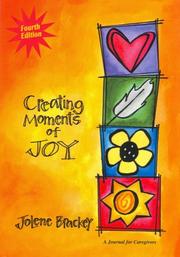
Creating Moments of Joy
Short, warm sections encourage you to value good moments, even when the person may not remember them later. It offers everyday examples for visits and care. It suits tired caregivers, grandchildren old enough to help, and care staff who prefer to read in small pieces.

Still Alice
This novel follows a university professor with early-onset Alzheimer's disease, largely through her own changing view of the world. It can help relatives imagine what the person may be facing. It is fiction, not a care guide, and some readers will find it upsetting.

Loving someone who has dementia
Boss applies the idea of ambiguous loss: grieving someone who is physically present but changing. The book looks at stress, guilt, family ties and resilience. It suits partners and adult children who need help with their own feelings as much as with daily tasks.

Travelers to Unimaginable Lands
Kiper, a clinical psychologist, uses caregiver stories and brain science to explore why it is so hard to stop reasoning, correcting and expecting the old responses. It suits readers who blame themselves for losing patience and want understanding more than a checklist.

Dementia Reimagined
Powell, a psychiatrist and bioethicist, combines history, medical ethics and family experience. The book asks what a good life with dementia, and good care near its end, might look like. It suits readers facing hard choices who want to think about dignity and comfort.

The Problem of Alzheimer's
Karlawish, a physician who works with people with dementia, explains how science, culture and policy shaped the way Alzheimer's is understood and cared for. It suits readers who want the bigger picture and are ready for more history than day-to-day advice.
Questions readers ask
What is the difference between dementia and Alzheimer's disease?
Dementia is a decline in thinking abilities serious enough to disrupt daily life. Alzheimer's disease is one cause of dementia, and the most common one. Other forms include vascular dementia, Lewy body dementia and frontotemporal dementia, and some people have more than one. A doctor can explain which type applies. [1] [2]
What is the best first book for a new dementia caregiver?
The 36-Hour Day is a sensible first choice because it is broad and practical. You can look up the subject you need instead of reading straight through. If it feels like too much right now, start with Creating Moments of Joy, which is organised in shorter, gentler sections.
Is there a novel that helps explain Alzheimer's to a family?
Still Alice by Lisa Genova is a novel about a university professor with early-onset Alzheimer's disease. It helps readers imagine the experience from the inside. Remember that it tells one fictional person's story. Early-onset Alzheimer's, which begins before age 65, is uncommon, and your relative's experience may differ. [3]
Is memory loss always a sign of dementia?
No. Depression, anxiety, delirium caused by an infection, an underactive thyroid and side effects of some medicines can also cause memory problems. If you are worried, see a doctor for a proper assessment. Get emergency help if confusion comes on suddenly, even if the person already has dementia. [4] [5]
Where can dementia caregivers find a break or support?
Ask a doctor, local health team or social services about respite care, day programmes, home care and carer groups. Relatives or friends may also be able to cover short breaks, even for an hour. In the UK, you can ask for a free carer's assessment if you are over 18. [7] [8]
Sources
- Dementia (fact sheet). World Health Organization. Accessed 2026-11-29.
- Dementia. MedlinePlus, National Library of Medicine. Accessed 2026-11-29.
- Alzheimer's Disease. MedlinePlus, National Library of Medicine. Accessed 2026-11-29.
- How to get a dementia diagnosis. NHS. Accessed 2026-11-29.
- Confusion. MedlinePlus Medical Encyclopedia. Accessed 2026-11-29.
- Dementia and relationships. NHS. Accessed 2026-11-29.
- Alzheimer's Caregivers. MedlinePlus, National Library of Medicine. Accessed 2026-11-29.
- Looking after someone with dementia. NHS. Accessed 2026-11-29.