Medical conditions
Understanding anxiety disorders: the best books to start with
Good starting books include Mind Over Mood, The Anxiety and Phobia Workbook, and Overcoming Anxiety. For constant worry, try The Worry Cure. For shyness and social fear, try Overcoming Social Anxiety and Shyness. Books can help you understand and manage anxiety, but they do not replace assessment by a doctor or mental health professional.
By BookPounce | Updated
What is an anxiety disorder?
Anxiety is a feeling of fear, dread and uneasiness. It can be a normal response to stress, and it may even help you focus before a test or a hard decision [3]. An anxiety disorder is different. The anxiety does not go away, shows up in many situations, and can get worse over time [2]. It can get in the way of work, school and relationships [2].
There are several types. Generalized anxiety disorder involves ongoing worry about everyday things such as health, money, work and family [3]. Panic disorder involves sudden, repeated panic attacks. Social anxiety disorder and other phobias involve intense fear of things or situations that pose little or no real danger [3].
You might notice thoughts that are hard to control, a racing heart, dizziness, shortness of breath or unexplained aches. You might also start avoiding ordinary activities [3]. The exact cause is not known. Genetics, brain chemistry, stress and your surroundings may all play a part [3].
You are far from alone. The World Health Organization (WHO) says anxiety disorders are the most common mental disorders in the world, affecting 470 million people in 2023 [1].
When should you see a doctor about anxiety?
See a doctor if worry or fear is affecting your daily life or causing you distress. The UK's National Health Service (NHS) advises seeing a GP if you think you might have generalised anxiety disorder, or if you have the diagnosis and your care is not helping [4]. It also advises seeing a GP if you have been having symptoms of panic disorder [6].
A health care provider will usually ask about your symptoms and medical history. They may also do a physical exam or lab tests, because other health problems can cause similar feelings [3]. Thyroid problems and heart rhythm problems are two examples linked with anxiety [3]. So please do not assume that a racing heart or chest pain is "just anxiety". If you are not sure whether something is an emergency, call your local emergency number.
If you are thinking about suicide or are in crisis, get help now. In the United States you can call or text 988, the Suicide and Crisis Lifeline [2]. In the UK, the NHS lists Samaritans on 116 123 [4]. Elsewhere, contact local emergency services.
It can help to write down what you feel, when it happens and what you have started to avoid. Take those notes to your appointment.
Can a self-help book really help with anxiety?
It can, within limits. The NHS includes books, online tools and courses among the self-help options for generalised anxiety disorder [5]. A Cochrane review looked at 101 studies of self-help for anxiety disorders, with 8,403 participants. Its authors concluded that self-help is probably better than no treatment [7].
The same review adds important cautions. Many people would likely do better with care from a skilled psychologist, and face-to-face cognitive behavioural therapy (CBT) is probably superior for those who can access it [7]. Most materials tested in the studies were not publicly available, so the results may not apply to the book you pick up in a shop [7]. The authors also found a lack of evidence on possible harms [7].
Think of a book as a companion. It can give you words for what you feel, show you how a therapy works, and help you prepare better questions. It can also sit alongside professional care. WHO says there are highly effective treatments for anxiety disorders, yet only about 1 in 4 people with these disorders receive treatment [1]. If a book leaves you feeling worse or stuck, stop and talk to a professional.
Which kind of anxiety book fits your situation?
Start with the problem that bothers you most. If you are not sure what that is, choose a broad book such as Overcoming Anxiety or The Anxiety and Phobia Workbook. A broad book helps you spot patterns before you narrow down.
If your mind jumps from one "what if" to the next, look at The Worry Cure. If sudden surges of fear are the main issue, Hope and Help for Your Nerves speaks directly to that frightened, physical side of anxiety. If you dread being watched or judged, choose Overcoming Social Anxiety and Shyness.
Next, think about format. A workbook asks you to write, rate your feelings and practise between readings. That suits you if you like structure. A narrative or science book asks less of you and can be easier on a tiring day.
Many practical titles draw on CBT. CBT is the usual talking therapy offered for generalised anxiety disorder in the NHS [5]. MedlinePlus also lists exposure therapy, a form of CBT, and acceptance and commitment therapy among talk therapy options [3]. If you already see a therapist, ask which book matches the work you are doing together.
How can you get the most from an anxiety book?
Go slowly. One chapter that you think about is worth more than a whole book rushed in a weekend. Keep a notebook beside you and note what sounds like you and what does not.
Pick one book at a time. Several books can give you several sets of terms and exercises, which may feel like more to worry about. Give your first choice a fair try, then decide whether its style suits you.
Check the edition before you buy. Workbooks are often revised, so a newer edition may differ from an older library copy. Your local library is a good place to browse before spending money.
Share what you are reading with someone you trust, or bring it to your doctor or therapist. They can help you judge whether an idea applies to you. This matters if you also have depression, another health condition or a history of trauma.
Notice how you are doing over time. Are you sleeping? Are you avoiding more places or fewer? Is worry taking up less of your day, or more? If daily life is still hard, that is not a personal failure. It is a good reason to ask for more support.
Books to read

Hope and help for your nerves
A short, reassuring classic by an Australian doctor. Weekes explains the frightening body sensations of anxiety in everyday words and encourages acceptance instead of fighting them. It suits you if panic or "nerves" feel overwhelming and you want a calm voice. Some of its language reflects its era.

Overcoming anxiety
A self-help guide using cognitive behavioural techniques. It explains how fear and anxiety develop, what keeps them going, and ways to work on those patterns step by step. It suits you if you want one broad, plainly organised starting point before moving to a book on a specific problem.
The anxiety and phobia workbook
A large, wide-ranging workbook covering panic, phobias and worry, with exercises on relaxation, thinking patterns, exposure and daily habits. It suits you if you want a reference to return to over many months. Its size can feel like a lot, so choose the chapters that match your needs.

The Worry Cure
A psychologist's close look at chronic worry: why it can feel useful, how it keeps itself going, and how to question it. It suits you if your mind runs through endless "what if" scenarios. Despite the title, read it as a set of tools, not a promise of a cure.
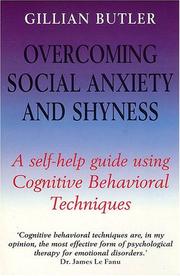
Overcoming social anxiety and shyness
A focused guide for people who fear being judged, embarrassed or noticed. It uses cognitive behavioural methods to explore self-consciousness, avoidance and the habits you may use to feel safe. It suits you if meetings, parties or speaking up cause dread, whether you call it shyness or social anxiety.

Anxious
A neuroscientist examines how the brain handles threat and how that relates to the conscious feelings of fear and anxiety. This is a science book, not a workbook. It suits you if you want to understand the research and its open questions, and you are comfortable with detailed explanations.
Questions readers ask
What is the best first book to read about anxiety?
Overcoming Anxiety by Helen Kennerley is a sensible broad start, and Mind Over Mood suits you if you like worksheets. There is no single best book for everyone. Choose one that matches your main difficulty and reading style, and speak to a doctor if anxiety is disrupting your daily life.
Can a book replace therapy for an anxiety disorder?
Do not count on it. A Cochrane review found self-help is probably better than no treatment, but face-to-face cognitive behavioural therapy is probably superior for people who can access it [7]. A book can support your care or help while you look for it. A professional can assess what you need.
Which book is helpful for panic attacks?
Hope and Help for Your Nerves by Claire Weekes speaks clearly about frightening physical sensations, and The Anxiety and Phobia Workbook covers panic in a more structured way. See a doctor if you have symptoms of panic disorder [6]. Other health problems can feel similar, so a medical check matters.
What is the difference between normal worry and an anxiety disorder?
Worry about health, money or family is part of life. In an anxiety disorder, the anxiety does not go away, is felt in many situations and can get worse over time [2]. It may interfere with work, school or relationships. Only a qualified professional can diagnose it.
Are workbooks better than other books about anxiety?
It depends on what you want. A workbook gives you exercises and a way to record your thoughts, which suits active practice. A narrative or science book helps you understand the experience with less effort on paper. Pick the format you are likely to keep reading and using.
Sources
- Anxiety disorders. World Health Organization. Accessed 2026-11-29.
- Anxiety Disorders. National Institute of Mental Health. Accessed 2026-11-29.
- Anxiety. MedlinePlus, National Library of Medicine. Accessed 2026-11-29.
- Generalised anxiety disorder (GAD). NHS. Accessed 2026-11-29.
- Treatment for generalised anxiety disorder (GAD). NHS. Accessed 2026-11-29.
- Panic disorder. NHS. Accessed 2026-11-29.
- Self-help for anxiety disorders. Cochrane. Accessed 2026-11-29.