Medical conditions
Understanding depression: which books should you read?
Start with The Noonday Demon by Andrew Solomon for the big picture, Reasons to Stay Alive by Matt Haig for a lived account, and Mind Over Mood by Dennis Greenberger and Christine Padesky for practical exercises. Books can help you understand depression, but they do not replace a doctor or therapist.
By BookPounce | Updated
What is depression, in plain words?
Depression is more than a few days of feeling sad or irritable. It is a serious mood disorder that can change how you think and feel. It can also make everyday things, such as sleeping, eating or working, much harder [4].
The two core signs are a low mood and a loss of interest or pleasure in activities. In a depressive episode, at least one of them is present for most of the day, nearly every day, for at least two weeks [2]. Other signs can include poor concentration, guilt or low self-worth, hopelessness, changes in sleep or appetite, low energy and thoughts of death [2].
Depression is common. The World Health Organization estimates that about 4% of people had it in 2023, including 5.2% of adults [2].
There is no single cause. Genetic, biological, environmental and psychological factors can all play a part [1]. Hard life events, such as bereavement, unemployment or trauma, raise the risk [2]. Sometimes no clear cause is found [4].
There are also different forms. Persistent depressive disorder lasts much longer, usually at least two years. Seasonal and pregnancy-related forms exist too [1].
When should you see a doctor about depression?
See a doctor if you have had symptoms of depression for most of the day, every day, for more than two weeks [3]. You do not need to have every symptom. Most people do not [3].
The signs are not only emotional. You might notice aches with no clear reason, slower movement or speech, or changes in weight and sleep. You might pull away from friends or drop hobbies you used to enjoy [3]. These changes are worth mentioning at your appointment.
A health care provider will ask about your symptoms and how long they have lasted. They may also do a physical exam or lab tests, because some medical conditions and medicines can cause similar symptoms [1]. Effective treatments exist for mild, moderate and severe depression, and a professional can talk through the options with you [2].
If you are thinking about suicide or hurting yourself, get help right away. In the United States, you can call or text 988 to reach the Suicide and Crisis Lifeline, and call 911 if a life is in danger [1]. Elsewhere, contact your local emergency number or a crisis line. Please do this before you pick up any book.
Can reading a book really help with depression?
A book can give you words for what is happening. It can show you that other people have felt this too. Some books also teach structured skills that therapists use.
There is research behind guided self-help, which means working through structured material with support from a trained person. In England, the National Institute for Health and Care Excellence advises considering it first for most people with less severe depression. The material can be printed or digital [5].
A 2010 review pooled 21 studies with 810 participants who had depression or anxiety. It found that guided self-help and face-to-face therapy can have comparable effects [6]. Read that carefully. The result is about guided programmes, across both conditions. It does not show that any book on a shop shelf, read alone, works as well as therapy.
Some libraries also help you choose. The Reading Agency runs Reading Well, a set of books recommended by health experts and people with lived experience. You can borrow them from local libraries, with or without a recommendation from a health professional [7].
Treat a book as a companion to care. If you feel worse while reading, stop and talk to someone.
Which kind of depression book should you choose first?
Choose by what you need today, and by how much energy you have. Concentration problems are a common part of depression [2], so a thick book may not be the right place to begin.
If reading feels heavy, try I Had a Black Dog. It uses pictures and very few words. Reasons to Stay Alive is also easy to dip into, with short sections you can read in any sitting.
If you want to feel less alone, pick a memoir. Haig writes in a direct, hopeful voice. William Styron's Darkness Visible is brief, literary and intense. Both discuss suicidal thoughts, so choose your moment with care.
If you want to understand the subject widely, The Noonday Demon is the deep option. It is long, and you can read it a chapter at a time.
If you want to practise skills, look at the workbooks and guides based on cognitive behavioural therapy (CBT) or mindfulness. CBT looks at how thoughts, feelings and actions connect, and it is one of the recognised talking therapies for depression [1]. A therapist can help you decide which approach fits.
How can these books help you support someone else?
If someone close to you may be depressed, a book can help you understand what they are living with. Memoirs are useful here. They describe the inside of the illness, which can be hard for a person to explain while they are in it.
I Had a Black Dog works well as a shared starting point. Its pictures can open a conversation without asking anyone to read hundreds of pages. Reasons to Stay Alive can do something similar for readers who prefer plain prose.
Reading is only one part of support. You can encourage the person to see a health care provider or mental health professional. You can also invite them out, help with transport to appointments and remind them that depression can lift with time and treatment [1].
Try not to hand over a book as if it were the answer. Ask first. You might say that you have been reading to understand them better, and let them decide whether they want to look.
If they talk about suicide or self-harm, take it seriously and get urgent help [4]. You do not have to manage that alone, and you also deserve support while you care for them.
Books to read

I Had a Black Dog
A short illustrated book that pictures depression as a black dog that follows its owner around. It suits you if concentration is low, or if you want to show a friend or relative how it feels. You can read it in one sitting and return to it often.

Reasons to stay alive
Haig writes about living through depression and anxiety, in short and open sections. You get a personal account with warmth and hope, not a clinical manual. It suits readers who want to feel less alone. It discusses suicidal thoughts, so pick a steady moment to read it.

Darkness Visible
A novelist's brief memoir of his own severe depression. Styron puts careful language to an experience many people find hard to describe. It suits readers who like literary nonfiction, and families trying to understand. The subject matter is intense and includes thoughts of suicide.

Overcoming depression
A self-help guide from a clinical psychologist that draws on cognitive behavioural ideas. It explains how low mood and harsh self-criticism can feed each other, and offers exercises for reflection. It suits readers who want explanation as well as practice, and who are often hard on themselves.

Feeling Good
A widely known introduction to cognitive therapy ideas, with exercises for spotting distorted patterns of thinking. It suits readers who like direct explanations and self-tests. Parts of it, especially anything about medicines, may be out of date, so check those points with a doctor.
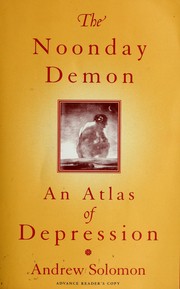
The Noonday Demon
A large study of depression that joins Solomon's own experience with interviews, science, history and social questions. It suits readers who want the widest view and do not mind a long, demanding book. Medical research has moved on since publication, so read treatment details with that in mind.
Questions readers ask
What is the best first book to read about depression?
For an easy start, try I Had a Black Dog by Matthew Johnstone or Reasons to Stay Alive by Matt Haig. Both are approachable when concentration is low. If you want practical exercises, Mind Over Mood is a structured choice. The best first book is one you can manage to open today.
Can a self-help book replace therapy for depression?
No, you should not treat it as a replacement. The research support is strongest for guided self-help, where a trained person supports you as you work through the material. A book can help you understand your experience and prepare questions, while a doctor or therapist assesses what you need.
Which depression books are based on cognitive behavioural therapy?
Mind Over Mood by Dennis Greenberger and Christine Padesky, Overcoming Depression by Paul Gilbert and Feeling Good by David Burns all draw on cognitive behavioural ideas. The Mindful Way Through Depression is related but centres on mindfulness. A therapist can help you choose between these approaches.
How do I know if it is depression or just sadness?
Sadness often eases after a short time. Depression tends to last and to interfere with daily life. If low mood or loss of interest is there most of the day, nearly every day, for two weeks or more, see a doctor. Only a qualified professional can make a diagnosis.
What should I read to understand a partner or friend with depression?
Try I Had a Black Dog for a quick, visual picture, then Reasons to Stay Alive or Darkness Visible for personal accounts. The Noonday Demon gives much wider background. Remember that experiences differ, so listen to the person and do not assume a book describes them exactly.
Sources
- Depression. National Institute of Mental Health (NIH). Accessed 2026-11-29.
- Depressive disorder (depression) fact sheet. World Health Organization. Accessed 2026-11-29.
- Symptoms: depression in adults. NHS. Accessed 2026-11-29.
- Depression. MedlinePlus, National Library of Medicine. Accessed 2026-11-29.
- Depression in adults (NG222): rationale and impact. National Institute for Health and Care Excellence. Accessed 2026-11-29.
- Is guided self-help as effective as face-to-face psychotherapy for depression and anxiety disorders? A systematic review and meta-analysis of comparative outcome studies. Psychological Medicine (Cuijpers et al., 2010). Accessed 2026-11-29.
- Reading Well. The Reading Agency. Accessed 2026-11-29.