Faith and traditions
What are the best books to understand Taoism?
Start with the Tao Te Ching, then read Zhuangzi in Burton Watson's translation. Add Eva Wong's Shambhala Guide to Taoism for a clear overview of the wider tradition. For history and religious practice, move on to Livia Kohn, Isabelle Robinet and Kristofer Schipper. This order gives you the classic voices first, then their context.
By BookPounce | Updated
What is Taoism, in plain words?
Taoism, also spelled Daoism, is a Chinese tradition of thought and religious practice built around the Tao, or Dao. The word means a path or way [1]. In the classic texts, it invites you to ask how things move on their own, and how a person might live in step with that movement.
Two more terms will help you from the first page. Ziran is often translated as naturalness or spontaneity. Wuwei is usually translated as nonaction. It does not mean doing nothing at all. It points to action that is free from self-serving desire [2].
You may see writers separate philosophical Daoism from religious Daoism. This split is a scholarly convention, and the Stanford Encyclopedia of Philosophy's entry on religious Daoism takes a broad view that includes both the ideas of the Daodejing and the tradition's rituals and practices [3].
That matters when you choose books. A shelf with only short classic texts shows you a great deal, but it leaves out priests, monastics, meditation and communal ritual. A good reading list gives you both the old words and the living tradition around them.
Should you read the Tao Te Ching first?
Yes, for most readers. The Tao Te Ching, also written Daodejing and also called the Laozi, is short enough to read in an afternoon and rich enough to reread for years. The received text has 81 chapters in two parts, and it is traditionally known as the book of five thousand characters [2].
Tradition credits it to Laozi. The historian Sima Qian, writing in the Han dynasty, describes him as a keeper of records at the Zhou court who was said to have met Confucius. Scholars question how reliable this account is, and they disagree about whether Laozi was a historical person [2].
The text also has a long life in manuscript. Silk copies found at Mawangdui in 1973 place the second part before the first. Bamboo slips found at Guodian in 1993, from a tomb dated to around 300 BCE, are the oldest known Laozi material [2].
Translations differ a lot because the original is so compact. Read a few chapters slowly. When a line puzzles you, compare it with a second version before you decide what it means. Stephen Mitchell's version, listed below, is an easy first pass.
Why is Zhuangzi the second book to read?
Zhuangzi gives you a very different voice. Where the Tao Te Ching is brief and poetic, the Zhuangzi is full of short parables and dialogues that are pithy, funny and open-ended. Its speakers include real and imagined people, animals and skilled workers such as butchers and musicians [4].
The book takes its name from Master Zhuang, a thinker of the late fourth century BCE. The version most people read today has 33 chapters. It was edited by Guo Xiang, who died in 312 CE and cut a larger collection of 52 chapters down to this size [4].
Those 33 chapters fall into three groups: the Inner Chapters (1 to 7), the Outer Chapters (8 to 22) and the Miscellaneous Chapters (23 to 33). The Inner Chapters are the ones linked to Zhuangzi's own period, though even his authorship of them is open to doubt [4].
For a first reading, begin with the seven Inner Chapters. Take one story at a time and resist the urge to turn it into a rule. Then dip into the later chapters as your interest grows. Burton Watson's translation gives you the whole work in one volume.
Which books explain Taoism as a living religion?
The classics are only part of the story. In the tradition's own account, the divine Lord Lao appeared to Zhang Daoling in 142 CE and made a covenant with him. Zhang became the first Celestial Master [3]. That line continues today as the Way of Correct Unity, or Zhengyi, one of the two main branches of Daoism, which handles most communal ritual [3].
Later movements added new scriptures and practices. Shangqing, or Highest Clarity, grew from revelations dated 364 to 370 and made meditation central. Lingbao, or Numinous Treasure, grew from revelations dated 397 to 402 and centres on communal ritual [3].
The other main branch today is Quanzhen, or Complete Reality. It is a celibate monastic order founded by Wang Zhe, who lived from 1113 to 1170, together with seven main disciples [3].
To follow these threads, choose a history or survey. Robinet traces how the religion grew. Kohn connects Daoism with wider Chinese culture. Schipper looks closely at ritual and the body. Eva Wong's novel translation, Seven Taoist Masters, lets you meet the Quanzhen teachers through story.
What reading order works best for you?
Your order depends on what drew you to Taoism. If you are curious and new, you can open with The Tao of Pooh for a light, friendly introduction. Treat it as one writer's reading of the ideas, and follow it quickly with the Tao Te Ching itself.
If you want a steady foundation, read the Tao Te Ching, then the Inner Chapters of Zhuangzi, then The Shambhala Guide to Taoism. You will have met the two classic voices before you read about schools and practices.
If you are studying religion or Chinese history, add Kohn after the classics. Then read Robinet for historical development and Schipper for ritual life. These ask more of you, so keep a short list of names and terms as you go.
Spelling can trip you up when you search a library. Taoism and Daoism are the same tradition. Tao Te Ching and Daodejing are the same book. Chuang Tzu and Zhuangzi are the same name. Try both forms.
Finally, leave time to reread. These texts are short in places, and a line that seems strange today may read differently after you have seen the history around it.
Books to read
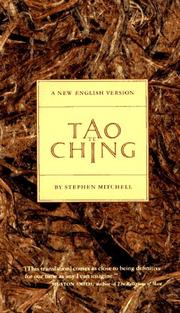
Tao Te Ching
Mitchell's version of the classic is smooth and direct, so you can read it without any background in Chinese thought. It suits first-time readers who want to feel the rhythm of the chapters. If a line matters to you, compare it with a more scholarly translation.
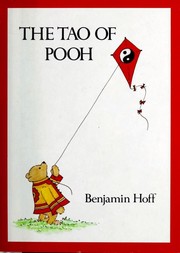
The Tao of Pooh
Hoff uses Winnie-the-Pooh and friends to introduce Taoist ideas such as simplicity and living without strain. It is short, playful and easy to share. It suits readers who feel shy of ancient texts. Read it as a gentle doorway, not as a full account of the tradition.
The Complete Work of CHuang Tzu
Watson translates the whole Zhuangzi, so you get the Inner, Outer and Miscellaneous Chapters in one place. The parables keep their humour and surprise. It suits readers who have finished the Tao Te Ching and want the second great classic voice at full length.

The Shambhala guide to Taoism
Wong gives you a map of the wider tradition, including its history, schools and practices. It is a helpful next step after the classics, especially if you wonder how Taoism is lived as well as read. It suits general readers who want breadth in clear language.

Seven Taoist masters
This translation of a traditional Chinese novel follows Wang Chongyang and the seven disciples associated with the Quanzhen school. You learn about discipline and inner cultivation through story instead of theory. It suits readers who enjoy narrative and want to see the tradition's ideals in characters.

Daoism and Chinese Culture
Kohn places Daoism within Chinese history and culture, showing how its ideas, communities and practices developed over time. It works well as a course-style introduction. It suits students and careful readers who want more structure than a popular guide offers, without starting on specialist research.
The Taoist Body
Schipper, a scholar of Daoism, looks at ritual, local religious life and ideas about the body. The book shifts your attention from famous texts to what practitioners do. It suits readers who want an in-depth view and are ready for unfamiliar terms and detail.
Questions readers ask
What is the best first book on Taoism?
The Tao Te Ching is the best first book for most readers. It is brief, central to the tradition and open to repeated reading. If you would like background before the classic itself, Eva Wong's Shambhala Guide to Taoism gives a clear overview of history, schools and practices.
Are Taoism and Daoism the same thing?
Yes. Taoism and Daoism are two spellings of the same Chinese tradition, drawn from different ways of writing Chinese sounds in Roman letters. The same applies to Tao and Dao, and to Tao Te Ching and Daodejing. Search both spellings when you look for books or articles.
Did Laozi really write the Tao Te Ching?
Tradition names Laozi as its author, and the Han historian Sima Qian gives an account of his life. Scholars question that account and disagree about whether Laozi was a historical person. You can read the book with respect for the traditional attribution while knowing that the history remains debated.
Is Taoism a philosophy or a religion?
It includes both. Many introductions separate the thought of the classic texts from religious Daoism, but scholars note that this division is a convention. The wider tradition includes ideas about the Way along with meditation, communal ritual, priesthood and monastic life. Choose books that show you more than one side.
What does wuwei mean in Taoism?
Wuwei is usually translated as nonaction, but it does not mean total inactivity. In readings of the Laozi, it refers to freedom from action driven by self-serving desire. Watch how the idea appears in different chapters, since a single English phrase cannot carry everything the term suggests.
Sources
- Daoism. Stanford Encyclopedia of Philosophy. Accessed 2026-11-29.
- Laozi. Stanford Encyclopedia of Philosophy. Accessed 2026-11-29.
- Religious Daoism. Stanford Encyclopedia of Philosophy. Accessed 2026-11-29.
- Zhuangzi. Stanford Encyclopedia of Philosophy. Accessed 2026-11-29.