Finance and the economy
How is money created?
Most money today is created when commercial banks make loans. The bank adds a deposit to the borrower's account, and that deposit is new money. Repaying the loan removes it again. Central banks steer the process mainly through interest rates, while cash makes up only a small share.
By BookPounce | Updated
What counts as money today?
When you picture money, you may think of notes and coins. In a modern economy, that is only a small part of it. A Bank of England explainer describes three types of money in the UK: bank deposits, central bank reserves, and notes and coins. It puts deposits at 79% of the total, reserves at 18%, and notes and coins at 3% [1].
Each type is a kind of IOU, a promise that people trust others to accept [3]. A banknote is a promise from the central bank. Your account balance is a promise from your bank to you. Reserves are electronic money that commercial banks hold in accounts at the central bank [1][3].
The differences matter. You can spend your deposit by card or transfer, and you can swap it for cash. You cannot hold reserves yourself. Banks use them to settle payments with one another [1].
So when people ask how money is created, the biggest part of the answer is about deposits. Who adds new numbers to bank accounts, and when? In most cases, the answer is a commercial bank making a loan [2].
How do banks create money when they lend?
Say your bank approves a loan of £100. It credits £100 to your account. It does not need to move that sum out of another customer's savings. The new deposit is new money [1]. Germany's central bank, the Bundesbank, explains that banks can create this kind of money through an accounting entry [4].
Two things appear at once. You have a deposit you can spend, and you have a debt you must repay. The bank has a loan it expects to collect, and a deposit it owes to you. You have more money, but you are not richer, because you owe the same amount [1].
The process also runs backwards. When you repay the loan, that money is deleted [1]. The total amount of deposits depends partly on how fast new lending happens compared with repayment.
This may differ from what you learned at school. A common story says banks only pass savers' money on to borrowers. Another says they multiply a fixed stock of central bank money into a larger amount of loans. A 2014 Bank of England article rejects both descriptions of how the modern system works [2].
What stops banks from creating unlimited money?
A bank can write a deposit into an account, but it cannot do that without limit. Several brakes work together.
First, a loan has to make sense for the bank. It needs to earn more than it costs to fund, after allowing for risk. Households and firms also have to want to borrow [4].
Second, deposits move. When you pay someone who uses another bank, your bank has to settle that payment in central bank reserves. A bank that lends too fast could struggle to pay [1][4].
Third, regulators require banks to hold capital, a cushion that can absorb losses when loans go bad [1]. Under the international Basel III framework, banks hold a capital conservation buffer of 2.5% of risk-weighted assets on top of the minimum. If a bank dips into it, limits apply to payouts such as dividends and bonuses. Authorities can also add a countercyclical buffer of up to 2.5% when credit growth looks risky [5].
What about reserve requirements, the rule that banks must keep a set fraction of deposits in reserve? They differ by country. In the United States, the Federal Reserve cut these ratios to zero in March 2020 [6]. Lending there still faces the other limits.
What does the central bank do?
The central bank does not usually decide each loan. It shapes the conditions in which banks lend and people borrow. In normal times, its main tool is the interest rate [2][4].
In the UK, the key rate is called Bank Rate. It influences what banks charge borrowers and pay savers. When it goes up, loans tend to cost more and saving looks more attractive, so spending and inflation tend to slow. Lower rates tend to work the other way [7]. In the United States, the Federal Reserve pays interest on reserve balances, one of the tools it uses to keep a key short-term rate in its target range [8].
Central banks can also create money more directly through quantitative easing, often shortened to QE. The central bank creates new reserves and uses them to purchase bonds. The Bank of England purchased £895 billion of bonds this way, mostly UK government debt, starting in March 2009. It began reducing those holdings in February 2022, a process called quantitative tightening [9].
QE does not turn every new pound of reserves into spending money. The Bundesbank notes that the direct effect on deposits comes mainly when the sellers of the bonds are not banks [4].
Who prints cash, and where did banknotes come from?
Printing is the part most people imagine, but it is a small piece of the picture. In the United States, the Federal Reserve does not print notes itself. It estimates demand and orders new currency from the Bureau of Engraving and Printing, part of the Treasury. The U.S. Mint makes the coins [10].
The history of banknotes shows how a private promise can become money. Before the Bank of England existed, London goldsmiths held deposits for safekeeping and increasingly lent them out. Their notes, payable on demand, became a handy way to make payments. The Bank of England note ultimately grew out of these goldsmiths' notes [11].
The Bank of England itself was founded in 1694 as a private bank to act as the government's banker, mainly to help fund a war with France. Its early notes were written by hand, often for the exact sum a customer had deposited [12].
The thread running from then to now is trust. A note or a bank balance works because other people accept it. That trust rests on the issuer, the law, and the rules that govern banks and central banks.
Books to read
Where does money come from
A step by step guide to the UK monetary and banking system, written with co-authors. It walks through how bank lending, reserves and payments fit together. It suits you if you want the mechanics in detail and are happy to follow balance sheets. The authors also care about reform, so notice where explanation turns into argument.
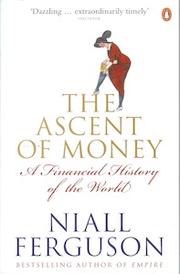
The ascent of money
A broad, story driven history of finance, from early credit to banks, bond markets and insurance. You get the people and events behind ideas that can feel abstract. It suits readers who learn best through history and want the wider setting before studying how modern banks create deposits.

Money: The Unauthorised Biography
Martin challenges the familiar tale that money grew out of barter, and presents it as a system of credit and transferable debt. The writing is lively and draws on many periods and places. It suits curious readers who want to rethink what money is before asking how it is made.
Money, whence it came, where it went
A witty history of money and banking by a well known economist, covering coinage, paper money, central banks and inflation. It was written in the 1970s, so it will not cover recent tools such as quantitative easing. It suits you if you enjoy sharp prose and long historical context.

The End of Alchemy
A former Governor of the Bank of England looks at money, banking and the weak points exposed by the 2008 financial crisis. He explains why turning short-term deposits into long-term loans carries risk, and proposes changes. It suits readers who know the basics and want an insider's view of the system.

Between debt and the devil
Turner, a former chair of the UK Financial Services Authority, asks what happens when banks create too much credit, especially against property. The book also debates whether governments should ever finance spending with new money. It suits readers ready for policy argument, including views that many economists dispute.
Lombard Street
A classic account of the London money market and the Bank of England's role when panic strikes. Its discussion of how a central bank should lend in a crisis still shapes debate. The Victorian style takes patience. It suits readers who want to meet an original source rather than a summary.

The new Lombard Street
Mehrling picks up Bagehot's questions for a world of modern money markets and shows how the Federal Reserve came to act as a dealer of last resort during the 2008 crisis. It suits students and finance readers who already understand reserves and want to see how the plumbing works.
Questions readers ask
Do banks lend out other people's savings?
Not in the simple way many people picture. When a bank makes a loan, it creates a new deposit in the borrower's account. Savings and other funding still matter, because the bank must manage payments leaving it, funding costs and risk. But it does not need to hand over a particular saver's money to make your loan.
Is creating money the same as printing money?
No. Printing produces banknotes, which are a small share of all money. Most money exists as electronic bank deposits created through lending. Central banks can also create electronic reserves, for example through quantitative easing. People often call that printing money, but no new paper notes are needed for it.
What happens to money when a loan is repaid?
The repayment cancels the debt and removes the matching deposit money from the economy. This is the reverse of what happened when the loan was made. Interest is treated differently, because it is income to the bank, which can pay it out again as wages, costs or returns to its owners.
Can a bank create money for itself without limit?
No. A bank needs creditworthy borrowers who want loans, and it has to expect a profit after risk. It must hold capital against possible losses and have enough reserves and funding to meet payments. Central bank interest rates also affect how attractive borrowing is. These limits work together rather than as one fixed cap.
Does creating more money always cause inflation?
Not automatically. Prices depend on how much people and firms spend compared with what the economy can produce. New lending can support spending, and stronger demand can push prices up. Money that stays as reserves between banks does not reach shops directly. Central banks adjust interest rates partly to keep inflation near their targets.
Sources
- How is money created?. Bank of England. Accessed 2026-11-29.
- Money creation in the modern economy (Quarterly Bulletin 2014 Q1). Bank of England. Accessed 2026-11-29.
- Money in the modern economy: an introduction. Bank of England. Accessed 2026-11-29.
- How money is created. Deutsche Bundesbank. Accessed 2026-11-29.
- The capital buffers in Basel III - Executive Summary. Bank for International Settlements. Accessed 2026-11-29.
- Reserve Requirements. Board of Governors of the Federal Reserve System. Accessed 2026-11-29.
- What are interest rates?. Bank of England. Accessed 2026-11-29.
- Interest on Reserve Balances. Board of Governors of the Federal Reserve System. Accessed 2026-11-29.
- Quantitative easing. Bank of England. Accessed 2026-11-29.
- Does the Federal Reserve print money?. Board of Governors of the Federal Reserve System. Accessed 2026-11-29.
- The Bank of England note - a short history. Bank of England. Accessed 2026-11-29.
- Our history. Bank of England. Accessed 2026-11-29.