Finance and the economy
What do central banks do?
A central bank is a public institution that manages a country's or region's money. It sets a key interest rate, usually to keep prices stable, lends to commercial banks under strain, and supports payment systems. Many also issue banknotes and supervise banks. Their exact goals and powers depend on the law that governs them.
By BookPounce | Updated
What is a central bank, and how is it different from your bank?
A central bank is a public institution that manages the currency of a country or a group of countries and controls the money supply [1]. The Federal Reserve in the United States, the Bank of England in the United Kingdom and the European Central Bank in the euro area are well known examples.
Your own bank is a commercial bank. It holds your deposits, makes loans and aims to earn a profit. A central bank does not serve individual customers in this way, and profit is not its purpose [1]. Instead, it acts as a bank for commercial banks [1].
Its everyday jobs often include these:
- setting interest rates to guide the economy
- lending to commercial banks, usually for short periods and against collateral
- issuing banknotes and coins
- supporting the systems that move payments
- managing foreign currency reserves
- explaining the state of the economy to the public
Many central banks also supervise commercial banks to limit excessive risk taking [1]. The mix differs from place to place, so it helps to check what a particular central bank is legally asked to do.
How do central banks set interest rates?
Think of the policy rate as the starting point for many other prices of money. In the United States, a committee called the Federal Open Market Committee, or FOMC, sets a target range for the federal funds rate [3]. This is a rate for overnight borrowing by banks [2]. The committee has eight regularly scheduled meetings each year [3].
In the United Kingdom, the key rate is called Bank Rate [7]. A committee at the Bank of England also meets eight times a year to decide on it [5].
A change in the policy rate spreads outward. It moves other short-term rates and wider financial conditions. Those changes then affect how much households and businesses spend, which influences activity, jobs and inflation [3].
In simple terms, a higher rate makes borrowing more costly and tends to cool spending. A lower rate makes borrowing cheaper and tends to support it. Central banks can also use open market operations, which means purchasing or selling securities, to steer short-term rates [12]. The effects take time and are never perfectly predictable, so policymakers have to judge where the economy is heading.
Why do central banks care so much about inflation?
Inflation is a general rise in prices over time. When it is high or jumpy, your wages and savings buy less than you expected, and planning gets harder. That is why many central banks treat price stability, meaning low and stable inflation, as a core goal [12].
Some have a second goal written into law. The Federal Reserve is asked to promote both maximum employment and stable prices [2]. People often call this the dual mandate. Maximum employment means the highest level of employment the economy can sustain [2].
The Federal Reserve judges that inflation of 2 percent over the longer run fits its mandate best. When people can expect low and stable inflation, they can make better decisions about saving and borrowing [4].
In the United Kingdom, the government sets the inflation target, which is 2 percent, and the Bank of England decides how to meet it [5]. The Bank has had independence over monetary policy since May 1997 [5]. This split shows a common idea: elected leaders can set the aim, while the central bank chooses the tools without day-to-day political direction.
What do central banks do in a financial crisis?
Banks can run short of cash even when many of their loans are sound. If depositors and lenders all want money at once, trouble can spread. A central bank can step in as the lender of last resort, which helps keep the financial system stable [1].
In the United States, one channel is called the discount window. Eligible banks can borrow from Federal Reserve Banks after signing agreements and pledging collateral. This helps them meet cash needs and keep lending during market stress [8].
The 2007 to 2009 crisis shows how far this can go. The FOMC cut its target rate from 4.5 percent at the end of 2007 to a range of 0 to 0.25 percent by the end of 2008. The Federal Reserve also created new lending programs and began large purchases of mortgage-backed securities and Treasury securities [11].
These actions are debated. Supporting the system can prevent deeper damage, but it also raises questions about who gets help and whether rescues encourage risk. Several of the books below take up those questions from different angles.
What is quantitative easing?
Sometimes the policy rate is already very low and a central bank still wants to support spending. One option is quantitative easing, often shortened to QE.
Under QE, the central bank purchases bonds in large amounts. This pushes up their prices and brings down longer-term interest rates [6]. Lower long-term rates can make borrowing cheaper for households and firms. The central bank pays for these bonds by creating reserves, which are electronic money that banks hold with it [6].
The Bank of England first used QE in March 2009. Its total purchases reached 895 billion pounds, mostly UK government bonds [6].
The process can also run in reverse. This is called quantitative tightening, or QT. A central bank can let bonds mature without replacing them, sell them, or do both. The reserves created earlier are then removed [6]. The Bank of England decided to begin this process in February 2022 [6].
QE is not the same as handing cash to households. It works mainly through financial markets and borrowing costs, which is one reason people disagree about who benefits most.
Where did central banks come from?
Central banks did not appear fully formed. Their jobs grew over centuries, often in response to failures and emergencies.
Sweden's Riksbank is described as the world's oldest central bank. The Swedish government created it in 1668 after an earlier bank, Stockholms Banco, collapsed [10]. The Bank of England followed in 1694 and has issued paper money since it was founded [10].
The United States took a longer route. A financial crisis in 1907 saw the financier J.P. Morgan organize private support for the banking system. Lawmakers later concluded that the country could not keep relying on wealthy individuals in emergencies. President Woodrow Wilson signed the Federal Reserve Act on December 23, 1913 [9].
Today the Bank of England's work reaches well beyond banknotes. It sets Bank Rate, checks that banks are safe and sound, and makes sure electronic payments can be made at any time [7].
When you read the history, notice how each new power answered a specific problem. That habit makes today's debates about central bank limits much easier to follow.
Books to read

Central Banking 101
A compact guide to the plumbing: how money is created, how central bank reserves work and how the Federal Reserve deals with financial markets. It suits you if headlines about balance sheets leave you puzzled and you want mechanics explained before opinions. The focus is mainly American.

21st Century Monetary Policy
A former Federal Reserve chair traces how the institution's thinking and tools changed from the high inflation of the twentieth century to the pandemic era. You get a clear account of rate setting, quantitative easing and communication. Best for readers who want an insider's explanation with some patience for detail.
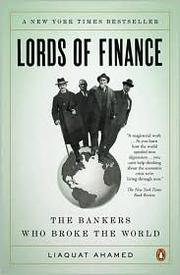
Lords of finance
A narrative history of four central bankers from the United States, Britain, France and Germany in the years leading into the Great Depression. It reads like a group biography, so you learn about gold, debt and policy through people and decisions. A good choice if you prefer stories to textbooks.

The End of Alchemy
A former Governor of the Bank of England asks why banking systems keep breaking and what might make them sturdier. The book examines money, banking and uncertainty, and proposes reforms to the lender of last resort role. It suits readers ready to think about the design of the whole system.

Unelected Power
Written by a former Deputy Governor of the Bank of England, this book asks how much authority unelected officials should hold in a democracy. It sets out principles for delegating power and limiting it. Choose it if law, politics and accountability interest you as much as economics does.
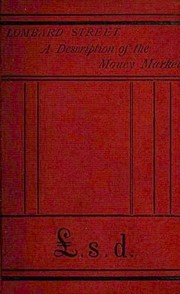
Lombard Street
The Victorian classic on London's money market and the Bank of England's duties in a panic. Its argument that a central bank should lend freely in a crisis, on good security and at a high rate, still shapes debate. The language is old, but the ideas remain direct.
Questions readers ask
What is the main job of a central bank?
For many central banks, the main job is price stability, which means keeping inflation low and steady. They mostly pursue it by setting a key interest rate. Some, such as the Federal Reserve, also have a legal goal for employment. Central banks usually help protect the financial system and payments too.
Can you open an account at a central bank?
Usually not in the way you would at a high street or retail bank. A central bank does not serve ordinary customers like a commercial bank does. It mainly acts as a bank for commercial banks, which in turn hold your deposits, process your payments and lend to households and businesses.
Do central banks print money?
Many central banks issue banknotes and coins, although the exact arrangements differ by country. Most discussion of money creation today is also about electronic reserves. Under quantitative easing, for example, a central bank creates reserves to pay for bonds. Those reserves can later be removed when the process is reversed.
Are central banks independent from the government?
It depends on the country and the law. Many have freedom to choose how to run monetary policy, while still answering to lawmakers or government. In the United Kingdom, for instance, the government sets the 2 percent inflation target and the Bank of England has decided how to meet it since 1997.
Why do higher interest rates affect inflation?
A higher policy rate tends to raise other borrowing costs and can make saving more attractive. Households and businesses may then spend less. With weaker demand, pressure on prices can ease. The process takes time, and other forces such as energy costs or supply problems also affect inflation.
Sources
- What is a central bank?. European Central Bank. Accessed 2026-11-29.
- The Fed Explained: Monetary Policy. Board of Governors of the Federal Reserve System. Accessed 2026-11-29.
- Economy at a Glance: Policy Rate. Board of Governors of the Federal Reserve System. Accessed 2026-11-29.
- Why does the Federal Reserve aim for inflation of 2 percent over the longer run?. Board of Governors of the Federal Reserve System. Accessed 2026-11-29.
- How is the Bank of England independent of the Government?. Bank of England. Accessed 2026-11-29.
- Quantitative easing. Bank of England. Accessed 2026-11-29.
- What does the Bank of England do?. Bank of England. Accessed 2026-11-29.
- The Discount Window. Board of Governors of the Federal Reserve System. Accessed 2026-11-29.
- Federal Reserve Act Signed into Law. Federal Reserve History. Accessed 2026-11-29.
- The world's first central bank and the invention of banknotes. Bank of England Museum. Accessed 2026-11-29.
- The Great Recession and Its Aftermath. Federal Reserve History. Accessed 2026-11-29.
- Monetary Policy and Central Banking. International Monetary Fund. Accessed 2026-11-29.