Medical conditions
Understanding migraine: which books should you read?
For a practical start, read Managing Your Migraine by Katy Munro or The Migraine Brain by Carolyn Bernstein. For depth, try Oliver Sacks's Migraine. For lived experience and social history, choose Andrew Levy, Joanna Kempner or Katherine Foxhall. Use books to prepare better questions, and let a doctor guide your diagnosis and care.
By BookPounce | Updated
What is migraine, in plain words?
Migraine is a condition that causes repeated attacks, often over many years. It is much more than an ordinary headache. The World Health Organization (WHO) says an attack usually lasts 4 to 72 hours and may bring nausea, vomiting and sensitivity to light and sound [1].
The pain is often moderate or severe. It may throb, sit on one side of the head and get worse when you move around [1]. Not everyone has the same pattern.
The exact cause is still not fully understood. MedlinePlus, a service of the US National Library of Medicine, describes abnormal brain activity along nerve pathways, with chemical changes that affect blood flow in and around the brain [3]. Migraine tends to run in families and is more common in women [3].
It often begins at puberty and mostly affects people aged 35 to 45 [1]. Children can have it too. Their attacks are usually shorter, and stomach symptoms can stand out more [1].
This matters when you pick a book. A good one explains that migraine is a real neurological condition, and that two people with it can have very different days.
What happens during a migraine attack?
An attack can unfold in stages, though you may not notice all of them. Early signs can appear before any pain. The NHS lists tiredness, yawning, food cravings, thirst, mood changes, a stiff neck and needing to pee more often [2].
Some people then have an aura. This is a set of temporary nervous system symptoms. It often affects sight, with blind spots, flashing lights or zigzag lines. It can also cause numbness, tingling, dizziness or trouble finding words [3]. Many people have migraine without any aura, and an aura is not always followed by a headache [3].
The headache stage is the part most people know. You may want a dark, quiet room. Afterwards, some people feel foggy, sleepy or sore in the neck, which is sometimes called a migraine hangover [3].
Triggers differ from person to person. Common examples include stress, poor sleep, skipped meals, alcohol, strong smells, bright light and hormonal changes [3]. A headache diary can help you and your doctor spot patterns [2][3]. As you read, treat any list of triggers as a set of possibilities to check, not a list of rules that applies to everyone.
How do doctors diagnose and manage migraine?
No single test confirms migraine. A doctor usually works from your symptoms, your family history and a physical and neurological exam. Scans or other tests may be used when symptoms are worrying or another cause needs to be ruled out [3].
The NHS says migraine cannot currently be cured, but it can be managed [4]. Doctors often think in two parts. One is relief during an attack, which may involve painkillers, medicines called triptans or gepants, and medicines for sickness [4]. The other is prevention for people whose attacks are frequent or disruptive. Options a doctor may consider include certain medicines, acupuncture, relaxation methods and cognitive behavioural therapy [4].
One problem deserves special attention. Using headache medicine too often, over a long period, can itself lead to more headaches. This is called medication-overuse headache [1]. It is a good topic to raise with a doctor or pharmacist.
Books differ in how current they are. Several titles below appeared before some newer medicines, such as gepants, became part of care. Read older books for understanding and experience, and check treatment details with a clinician. If standard options are not helping, a GP may refer you to a specialist [4].
When should you see a doctor about migraine?
The NHS advises seeing a GP if your attacks are severe, getting worse or lasting longer than usual. The same applies if they happen more than once a week, are hard to control, or regularly come before or during your period [2].
Some situations need urgent advice. The NHS lists an attack lasting more than 72 hours, an aura lasting more than an hour, and migraine symptoms during pregnancy or soon after giving birth [2]. In the UK, that means an urgent GP appointment or NHS 111.
Some symptoms are an emergency. Call your local emergency number (999 in the UK) for a sudden, extremely painful headache, trouble speaking or remembering, vision loss or double vision, confusion or drowsiness, a seizure, or weakness on one side of the face or body [2]. A very high temperature with signs of meningitis, or a headache with a recent head injury, also needs emergency care [2]. Do not drive yourself to hospital [2].
MedlinePlus also suggests contacting a provider if your headache pattern changes, your usual care stops working, you have side effects, or your headaches are worse when you lie down [3]. No book can check these things for you.
Which migraine book should you read first?
Start with the question you most want answered.
If you want a clear, practical overview, try Managing Your Migraine. Its author, Dr Katy Munro, is a headache specialist GP, and the book covers phases, triggers, sleep, food, attack plans, prevention, children and mental health [8]. The Migraine Brain is another reader-friendly choice that presents migraine as a serious condition that can be managed.
If you are interested in a particular programme, you may come across Heal Your Headache. It sets out a three-step approach built around painkiller overuse, diet triggers and preventive medicine. It also argues that nearly all headaches are forms of migraine [7]. That is the author's view, so discuss it with a doctor before changing anything. The Keeler Migraine Method also focuses on finding your own triggers and building an individual plan.
If you want to feel understood, A Brain Wider Than the Sky offers a personal account. If you wonder why people with migraine are sometimes dismissed, Not Tonight examines gender and stigma. Family members and carers may find these two especially helpful, because they show what a symptom list leaves out.
What can history and memoir teach you about migraine?
People have described migraine for a very long time. A scholarly review traces descriptions of its symptoms back to ancient Babylonia. It also notes that the physician Galen used the term hemicrania, from which later words for migraine developed [5]. The root idea is pain in half of the head.
Katherine Foxhall's Migraine: A History follows how people understood and handled the condition across many centuries. It helps you see that today's explanations are part of a long, changing story.
Oliver Sacks brought a doctor's curiosity to the subject. His book Migraine, first published in 1970, was partly inspired by his work in a migraine clinic. It looks closely at the many forms of attacks, especially the visual disturbances of aura [6]. It is rich in detail and rewards slow reading, though it is not a current guide to care.
These books will not tell you what to do during your next attack. They can give you language for what you feel, and a sense that many others have tried to describe it before you. Pair one of them with a recent practical guide for a balanced picture.
Books to read

Managing Your Migraine
A compact, practical guide from a headache specialist GP. You get plain explanations of phases and triggers, plus chapters on sleep, food, attack planning, prevention, children and mental health. It suits newly diagnosed readers and anyone who wants better questions for their next appointment.
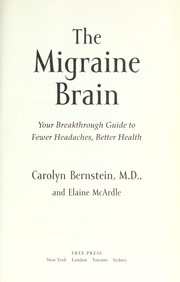
The migraine brain
A reader-friendly book that treats migraine as a serious brain-based condition, not a character flaw or a simple headache. It suits people who want to understand their own pattern. Check any treatment details with a clinician, since care has moved on since publication.
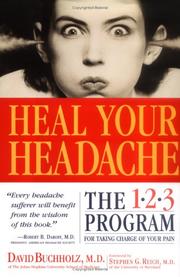
Heal Your Headache
A neurologist's three-step programme centred on painkiller overuse, diet triggers and preventive medicine. It is direct and easy to follow. Its view that nearly all headaches are migraine is the author's own argument, so read it critically and talk to a doctor before acting on it.

A brain wider than the sky
A memoir that blends the author's life with migraine and research into well-known sufferers from the past. It suits you if you want company more than instructions. Partners, relatives and friends may also gain a clearer sense of what living with attacks can feel like.
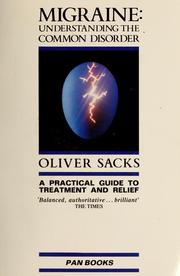
Migraine
A detailed, humane study by a neurologist who drew on clinic work. You will meet many forms of migraine, with close attention to aura and altered perception. It suits patient, curious readers. Read it for insight into the experience, not for up-to-date care.

Not Tonight
A sociologist asks why migraine is still often dismissed, even as science describes it as a brain disorder. The book examines gender, doctors, advocates and drug companies. It suits readers interested in stigma, health policy or why their symptoms may not have been taken seriously.
Questions readers ask
What is the best migraine book for a beginner?
Managing Your Migraine by Katy Munro is a sensible first choice. It is practical, written by a headache specialist GP, and covers phases, triggers, daily habits, attack planning and prevention. The Migraine Brain by Carolyn Bernstein is another approachable option. Whichever you pick, check treatment details with your own doctor.
Is migraine just a bad headache?
No. Migraine is a recurring neurological condition. Headache is often a major part, but attacks can also bring nausea, vomiting, sensitivity to light and sound, tiredness and sometimes visual or sensory changes called aura. Symptoms vary between people, so a medical assessment is the best way to find out what you have.
Can a book help me find my migraine triggers?
A book can show you what to watch for, such as sleep, meals, stress, alcohol, light or hormonal changes. It cannot tell you which ones apply to you. A headache diary can help you and your doctor look for patterns over time without assuming every common trigger affects you.
Are older migraine books still worth reading?
Yes, for experience, history and understanding. Oliver Sacks's book, for example, still offers close descriptions of aura and the many forms attacks can take. Older books may miss newer medicines and current guidance, though. Use them alongside a recent source such as the NHS or MedlinePlus, and ask a clinician about care.
Which book helps family members understand migraine?
A Brain Wider Than the Sky by Andrew Levy is a good place to start because it is a personal account of living with migraine. Not Tonight by Joanna Kempner suits relatives who want to understand stigma and disbelief. A short practical guide can then explain symptoms and warning signs.
Sources
- Migraine and other headache disorders. World Health Organization. Accessed 2026-11-29.
- Migraine. NHS. Accessed 2026-11-29.
- Migraine. MedlinePlus, US National Library of Medicine. Accessed 2026-11-29.
- Migraine: treatment. NHS. Accessed 2026-11-29.
- History of migraine (Handbook of Clinical Neurology). PubMed. Accessed 2026-11-29.
- Migraine, by Oliver Sacks. Oliver Sacks official website. Accessed 2026-11-29.
- Heal Your Headache. Hachette Book Group. Accessed 2026-11-29.
- Managing Your Migraine. Penguin Books. Accessed 2026-11-29.