Company stories
How did Amazon become so big?
Amazon started by selling books online, then kept widening what it sold. It put long-term growth first, opened its store to independent sellers, made fast delivery a membership with Prime, and rented its computing power through Amazon Web Services. Each move supported the others. By 2025, yearly net sales reached $716.9 billion. [9]
By BookPounce | Updated
How did Amazon start?
Jeff Bezos founded the company on July 5, 1994, under the name Cadabra, a play on "abracadabra". He later renamed it Amazon. It began as an online bookstore run from his garage in Bellevue, Washington. [11] The website opened for business in July 1995, and the company sold shares to the public for the first time in May 1997. [2]
Books were a starting point, and growth came fast. Sales rose from $15.7 million in 1996 to $147.8 million in 1997. Customer accounts grew from 180,000 to about 1.5 million over the same year. The staff went from 158 people to 614. [1]
Amazon also built up the physical side of the business early. Its distribution center space grew from 50,000 to 285,000 square feet during 1997. [1] That detail matters. You may think of Amazon as a website, but warehouses were part of the story from the first years. A web page can take an order. Someone still has to find the item, pack it and send it to your door.
Why did Amazon put long-term growth ahead of quick profit?
In his 1997 letter to shareholders, Bezos set out the approach plainly. He said the company's success should be measured by the value it created for shareholders over the long term. He also promised a relentless focus on customers. [1]
He warned investors that Amazon might make choices differently from other companies. If it had to pick between better looking accounts and more future cash, he wrote, "we'll take the cash flows." [1] In simple words, the company cared more about the money the business could produce over many years than about how one year's report looked.
Profit took time. Amazon's first full year of profit was 2003, when it earned $35 million on sales of $5.26 billion. [10] That was about six years after it first sold shares to the public. [2][10]
The lesson is not that losses are good. It is that Amazon told investors early what it was trying to do. It then spent heavily on customers, systems and delivery while the business was still young. Patience was part of the plan, and it was stated in writing.
How did outside sellers help Amazon grow?
In 2000, Amazon let independent sellers offer their products in its store, next to the items Amazon sold itself. [5] This was called Marketplace. Shoppers got more choice, and Amazon did not need to own every item on its shelves. It earned money through fees and commissions on these sales. [2]
It did not work on the first try. Bezos later wrote that two earlier efforts, Auctions and zShops, had missed before Marketplace arrived. [6]
In 2006, Amazon added Fulfillment by Amazon. [5] Sellers could use Amazon's fulfillment services to handle their orders. [2] Their goods could then qualify for Prime delivery, which made them more attractive to members. Bezos described this as a flywheel: a loop where each part helps push the next one faster. [6] More sellers bring more selection. More selection makes Prime more useful. More members give sellers a bigger audience.
The effect became very large. Amazon says independent sellers now account for more than 60% of sales in its store. [5] Many of the things you buy there come from other businesses.
Why did Amazon Prime matter so much?
Amazon announced Prime in February 2005. For $79 a year, members got unlimited two-day shipping with no minimum order. One-day shipping cost $3.99 per item. Members could also share the benefit with up to four family members in their household. [3]
The idea changed the small decision you make before each order. Without a membership, you might wait until your basket was large enough to justify delivery. With one, you have already paid, so ordering a single item feels easy. It also gives you a reason to check Amazon first.
Prime later grew beyond shipping. By his 2015 letter, Bezos described it as a mix of physical and digital benefits, and reported that membership had grown 51% in the previous year. [6]
Amazon was also building its own devices. It introduced the Kindle e-reader in November 2007 at $399, with wireless book downloads and no monthly wireless bill. [7] In 2017, it agreed to buy Whole Foods Market in a deal valued at about $13.7 billion, including debt. [8] That gave the online company a large step into physical grocery stores.
What is Amazon Web Services, and why is it so important?
Amazon Web Services, or AWS, rents computing power and storage to other organisations. Amazon's account is that its own struggles with costly, hard to manage technology systems helped lead to the idea. [4]
Its storage service, S3, arrived in 2006. A computing service called EC2 followed a few months later. [4] Instead of buying and running their own servers, customers could rent what they needed over the internet. A small team could start building without first setting up a data center.
This was a very different business from selling books. It now carries great weight in Amazon's results. In 2025, AWS had $128.7 billion in sales and $45.6 billion in operating income. Amazon as a whole had $716.9 billion in sales and $80.0 billion in operating income. [9]
Put simply, AWS brought in about 18% of sales but about 57% of operating income that year. [9] If you only picture parcels when you think of Amazon, you miss a large part of how the company makes money.
What can you learn from Amazon's growth?
First, the parts connect. Marketplace widened choice, Prime gave shoppers a reason to return, and Fulfillment by Amazon tied sellers to Prime. [6] AWS added a second large line of business. In his 2015 letter, Bezos named AWS, Marketplace and Prime as bold bets that had worked. [6]
Second, not every bet paid off. Auctions and zShops missed. Bezos wrote that "failure and invention are inseparable twins." [6] His point was that real experiments can fail, and a few large wins can pay for many misses.
Third, size came in steps over decades. A bookstore opened in 1995. [2] Outside sellers arrived in 2000, Prime in 2005 and S3 in 2006. [5][3][4] No single launch explains the whole company.
Be careful when you borrow these lessons. Company letters tell the story from the inside, and success can look neater afterwards than it felt at the time. To get a fuller view, read an insider account beside a reporter's account. The books below let you do that, including one that looks at the costs felt by workers and towns.
Books to read
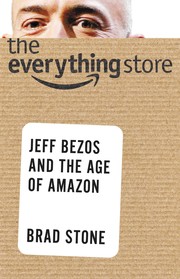
The Everything Store
Start here if you want one readable story of how Amazon grew from an online bookseller into a much wider business. Stone, a journalist, follows Bezos and the people around him. It suits readers who like company history told through decisions, pressure and personalities.
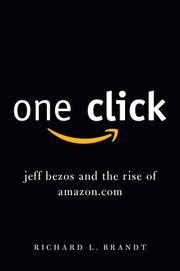
One click
A compact look at Jeff Bezos and the rise of Amazon. It suits you if you want the early story without committing to a long book. Because it appeared in 2011, read it for the foundations and use newer titles for what came later.

The Amazon way
Rossman, a former Amazon executive, explains the company through its leadership principles. You get a view of the habits and expectations behind the work. It suits managers and team leads who want ideas to test, while remembering that this is an insider's reading of the culture.
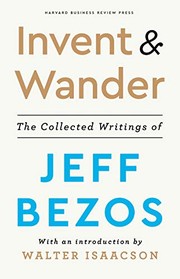
Invent and Wander
This collection brings together Bezos's own writing, including shareholder letters, with an introduction by Walter Isaacson. You can follow how he explained long-term thinking, customers and risk in his own words. It suits readers who want primary material and can weigh a founder's point of view.

Amazon Unbound
Stone's follow-up to The Everything Store looks at the later, much larger Amazon and at Bezos's widening interests. Read it after the first book. It suits you if you want to understand what changed as the company became a global power with many different businesses.
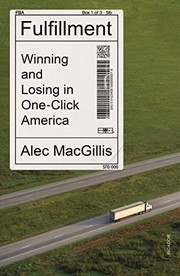
Fulfillment
MacGillis looks at America in the shadow of Amazon, focusing on places and people affected by the company's rise. It is less a business manual than a work of social reporting. Choose it to balance the success story with questions about work, towns and inequality.
Questions readers ask
What was Amazon's first business?
Amazon began as an online bookstore. Jeff Bezos founded the company in 1994, first under the name Cadabra, and ran it from his garage in Bellevue, Washington. [11] The website opened in July 1995. [2] Over time, the company added many more products, outside sellers, devices, memberships and cloud computing services.
When did Amazon first make a yearly profit?
Amazon's first full year of profit was 2003. It earned $35 million on sales of $5.26 billion. [10] This came years after its first public share sale in May 1997. [2] In his 1997 shareholder letter, Bezos had already told investors that the company would put long-term value first. [1]
Does Amazon make most of its profit from online shopping?
In 2025, Amazon Web Services, its cloud computing business, produced $45.6 billion of the company's $80.0 billion in operating income. That is more than half, although AWS had only $128.7 billion of $716.9 billion in net sales. [9] Operating income is not the same as final net profit, so compare the figures with care.
What is the Amazon flywheel?
A flywheel is a loop in which each part helps the next. At Amazon, outside sellers add choice. When they use Fulfillment by Amazon, their stock can qualify for Prime. That makes Prime more useful to members and helps sellers reach buyers. Bezos used this idea in his 2015 shareholder letter. [6]
Which book about Amazon should I read first?
Start with The Everything Store by Brad Stone if you want the company's story. Pick Working Backwards by Colin Bryar and Bill Carr if you want to understand working methods. Read Fulfillment by Alec MacGillis if you care about how Amazon's rise has affected people and places in America.
Sources
- Amazon's original 1997 letter to shareholders. Amazon. Accessed 2026-11-29.
- Amazon.com, Inc. Form 10-K for fiscal year 2007. U.S. Securities and Exchange Commission. Accessed 2026-11-29.
- Amazon.com announces record free cash flow and introduces Amazon Prime (February 2005). Amazon Press Center. Accessed 2026-11-29.
- Our origins. Amazon Web Services. Accessed 2026-11-29.
- Celebrating 25 years of Amazon's partnership with independent sellers. Amazon. Accessed 2026-11-29.
- 2015 letter to shareholders (Exhibit 99.1). U.S. Securities and Exchange Commission. Accessed 2026-11-29.
- Introducing Amazon Kindle. Amazon Press Center. Accessed 2026-11-29.
- Amazon to acquire Whole Foods Market. Amazon Press Center. Accessed 2026-11-29.
- Amazon.com announces fourth quarter results (2025). Amazon Investor Relations. Accessed 2026-11-29.
- Amazon profits climb, forecast raised. The Register. Accessed 2026-11-29.
- Amazon is founded by Jeff Bezos. HISTORY. Accessed 2026-11-29.