Company stories
How did Google become so successful?
Google became successful by building a search engine that used links between web pages to rank results, then earning money from advertising. It added huge low-cost computing systems, products such as Gmail and Android, and acquisitions such as YouTube. Paid default placements also mattered, and a US court later found Google broke antitrust law.
By BookPounce | Updated
How did Google start?
Google began at Stanford University. By the company's own account, Larry Page and Sergey Brin met there in 1995, when Brin was assigned to show Page around. They soon built a search engine from their dorm rooms that used links to judge how important pages were. They called it Backrub, and later renamed it Google. [1]
In August 1998, Sun co-founder Andy Bechtolsheim gave them $100,000, and Google Inc. was formed. The small team then moved from the dorms into a garage in Menlo Park, California. It belonged to Susan Wojcicki, who became employee number 16 and later led YouTube. [1]
The company stated a clear mission: "to organize the world's information and make it universally accessible and useful." [1] That sentence helps explain what came next. Search was the first product, but the goal was always wider than a single search box.
The garage is the famous part of the story. The more useful lesson is what the founders carried into it: a research idea they had already built and tested at a university, aimed at a problem that grew as the web grew.
Why was Google's search better?
The web was growing fast, and finding a good page was hard. In their 1998 research paper, Brin and Page described a prototype that made heavy use of the structure found in hypertext, especially links. [2] Their ranking method became known as PageRank.
The simple idea works like this. A link from one page to another is a kind of recommendation. A page that many pages point to may deserve attention, and a recommendation from an important page can count for more. So the engine did not rely only on the words on a page. It also looked at how the rest of the web treated that page.
The paper was also about scale. The prototype held the text and links of at least 24 million pages, and the authors set out to crawl and index the web efficiently. [2]
Google kept working on the machinery underneath. In 2003, its engineers described the Google File System, built to run on inexpensive, off-the-shelf computers and to keep working when parts failed. [5] You can think of this as a second advantage. Good ranking brought better answers, and cheap, sturdy infrastructure helped Google deliver them as demand rose.
How did Google start making money?
Great search does not pay the bills by itself. Google first earned revenue from advertising in 2000, and launched cost-per-click pricing in 2002. [3] With cost-per-click, an advertiser pays when someone clicks the ad, not only when it appears.
Ads could be matched to what you had just searched for. That made them useful to businesses that wanted to reach people at the moment of interest. Google then carried the model beyond its own pages. Its AdSense program placed advertisers' ads on other websites and shared most of the resulting fees with those sites. [3]
The growth was steep. Net revenues rose from about $86 million in 2001 to $348 million in 2002 and $962 million in 2003. Google was profitable in all three years. About 95% of 2003 net revenues came from advertisers. [3] Full-time staff grew from 284 at the end of 2001 to 1,628 at the end of 2003. [3]
There is an irony here. The founders' 1998 paper warned that search engines funded by advertising would tend to favor advertisers over users. [2] The company they built went on to make advertising its engine.
Which big bets helped Google grow beyond search?
When Google prepared to sell shares to the public in 2004, the founders wrote that they would focus on the long term. They said serving users was their top priority, and described asking employees to spend 20% of their time on work they thought would most benefit Google. [4]
New products followed that gave people more reasons to use Google. In April 2004, it announced a test version of Gmail with 1 gigabyte of free storage, far more than most free email services offered then. [9]
Google also bought its way into new areas. It acquired Android in 2005, and the first Android phone, the T-Mobile G1, arrived in 2008. [8] This gave Google a strong place on mobile devices as people moved their searching to phones.
In October 2006, it agreed to buy YouTube for $1.65 billion in stock. [6] In April 2007, it agreed to pay $3.1 billion in cash for DoubleClick, a company that sold display advertising technology. [7] Together, these deals added video and visual ads to a business built on text ads beside search results.
What did distribution deals and the antitrust case show?
A good product also needs to be where people are. Early on, partners mattered. In 2005, AOL accounted for about 9% of Google's revenue, mainly through AdSense. [13]
Later, default placement became a major issue. A default is the search engine your phone or browser uses unless you change it. Google paid companies such as Apple for that position, with payments of more than $26 billion a year across its default deals. [11]
In August 2024, a US federal court concluded that Google was a monopolist and had acted to maintain its monopoly, in violation of antitrust law. [10] In September 2025, the court ordered remedies. Google may not make exclusive distribution contracts for products including Search and Chrome, and must share certain search data with rivals. [10] The judge did not force a sale of Chrome or ban default payments. Google said it planned to appeal, so check for later rulings. [11]
The business remains very large. Alphabet, Google's parent company, reported $402.8 billion in revenue for 2025. In the last quarter of that year, Google advertising brought in $82.3 billion of $113.8 billion total revenue. [12]
Books to read

I'm feeling lucky
Edwards was an early marketing hire, and this memoir shows the young company from a desk inside it. You get the arguments, habits and pressure of daily work, told by someone who was not an engineer. It suits readers who like personal stories more than business analysis.
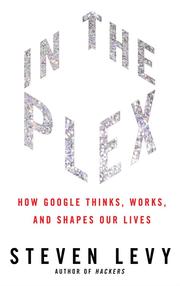
In the plex
A detailed look at how Google thinks and works, by a veteran technology journalist. It connects search, advertising, data centers and new products into one picture. Pick this one if you want a single substantial book that explains both the technology and the company without needing a computing background.
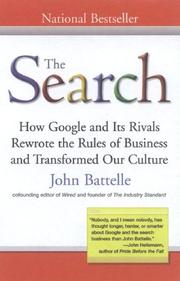
The Search
This book places Google within the wider story of web search and the business that grew around it. You learn why search became so valuable to advertisers and what came before Google. It suits readers who want industry context, with the caution that it reflects the web of the mid 2000s.

Googled
Auletta looks at Google through the eyes of the company and of the media businesses it disrupted. It is a good choice if you care about what Google's success meant for newspapers, television and advertising firms. It adds tension and outside views that insider books tend to leave out.
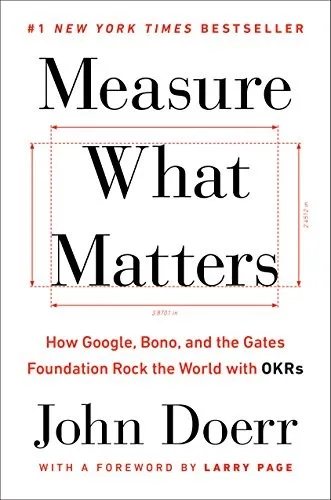
Measure what matters
Doerr, an early Google investor, explains objectives and key results, a goal-setting method Google adopted. The book covers more organizations than Google, so it is not a company history. It suits team leads and founders who want to understand one management habit and apply it to their own work.
Questions readers ask
Who founded Google?
Larry Page and Sergey Brin founded Google. By the company's account, they met at Stanford University in 1995 and built a link-based search engine called Backrub, later renamed Google. Google Inc. was formed in August 1998 after Andy Bechtolsheim, a co-founder of Sun, gave them $100,000.
What made Google different from other search engines?
Google's founders made heavy use of the links between web pages to judge which results were important, an approach known as PageRank. Their 1998 paper also focused on crawling and indexing the web efficiently at large scale. The aim was to return more useful results than existing systems did.
How does Google make most of its money?
Mostly from advertising. About 95% of its 2003 net revenues came from advertisers. In the last quarter of 2025, Google advertising brought in $82.3 billion of Alphabet's $113.8 billion total revenue. That advertising includes ads tied to search, ads on YouTube and ads on partner sites.
Did Google invent Android and YouTube?
No. Google acquired both. It bought Android in 2005, and the first Android phone arrived in 2008. It agreed to buy YouTube in October 2006 for $1.65 billion in stock. Google then developed both, and they became important parts of how it reaches people on phones and through video.
Was Google found to be a monopoly?
Yes, by a US federal court. In August 2024, it concluded that Google was a monopolist and had acted to maintain that monopoly. Remedies ordered in September 2025 limit exclusive contracts and require some data sharing. Google said it planned to appeal, so check the latest court news.
Sources
- Our story. Google. Accessed 2026-11-29.
- The Anatomy of a Large-Scale Hypertextual Web Search Engine (Brin and Page, 1998). Google Research. Accessed 2026-11-29.
- Google Inc. Form S-1 Registration Statement, 2004. US Securities and Exchange Commission. Accessed 2026-11-29.
- 2004 Founders' IPO Letter. Alphabet. Accessed 2026-11-29.
- The Google File System (Ghemawat, Gobioff and Leung, 2003). Google Research. Accessed 2026-11-29.
- Google To Acquire YouTube for $1.65 Billion in Stock. US Securities and Exchange Commission. Accessed 2026-11-29.
- Google buys DoubleClick, but will it backfire?. Fortune. Accessed 2026-11-29.
- Android operating system. Britannica. Accessed 2026-11-29.
- Google Gets the Message, Launches Gmail. Google. Accessed 2026-11-29.
- Department of Justice Wins Significant Remedies Against Google. US Department of Justice. Accessed 2026-11-29.
- Judge orders search shakeup in Google monopoly case. PBS NewsHour. Accessed 2026-11-29.
- Alphabet Announces Fourth Quarter and Fiscal Year 2025 Results. US Securities and Exchange Commission. Accessed 2026-11-29.
- Google Inc. Form 10-K for the fiscal year ended December 31, 2005. US Securities and Exchange Commission. Accessed 2026-11-29.