Company stories
How did Samsung become a global tech giant?
Samsung became a global tech giant by moving from trading into electronics in 1969, betting heavily on memory chips, learning quickly from foreign technology, and shifting its focus from volume to quality under Lee Kun-hee from 1993. Strength in chips then sat alongside leading positions in televisions and mobile phones.
By BookPounce | Updated
How did Samsung start before it made electronics?
Samsung did not begin with screens or chips. Lee Byung-chull founded it on March 1, 1938, as a grocery trading store [1]. Electronics came about three decades later.
In 1969, Samsung Group created Samsung Electronics as a division to enter the television and consumer electronics business [2]. Its first product was a small, simple black-and-white television [2]. In 1971, the company exported that kind of set to Panama [2].
This early stage matters because it shows where Samsung stood. It was not yet a technology leader. It made modest products and built up experience in manufacturing and selling abroad.
The group also had something a young electronics firm often lacks: a larger business family around it. In South Korea, large family-led business groups like this are known as chaebol. To understand Samsung, it helps to see the electronics company as one part of a wider group, and not as a lone startup.
Lee Byung-chull died in 1987, and his son Lee Kun-hee succeeded him [1]. The son would push the company to aim far beyond its home market. First, though, came a costly and risky move into semiconductors, the tiny chips that store and process information.
Why did Samsung bet on memory chips?
Memory chips became the engine of Samsung's rise. The first step came in 1974, when the company acquired Hankook Semiconductor [3]. Lee Kun-hee had backed that purchase with his own assets, despite his father's objection [4].
The big commitment followed in 1983. Samsung started its very large scale integration chip business, developed a 64Kb DRAM and set up its Giheung campus [3]. DRAM is the working memory inside computers and many other devices. Samsung drew on technology from Micron in the United States and Sharp in Japan to make Korea's first 64K DRAM chips [2].
Learning was fast. The scholar Linsu Kim found that Samsung built its knowledge base through technology licensing and by recruiting highly skilled scientists and engineers [5]. Kim also found that the company used a sense of crisis on purpose to intensify effort, while internal competition and cooperation sped up learning [5].
The results arrived within about a decade. In 1992, Samsung developed what it describes as the industry's first 64Mb DRAM and reached the largest share of the world DRAM market [3]. In 1993, it reached the largest share of the whole memory market [3].
The lesson is not simply that Samsung spent money. It paired investment with a deliberate effort to absorb know-how and then improve on it.
What changed with Lee Kun-hee's New Management in 1993?
Leading in memory did not mean customers saw Samsung as a premium brand. Lee Kun-hee felt that dominance at home had left the company complacent and unready for global competition [1].
In 1993, he gathered about 200 employees in Frankfurt and declared what he called New Management [4]. The message was to put product quality ahead of production volume [4]. One line from that period is still widely repeated: "Change everything except your wife and children." [4]
The same year, he saw Samsung televisions gathering dust in a Best Buy store in Los Angeles, priced nearly 100 dollars below Sony sets [4]. It was a sharp picture of the problem. Low prices alone were not winning respect.
The quality push became very visible in 1995. Lee ordered defective mobile phones worth 15 billion won to be burned [4]. The act told staff that shipping faulty goods was no longer acceptable.
You can read this reform as a change in what the company rewarded. Before, making more was a clear goal. After, making better products had to come first. The shift did not turn Samsung into a leading brand overnight. It did set the direction for its later work in televisions and phones, where buyers judge quality with their own eyes and hands.
How did Samsung win in televisions and smartphones?
Televisions show how Samsung used a change in technology. In 2003, Lee Kun-hee ordered an end to production of older tube televisions, even though they made up 27 percent of sales [4]. The company turned its attention to flat panel sets [4].
In 2006, its Bordeaux television series helped Samsung take the top share of the global TV market, passing Sony [4]. Samsung reports that it has ranked first in global TV sales by revenue every year since, reaching 20 years in a row with 2025 data from the research firm Omdia [6].
Phones followed their own path. By 1995, Samsung held 51.5 percent of its domestic mobile phone market, ahead of Motorola [4]. The Galaxy S smartphone arrived in May 2010 and sold more than 25 million units [4]. In 2012, Samsung led the world in mobile phone sales [4].
Researchers who studied the company's smartphone success point to the way it managed rivalry and teamwork inside the group at the same time [8]. They call this co-opetition. Too much harmony can make a business slow. Too much rivalry can waste money on duplicate work. In their view, Samsung succeeded by balancing the two [8].
What can you learn from Samsung's rise today?
Samsung is still a very large business. Samsung Electronics reported record revenue of 333.6 trillion won for 2025 and operating profit of 43.6 trillion won [7]. Those are results for the electronics company, not for every business that carries the Samsung name.
Several threads run through the story. First, the company moved into harder products step by step, from simple televisions to memory chips and smartphones. Second, it learned from others through licensing and hiring, then worked to build its own strength [5]. Third, leaders made large commitments in areas where the payoff was not certain. Fourth, they changed course when old habits, such as chasing volume, held the brand back [4].
Be careful about turning this into a simple recipe. Samsung's path depended on its time and place: a Korean business group with a family leader, access to foreign technology, and fast-changing electronics markets. A small firm today may not be able to copy those conditions.
It also helps to read more than one kind of account. Management scholars tend to focus on strategy and skills. Journalists often look at people, power and conflict. Economic historians ask how government policy and national development shaped firms like Samsung. The books below give you each of these angles, so you can judge the causes for yourself.
Books to read

Samsung Rising
A journalist's narrative of how Samsung grew and took on bigger rivals in consumer technology. It suits you if you want people, decisions and conflict instead of management theory. Start here for a readable story, then compare its critical view with the more academic books on this list.
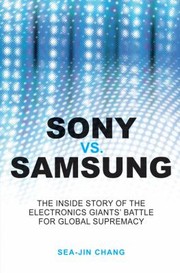
Sony vs Samsung
This comparison sets Samsung beside the Japanese company it once chased. Seeing two firms side by side helps you ask why choices about strategy and organization led to different results. It suits readers who like case studies. Remember that it was written before Samsung's biggest smartphone years.

Chip War
A history of the global contest over semiconductors. It is not only about Samsung, which is its strength: you see where Korean memory chips fit among American, Japanese, Taiwanese and Chinese players. It suits any curious reader who wants to know why chips matter so much.
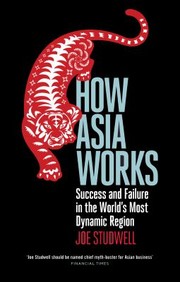
How Asia Works
Studwell asks why some Asian economies developed much faster than others, looking at farming, manufacturing and finance. It helps you place Korean business groups within national policy. It suits readers who want the bigger economic setting behind a company story, written in clear, argument-driven prose.

Imitation to innovation
Kim studies how Korean firms learned technology, moving from copying toward creating. It is a scholarly book that suits students and researchers of innovation. Read it to understand the learning process behind industries such as electronics and semiconductors, in the years before Samsung became a household name worldwide.

Asia's next giant
An influential academic account of South Korea's late industrialization, including the roles of government and large business groups. It is not a Samsung biography. It suits serious readers who want to understand the economy that shaped the chaebol, as seen before Samsung's later global rise.
Questions readers ask
Who founded Samsung?
Lee Byung-chull founded Samsung on March 1, 1938, as a grocery trading store. Electronics came later, with the creation of Samsung Electronics in 1969. After Lee Byung-chull died in 1987, his son Lee Kun-hee succeeded him and led the push to make Samsung competitive around the world.
What made Samsung successful in semiconductors?
Samsung invested heavily in memory chips, especially from 1983. It licensed foreign technology, recruited skilled scientists and engineers, and pushed teams to learn quickly. The company says it developed the industry's first 64Mb DRAM in 1992 and reached the largest share of the world memory market in 1993.
What was Samsung's New Management initiative?
New Management was the reform Lee Kun-hee declared in Frankfurt in 1993. It asked the company to put product quality ahead of production volume and to rethink old habits. In 1995, defective mobile phones worth 15 billion won were burned on his orders, a vivid signal that quality now mattered most.
When did Samsung overtake Sony in televisions?
Samsung took the top share of the global television market in 2006, passing Sony, helped by its Bordeaux series. The move followed a 2003 decision to stop making older tube televisions and focus on flat panels. Samsung reports that it has stayed first by revenue every year from 2006 through 2025.
Is Samsung just a phone company?
No. Phones are the product many people know best, but Samsung Electronics also has a large semiconductor business and makes televisions and other devices. The wider Samsung Group includes businesses beyond electronics. When you read revenue or profit figures, check whether they refer to Samsung Electronics or to the group.
Sources
- Samsung Electronics. Britannica Money. Accessed 2026-11-29.
- Samsung Electronics Co., Ltd.. Encyclopedia.com. Accessed 2026-11-29.
- About Us: Samsung Semiconductor history. Samsung Semiconductor. Accessed 2026-11-29.
- Lee transformed Samsung into world's tech giant. The Korea Times. Accessed 2026-11-29.
- The Dynamics of Samsung's Technological Learning in Semiconductors. California Management Review. Accessed 2026-11-29.
- Samsung Electronics Marks 20 Consecutive Years as the World's No.1 TV Brand. Samsung Newsroom. Accessed 2026-11-29.
- Samsung beats estimates as 2025 profitability rises 33% on chip supercycle. Korea JoongAng Daily. Accessed 2026-11-29.
- Dynamic Capabilities at Samsung: Optimizing Internal Co-opetition. California Management Review. Accessed 2026-11-29.