Company stories
How did Nike start and become so successful?
Nike began in 1964 as Blue Ribbon Sports, when runner Phil Knight and coach Bill Bowerman started importing Japanese running shoes. It took the Nike name in 1971. It grew through better shoe designs, outsourced manufacturing, athlete endorsements such as Michael Jordan's, and memorable advertising, including the 1988 Just Do It campaign.
By BookPounce | Updated
Who started Nike?
Two people started it: Phil Knight and Bill Bowerman. Knight ran track at the University of Oregon, where Bowerman was his coach. He graduated in 1959 with a business degree and went on to study for an MBA at Stanford. In a small business class there, he wrote a paper arguing that Japanese sports shoes could compete with German brands [1].
Bowerman was more than a coach. He had been tinkering with running shoes since the late 1950s, and he sent Knight a handmade pair to test in 1958 [2].
On January 25, 1964, the two met for lunch in Portland, Oregon. They shook hands, and Blue Ribbon Sports was born [1]. Each put in 500 dollars [3]. The plan was simple: import running shoes from the Japanese maker Onitsuka Tiger and sell them in the United States [2][3].
The start was small. Sales in 1964 were about 8,000 dollars [3]. In the early days, the few people involved sold shoes out of their cars [3].
How did Blue Ribbon Sports become Nike?
At first, the company sold another firm's shoes. It also helped improve them. Bowerman sent Onitsuka ideas and samples, and his work fed into the Tiger Cortez, a cushioned running shoe that appeared in Onitsuka's catalog in 1967 [2].
In 1971, Blue Ribbon Sports began making its own line overseas, with financing from the Japanese trading company Nissho Iwai. The new brand took the name Nike, after the Greek goddess of victory [3]. The first Nike product was a soccer shoe [3].
The logo came from Carolyn Davidson, a design student at Portland State whom Knight had hired to make charts and graphics. She drew the curved mark now called the Swoosh and billed 35 dollars for it [4]. Years later, in 1983, the company gave her a gold Swoosh ring and shares of stock [11].
The relationship with Onitsuka ended in 1972 in a dispute over distribution. Blue Ribbon Sports now had to stand on its own brand, and it began promoting its products at the U.S. Olympic Trials that year [3].
What made Nike's shoes stand out?
Nike's early edge came from people who cared about how a runner's foot meets the ground. The best known example started at breakfast. In 1970, Bowerman looked at the grid on a waffle and imagined it reversed, as raised nubs on a sole that could grip without heavy spikes [2].
He tried the idea by pouring melted urethane into the family waffle iron. The first attempt stuck the iron shut because he had not greased it [2]. He kept going. A waffle-soled shoe nicknamed the Moon Shoe appeared at the 1972 Olympic trials in Eugene, and the Waffle Trainer followed in 1974 [2].
The timing helped. Bowerman had written a book called Jogging in 1967 and helped make running popular in Eugene [2]. A shoe designed by a serious coach had an easy story to tell.
Technology stayed part of the pitch. In 1979, Nike introduced Nike Air cushioning [3]. Sales climbed from 14 million dollars in 1976 to 28 million in 1977 [3]. In December 1980, the company went public, offering two million shares [3].
Why did Michael Jordan and Just Do It matter so much?
In 1984, Nike signed Michael Jordan, then a rookie, to a deal worth 500,000 dollars a year for five years. It built a shoe line around him called Air Jordan. According to Jordan's agent, David Falk, the shoes brought in 126 million dollars in their first year [6]. That figure is the agent's account, but it shows the scale of the surprise. One athlete could be a product line, not only a face in an advert.
Growth was not a straight line. Nike had to win back ground from its rival Reebok in the later 1980s [3]. In 1988, it launched the Just Do It campaign. Sales that year rose 37 percent to 1.2 billion dollars [3].
The line came from Dan Wieden of the ad agency Wieden+Kennedy. He later said it was inspired by the last words of a prisoner facing execution, which he adapted [5]. The same year brought the Air Jordan 3, the Air Trainer 1 and the Air Revolution [5]. Strong products and a short, clear message arrived together.
What criticism did Nike face over its factories?
Nike designs and markets its products, while outside suppliers make them. By 2004, more than 800 suppliers employing over 600,000 workers in 51 countries were producing Nike goods [7]. This model let the company grow without owning most of its factories. It also raised hard questions about who is responsible for the people inside them.
In the 1990s, Nike faced public criticism over low pay in Indonesia, child labor in Cambodia and Pakistan, and poor conditions in China and Vietnam. It had a supplier code of conduct by 1992, but the criticism continued [7].
In May 1998, Knight spoke at the National Press Club. He admitted that the Nike product had "become synonymous with slave wages, forced overtime, and arbitrary abuse" [7]. Nike announced six initiatives, including wider independent monitoring, a minimum age of 18 for footwear factory workers and 16 for other light manufacturing, and stronger health and safety standards [8].
Change was uneven. Later analysis of supplier audits found that conditions improved at some factories but stayed flat or got worse at others [7].
Is Nike still as successful today?
Nike is still very large, though recent years have been harder. Annual sales grew from 39.1 billion dollars in fiscal 2019 to 51.4 billion in fiscal 2024 [9]. During part of that period, the company pushed to sell directly to shoppers through its own stores and website, and cut back on some retail partners. Newer rivals such as On and Hoka gained shelf space, and the chief executive at the time, John Donahoe, acknowledged that Nike had gone too far [9].
In September 2024, Nike announced that Elliott Hill, a company veteran of more than three decades, would return to replace Donahoe in October [9].
In fiscal 2026, which ended on May 31, 2026, revenue was 46.4 billion dollars, flat from the year before as reported. Wholesale sales rose 6 percent to 27.5 billion, while Nike's direct sales fell 6 percent to 17.7 billion [10].
The lesson for readers is practical. The things that built Nike, such as product ideas, partners and a clear brand, need constant care. Success at one stage does not guarantee the next.
Books to read
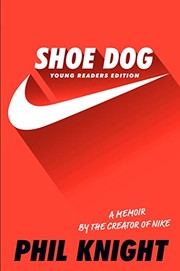
Shoe Dog
Start here. Knight tells the early years in his own voice, from the first shoe imports to the company going public. You get the money worries, the partners and the doubts. It reads like a novel and suits anyone curious about founding a business. Remember that it is one founder's view.
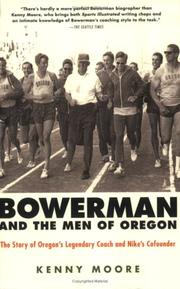
Bowerman and the Men of Oregon
Moore ran for Bowerman and writes about the coach with close knowledge. You learn how track training, stubborn experiments and strong opinions shaped Nike's first shoes. It suits runners, coaches and readers who want to understand the co-founder who often gets less attention than Knight.
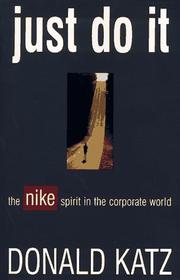
Just do it
Katz looks at Nike in the early 1990s, when it had become a global force in sport and marketing. You see how athletes, advertising and product teams worked together. It suits readers interested in brand building who want a reporter's view of the company at a particular moment.
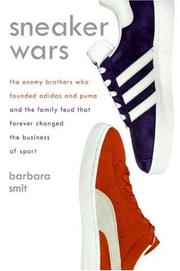
Sneaker Wars
Smit tells the story of the Dassler brothers, whose feud produced Adidas and Puma. It shows you the German giants that Japanese imports and later Nike had to challenge. Read it to understand the wider sports shoe business, including how athlete sponsorship became such a fierce contest.

Michael Jordan and the new global capitalism
A historian connects Jordan, Nike, satellite television and global business. You get a compact account of how a basketball star and a shoe company reached audiences worldwide, and why that drew criticism. It suits readers who want the bigger economic and cultural picture behind the brand.
Questions readers ask
What was Nike called before it was Nike?
Nike was first called Blue Ribbon Sports. Phil Knight and Bill Bowerman formed it in 1964 to import running shoes from Onitsuka Tiger in Japan. In 1971 the business introduced its own Nike brand and Swoosh logo, and the partnership with Onitsuka ended soon afterwards, in 1972.
Where does the name Nike come from?
The name comes from Nike, the Greek goddess of victory. The company adopted it for its own shoe line in 1971, as it moved from selling another maker's shoes to producing its own. The Swoosh logo, designed by student Carolyn Davidson, arrived at the same time.
Who designed the Nike Swoosh and how much was paid?
Carolyn Davidson, a design student at Portland State University, created the Swoosh in 1971. She billed 35 dollars for the work. In 1983, the company thanked her with a gold Swoosh-shaped ring set with a diamond, along with shares of Nike stock.
Does Nike make its own shoes?
Nike mainly relies on outside suppliers to make its products, while it focuses on design and marketing. In 2004, for example, more than 800 suppliers in 51 countries made Nike goods. That arrangement helped the company grow, and it also led to serious scrutiny of factory working conditions.
What is the best book to read about Nike's history?
For most readers, Shoe Dog by Phil Knight is the best first choice because it is personal and easy to follow. Add Bowerman and the Men of Oregon by Kenny Moore for the coach's side, or Swoosh by Strasser and Becklund for a wider view of the company.
Sources
- The Handshake That Started It All. Nike, Inc.. Accessed 2026-11-29.
- Bill Bowerman: Nike's Original Innovator. Nike, Inc.. Accessed 2026-11-29.
- Nike, Inc. (International Directory of Company Histories). Encyclopedia.com. Accessed 2026-11-29.
- Nike Swoosh logo history. Nike, Inc.. Accessed 2026-11-29.
- Just Do It: How the iconic Nike tagline built a career for the late Dan Wieden. NPR, via Michigan Public. Accessed 2026-11-29.
- All-Star weekend in 1985 yielded perfect springboard for Jordan, Nike. NBA.com. Accessed 2026-11-29.
- Improving Work Conditions in a Global Supply Chain. MIT Sloan Management Review. Accessed 2026-11-29.
- Nike 1998 annual report: corporate responsibility. Nike, Inc.. Accessed 2026-11-29.
- Nike CEO John Donahoe is out, replaced by company veteran Elliott Hill. CNBC. Accessed 2026-11-29.
- NIKE, Inc. Reports Fiscal 2026 Fourth Quarter and Full Year Results. Nike, Inc. (SEC Form 8-K exhibit). Accessed 2026-11-29.
- How college student Carolyn Davidson created the Nike Swoosh. ESPN. Accessed 2026-11-29.