Engineering
How do rockets work?
A rocket works by throwing mass backward very fast. It burns propellant to make hot gas, and a nozzle speeds that gas out of the back. The equal and opposite reaction pushes the rocket forward. Because it carries both fuel and oxidizer, a rocket also works in the vacuum of space.
By BookPounce | Updated
What makes a rocket move?
Picture yourself on a skateboard, holding a heavy ball. Throw the ball forward and you roll backward. A rocket does the same thing without stopping. It throws gas out of one end, and the rocket moves the other way.
This is Newton's third law: every action has an equal and opposite reaction [1]. The exhaust does not need to push against the ground or the air. That is why a rocket can work in space [1].
Newton's second law tells you how strong the push is. Force is linked to mass and acceleration. For a rocket, thrust grows when it burns more propellant each second and when the gas leaves faster [1].
The first law matters at launch. A rocket on the pad stays put until an unbalanced force acts on it [1]. To lift off, the engines have to push up harder than gravity pulls the whole vehicle down.
As the rocket climbs, it burns propellant and gets lighter. With less mass to move, it can speed up more quickly later in the flight [1].
What happens inside a rocket engine?
A chemical rocket needs two things to burn: a fuel and an oxidizer. The oxidizer supplies what the fuel needs to burn. A car engine takes oxygen from the air, but a rocket has to carry its own supply [2]. In rocketry, the word propellant covers both [2].
The two burn in a combustion chamber and make hot gas. The gas then rushes into a nozzle [3]. A typical rocket nozzle narrows to a tight point called the throat, then flares out into a wide bell. The flow is slower than sound before the throat and faster than sound after it [4].
The shape matters. The size of the throat helps set how much gas flows through each second. The width of the exit compared with the throat affects the speed and pressure of the exhaust [3].
Engineers write thrust in plain terms like this: thrust = mass flow rate x exit velocity + (exit pressure - outside pressure) x exit area [3]. The first part is the push from throwing gas backward. The second part accounts for the pressure difference at the mouth of the nozzle. The same equation works for solid and liquid engines [3].
What is the difference between solid and liquid rockets?
A solid rocket holds fuel and oxidizer already combined inside a case. Its main parts are the case, insulation, propellant, igniter and nozzle [2]. The design is simple. The catch is control. Once it starts, it burns until the propellant is gone, so it is hard to throttle or stop [2].
A liquid rocket keeps fuel and oxidizer in separate tanks. Pumps move them into the combustion chamber, where they mix and burn. This makes the engine heavier and more complex. In return, you can control the thrust and even restart the engine [2].
The solid idea is very old. NASA's history of rocketry describes Chinese forces using gunpowder rockets, called arrows of flying fire, against Mongol invaders in 1232 [5].
Liquid rockets came much later. On March 16, 1926, Robert Goddard launched the first one from a farm in Auburn, Massachusetts. It burned gasoline with liquid oxygen. It rose about 41 feet, flew for 2.5 seconds and landed about 184 feet away [6]. It was a short hop, but it showed that the idea worked in real hardware.
Why do rockets have stages?
Most of a rocket's mass at launch is propellant [1]. The ideal rocket equation shows why. It says the change in speed equals the effective exhaust velocity multiplied by the natural logarithm of the starting mass divided by the final mass [7].
The logarithm is the hard part. Adding more propellant helps, but each extra tonne also has to be lifted by the rest. In one NASA example for reaching a 200 mile orbit, about 90 percent of the launch weight is propellant. Engines, structure and payload share what is left [7].
Staging eases this problem. A rocket is built in sections. When one section runs out of propellant, it drops away, so the remaining engines no longer carry empty tanks [2].
The Saturn V, which sent Apollo crews toward the Moon, is a clear example. It stood about 363 feet tall and produced about 7.6 million pounds of thrust at launch [8]. The first stage lifted the fully fueled rocket off the ground. The second carried it nearly to orbit. The third placed the spacecraft in Earth orbit and then sent it toward the Moon [8].
How does a rocket get into orbit and stay on course?
Going high is not enough. To orbit, a spacecraft has to move sideways so fast that as it falls, the Earth's surface curves away beneath it. An orbit is a continuous fall [9].
Near Earth, this means climbing to about 150 kilometers or more, where air drag is small, and reaching roughly 30,000 kilometers per hour, or about 19,000 miles per hour [9]. After that, the spacecraft can coast, with only occasional small corrections [9]. This is why rockets tilt over after launch. Much of their work goes into building sideways speed.
A rocket also has to point the right way. Stability depends partly on where its weight and air forces act. The center of mass should sit toward the nose, and the center of pressure toward the tail [2].
Small rockets can rely on fixed fins. Larger vehicles can use active controls, such as swiveling nozzles, movable fins or small thrusters. Motion sensors detect unwanted changes in direction, and the guidance system corrects them [2]. In space, fins have no air to push on, so small thrusters do much of the steering [2].
Who worked out how rockets work, and what has changed?
People used rocket devices long before they could explain them. Newton's laws of motion, set out in the late 1600s, gave rocketry its scientific base [5].
In Russia, Konstantin Tsiolkovsky proposed space travel by rocket. In 1903 he suggested liquid propellants to reach greater range, and he argued that exhaust velocity limits a rocket's speed and range [5]. Goddard then turned liquid propulsion into a flying machine in 1926 [6].
During the Second World War, German engineers developed the V-2, which burned alcohol and liquid oxygen. It was used as a weapon, including against London [5]. Rocket history includes warfare as well as exploration.
The first Saturn V flew without a crew on November 9, 1967 [10]. For decades, large boosters were usually thrown away after one flight. In December 2015, a SpaceX Falcon 9 first stage made a controlled landing back in Florida, while its second stage carried satellites on to orbit [11].
The physics did not change. A returning booster still steers and slows itself by managing thrust and direction. It also has to save some propellant for the trip down, which is an engineering trade you can now watch happen.
Books to read

Rocket science for the rest of us
A friendly, visual starting point if equations make you nervous. It introduces space science in an accessible way, with graphics and plain explanations. Choose it for a curious teenager or an adult who wants the wider picture of space before tackling anything about engine design or orbital mathematics.

Rocket Boys
Hickam's memoir follows a group of boys in a West Virginia coal town who teach themselves to build rockets. You get trial, failure and slow improvement, told as a warm coming-of-age story. It suits readers who learn best through people, and young builders who need some encouragement.

Liftoff
Berger tells the story of SpaceX's early Falcon 1 rocket and the people who struggled to get it to orbit. It shows how small technical faults can end a flight. Pick it if you enjoy business and engineering stories and want to see how hard a first orbital launch can be.
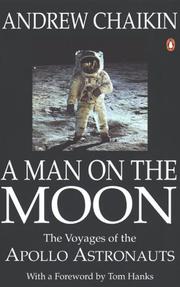
A Man on the Moon
A detailed account of the Apollo missions and the astronauts who flew them. It puts the Saturn V in its human setting, from preparation to lunar exploration. Read it if you want to understand what the hardware was for and what it felt like to depend on it.
Ignition!
A chemist's lively, often funny history of liquid rocket propellants. Clark explains why researchers tried so many combinations and why some were dangerous to handle. Some school chemistry helps. It suits readers who want to know what goes into the tanks and why that choice is so difficult.

How Apollo Flew to the Moon
Woods walks through an Apollo flight stage by stage, covering launch, navigation, engine burns and return. It is ideal if you keep asking how each step was actually done. Expect more technical detail than a popular history, explained with patience for readers who are not engineers.
Rocket Propulsion Elements
A long-running textbook on rocket propulsion, revised through many editions, with later ones co-written with Oscar Biblarz. It covers thrust, nozzles, propellants and engine design with full mathematics. Best for engineering students and serious builders who are comfortable with physics. Look for a recent edition.
Questions readers ask
How can a rocket work in space if there is no air to push against?
A rocket does not push against air. It pushes gas out of its engine, and the gas pushes back on the rocket with an equal and opposite force. It carries its own oxidizer, so the propellant can burn without outside oxygen. Empty space also removes air drag, which helps the rocket.
What fuel do rockets use?
It depends on the engine. Solid rockets use a mix of fuel and oxidizer already combined into one solid material. Liquid rockets store the two separately and often use liquid oxygen as the oxidizer. Goddard's first liquid rocket burned gasoline with liquid oxygen, while the German V-2 used alcohol with liquid oxygen.
Why is it so hard to get into orbit?
You need great sideways speed as well as height, roughly 30,000 kilometers per hour near Earth. Reaching it takes a lot of propellant, and that propellant is heavy too. In one NASA example, about 90 percent of launch weight is propellant. Staging helps by dropping empty sections along the way.
What does a rocket nozzle do?
The nozzle turns hot, high-pressure gas from the combustion chamber into a fast exhaust stream. A typical rocket nozzle narrows to a throat and then widens into a bell. The gas becomes supersonic after the throat. The nozzle's shape affects how much gas flows, how fast it leaves and how much thrust you get.
Who invented the rocket?
No single person did. Gunpowder rockets were used in China by 1232, according to NASA's history of rocketry. Newton later supplied the laws that explain their motion. Tsiolkovsky developed theory for space travel, and Robert Goddard launched the first liquid-fueled rocket in 1926. Each added a different piece.
Sources
- Rocket Principles. NASA Glenn Research Center. Accessed 2026-11-29.
- Practical Rocketry. NASA Glenn Research Center. Accessed 2026-11-29.
- Rocket Thrust Summary. NASA Glenn Research Center. Accessed 2026-11-29.
- Nozzles. NASA Glenn Research Center. Accessed 2026-11-29.
- Brief History of Rockets. NASA Glenn Research Center. Accessed 2026-11-29.
- 95 Years Ago: Goddard's First Liquid-Fueled Rocket. NASA. Accessed 2026-11-29.
- Ideal Rocket Equation. NASA Glenn Research Center. Accessed 2026-11-29.
- What Was the Saturn V? (Grades 5-8). NASA. Accessed 2026-11-29.
- Basics of Space Flight: Planetary Orbits. NASA Science. Accessed 2026-11-29.
- Saturn V Stage 1. NASA Science. Accessed 2026-11-29.
- APOD: Falcon 9 First Stage Landing. NASA Science. Accessed 2026-11-29.