Engineering
How does a car engine work?
A car engine burns fuel inside closed cylinders. The hot, expanding gas pushes pistons, and connecting parts turn that push into the spin of a crankshaft, which drives the wheels. Most engines repeat four strokes: intake, compression, power and exhaust. Petrol engines light the mixture with a spark. Diesel engines use the heat of compression.
By BookPounce | Updated
What happens inside a car engine?
Think of a cylinder as a strong metal tube, closed at one end. A piston fits snugly inside and slides up and down. At the closed end sits a small space called the combustion chamber. Fuel and air burn there. The burning gas gets hot, expands and shoves the piston away. That shove is the source of the engine's power [1].
A piston moving back and forth cannot roll a car by itself. So each piston is linked by a rod to the crankshaft, a shaft with offset sections. It works much like your leg on a bicycle pedal. You push down, and the crank turns your push into rotation. The spinning crankshaft then passes power toward the wheels [1].
Valves act as the doors of the cylinder. Intake valves let fresh charge in. Exhaust valves let burned gas out. Both stay shut while the gas is squeezed and while it pushes the piston [3].
Most cars have several cylinders sharing one crankshaft. They take turns firing, so the pushes arrive spread out instead of all at once. A heavy flywheel helps smooth the motion between pushes. Even the Wright brothers' 1903 aircraft engine used this basic layout, with four cylinders, a crankshaft and a flywheel [4].
What are the four strokes of an engine?
A stroke is one trip of the piston from one end of its travel to the other. In a four-stroke engine, the piston makes four of these trips before the pattern repeats [3].
1. Intake. The intake valve is open. The piston moves away from the closed end and draws in a fresh charge [3]. In a classic petrol engine, that charge is fuel mixed with air.
2. Compression. Both valves are closed. The piston moves back and squeezes the charge into a small space, which raises its pressure [3].
3. Power. The charge ignites. Hot gas drives the piston down the cylinder and turns the crankshaft [3]. This is the only stroke that delivers a push.
4. Exhaust. The exhaust valve opens, and the piston sweeps the spent gas out [3]. Then intake begins again.
Engineers call the ideal version of this process the Otto cycle. The textbook model assumes instant burning, no friction and no heat lost while the gas is compressed or expanding. Real engines fall short of that ideal, so they produce less work than the model predicts [2].
Here is a handy sum. Four strokes take two turns of the crankshaft. At 3,000 turns a minute, each cylinder has 1,500 power strokes a minute. That is 25 every second.
How do the valves and spark stay in time?
Timing is everything. If a valve opens at the wrong moment, the pressure escapes before it can do useful work. Engines solve this with mechanical teamwork.
A camshaft carries egg-shaped bumps called cams. As a cam rotates, its high point pushes a valve open, either directly or through a lever called a rocker arm. A spring closes the valve again. The crankshaft drives the camshaft through a chain or similar link, and the crankshaft turns twice for every one turn of the cams [3]. That ratio matches the four-stroke pattern: each valve opens once in every two crankshaft turns.
The spark must also arrive on cue, near the point where the charge is most tightly squeezed [3]. With several cylinders, the sparks follow a set firing order [4].
Early engines did this with purely mechanical parts. The Wright engine even let suction and a spring work its intake valve, while a cam drove the exhaust valve [3]. In a modern petrol car, an electronic control module manages the fuel mixture and ignition timing. It also watches emissions and helps diagnose faults. A battery provides power to start the engine and run the electronics [11].
So when a warning light appears on your dashboard, it is often this electronic system reporting that a reading looks wrong.
How is a diesel engine different from a petrol engine?
Both types burn fuel inside cylinders, and most use the same four strokes. The big difference is how the fire starts [1].
A petrol engine, also called a gasoline or spark-ignition engine, uses a spark plug. Fuel and air are mixed, the mixture is compressed, and an electric spark lights it [1]. In many cars today, fuel injectors deliver the fuel either into the intake passage or straight into the combustion chamber [11].
A diesel engine is a compression-ignition engine. It draws in air alone and squeezes it hard. Squeezing a gas heats it. Fuel is then sprayed into that hot air and ignites without a spark plug [1].
You can feel a small version of this heating when you pump a bicycle tyre and the pump grows warm. A diesel engine pushes the same idea much further.
Rudolf Diesel was looking for a more efficient engine than the spark-ignition design of his day. He described compression ignition in patents of 1892 and 1893, and demonstrated a 25 horsepower, four-stroke engine in 1897 [10].
Petrol and diesel are not interchangeable in everyday cars. Each engine is designed around the way its own fuel burns, along with the matching fuel system and exhaust equipment.
How does an engine stay cool and lubricated?
Burning fuel releases far more heat than the engine can turn into motion. Left alone, that heat would damage parts. Most car engines use liquid cooling [6].
Coolant flows through passages around the cylinders and picks up heat. A pump keeps it moving. It travels to the radiator, where thin fins give the heat to passing air. A fan pulls more air through when needed. A thermostat controls how much coolant goes to the radiator, which helps the engine hold a steady temperature [6]. Antifreeze raises the coolant's boiling point and lowers its freezing point [6].
Oil does a different job. Metal parts slide and spin against each other many times a second. A film of oil keeps them from rubbing directly. Oil collects in a pan at the bottom, called the sump. A pump sends filtered oil under pressure to the bearings of the crankshaft and camshaft. Oil thrown off those bearings splashes onto other parts, including the cylinder walls [7].
This is why your car has both a temperature gauge or warning and an oil pressure warning. If either one alerts you, stop when it is safe and check your owner's manual. Running without enough coolant or oil can ruin an engine.
Why does so much fuel energy get wasted?
You can describe efficiency with a simple formula: efficiency = useful energy out / fuel energy in.
For a car, the answer is lower than many drivers expect. US government figures for petrol cars show that only about 12 to 30 percent of the fuel's energy moves the car down the road, depending on how it is driven [5].
Most of the loss happens in the engine itself. In combined city and highway driving, engine losses take about 68 to 72 percent of the fuel energy [5]. Much of this leaves as heat through the exhaust and cooling system. Friction, pumping air in and out, and incomplete burning take smaller shares [5].
Other losses come after the combustion. Pumps and electrical equipment use some energy. The drivetrain, which carries power to the wheels, loses a little more. Idling in traffic burns fuel while the car goes nowhere [5].
Highway driving usually sends a larger share to the wheels than stop-and-go city driving. The figures are about 22 to 30 percent on the highway and 14 to 20 percent in the city [5].
This gap explains why engineers work so hard on small gains. Less friction, better timing and more careful fuel delivery all help more of each drop do useful work.
Who invented the car engine?
No single person did. The engine grew from many ideas, tests and improvements.
The French engineer Alphonse Beau de Rochas patented the four-stroke cycle in 1862. In 1876, the German engineer Nikolaus Otto built an engine that used it. Because Otto was first to build an engine on this principle, it became known as the Otto cycle [8].
Carl Benz then put an engine at the heart of a purpose-built road vehicle. On 29 January 1886, Benz applied for patent number 37435 for a vehicle powered by a gas engine. Its engine had a single cylinder, worked on four strokes and produced 0.75 horsepower. It was mounted at the rear and cooled by water [9].
Diesel's work in the 1890s added the second great family of engines, the compression-ignition type [10].
Since then, engines have gained more cylinders, better materials, fuel injection and electronic control. Exhaust systems now include catalytic converters that cut harmful emissions [11]. Yet the heart of the machine would still make sense to Otto. A piston draws in, squeezes, gets pushed and clears out. Once you can picture those four moves, the rest of the engine is easier to understand, because most other parts exist to support them.
Books to read
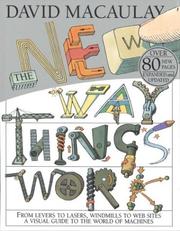
The Way Things Work
Macaulay explains machines through clear, witty drawings. It suits you if words alone do not help you picture moving parts, and it works well for curious teenagers and adults. You also see how engine ideas connect to levers, gears and other everyday mechanisms.
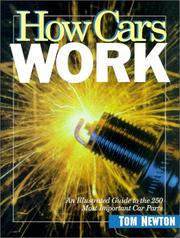
How cars work
A friendly, illustrated introduction to the whole car, broken into small steps. Pick it if you are a new driver, a student or an owner who wants to follow what a mechanic says. It places the engine alongside the other systems that keep a car moving.

Internal fire
A history of how the internal combustion engine came to be, following the inventors, experiments and dead ends. Choose it if you want to know why engines took their present form. It suits readers who enjoy the story of technology as much as the mechanics.

Engineering fundamentals of the internal combustion engine
A textbook that introduces engine cycles, combustion, fuel supply, heat transfer and friction with equations and worked problems. It suits engineering students who know some thermodynamics. Choose it when you are ready to calculate performance, not just describe how the parts move.

Internal combustion engine fundamentals
A detailed reference on what happens inside engines, including airflow, combustion, emissions and performance. It is demanding and rewards readers who have a solid background in thermodynamics and fluid mechanics. Pick it once you know the basics and need depth for university study, research or professional engine work.
Questions readers ask
What are the four strokes of a car engine in order?
The order is intake, compression, power and exhaust. The piston first draws in a fresh charge, then squeezes it. Burning gas next pushes the piston, which turns the crankshaft. Finally, the piston sweeps the spent gas out through the exhaust valve. The cycle then starts again, taking two crankshaft turns each time.
What does a spark plug do?
A spark plug makes a small electric spark inside the combustion chamber of a petrol engine. The spark lights the compressed mixture of fuel and air at a carefully timed moment. The burning gas then expands and pushes the piston. Diesel engines do not need a spark to ignite fuel, because compressed air gets hot enough.
Why does a car engine need oil?
Engine parts slide and spin against each other at high speed. Oil forms a film between them, which reduces friction and wear. A pump draws oil from the sump and sends it, filtered and under pressure, to key bearings. Without enough oil, metal surfaces can rub together and the engine can be badly damaged.
What is the difference between the crankshaft and the camshaft?
The crankshaft turns the up and down motion of the pistons into rotation that can drive the wheels. The camshaft controls the valves, using shaped bumps to push them open at the right moments. The crankshaft drives the camshaft, and in a four-stroke engine the camshaft turns at half the crankshaft's speed.
Do electric cars have engines like this?
A fully electric car does not burn fuel, so it has no cylinders, pistons, spark plugs or exhaust strokes. It uses an electric motor powered by a battery. Hybrid cars are different. Many combine an internal combustion engine with an electric motor, so the four-stroke ideas on this page still apply to them.
Sources
- Internal Combustion Engine Basics. U.S. Department of Energy. Accessed 2026-11-29.
- Ideal Otto Cycle. NASA Glenn Research Center. Accessed 2026-11-29.
- Four stroke engine operation (Wright 1903 engine). NASA Glenn Research Center. Accessed 2026-11-29.
- Engine parts (Wright 1903 engine). NASA Glenn Research Center. Accessed 2026-11-29.
- Where the Energy Goes: Gasoline Vehicles. U.S. Department of Energy and EPA, fueleconomy.gov. Accessed 2026-11-29.
- Automobile: Cooling system. Encyclopaedia Britannica. Accessed 2026-11-29.
- Gasoline engine: lubrication and related systems. Encyclopaedia Britannica. Accessed 2026-11-29.
- Gasoline engine: Development of gasoline engines. Encyclopaedia Britannica. Accessed 2026-11-29.
- The original Benz Patent Motor Car, 1886. Mercedes-Benz Group. Accessed 2026-11-29.
- Rudolf Diesel. Encyclopaedia Britannica. Accessed 2026-11-29.
- How Do Gasoline Cars Work?. U.S. Department of Energy, Alternative Fuels Data Center. Accessed 2026-11-29.