Engineering
Why do engineering structures fail?
Engineering structures fail when the forces acting on them exceed what they can actually resist. Common reasons include design errors, construction changes, added weight, cracks from repeated loading, corrosion, water washing away foundations, and unexpected wind effects. Major collapses often involve several of these together, along with missed warnings or weak checking.
By BookPounce | Updated
What does it mean for a structure to fail?
A structure has one basic job: carry loads safely down to the ground, or in an aircraft, hold together under air and pressure forces. Loads include the structure's own weight, people, vehicles, equipment, wind, water and temperature changes. Resistance comes from the shape of the structure, the materials and the connections between parts.
Failure happens when demand beats resistance. That can mean a dramatic collapse. It can also mean a crack, a sagging floor or a sway that makes the structure unsafe to use.
Engineers build in a margin, so a structure can take more than the load they expect. The margin covers uncertainty in materials, workmanship and use. It can shrink through a calculation mistake, a change on site, heavier loads or years of decay.
Think of it as a budget. Every error or added weight spends some of the reserve. You may see nothing wrong for years. In its Champlain Towers South investigation, the US National Institute of Standards and Technology (NIST) found that the margins against failure were too narrow from the start [1].
How do design and construction mistakes cause collapses?
Small details matter, especially connections. In 1981, suspended walkways fell in the Hyatt Regency hotel atrium in Kansas City. NIST records 113 deaths and 186 injuries, and traces the collapse to connections that could not carry enough load [2]. The original connection design was inadequate, and a change to the hanger rod arrangement during construction made matters much worse [3].
The I-35W bridge in Minneapolis collapsed in 2007, killing 13 people. The National Transportation Safety Board (NTSB) found a design error in some gusset plates, the steel plates that join truss members. Earlier changes had added weight to the bridge, and traffic and construction loads were on it that day. Design review had not caught the error [4].
The Quebec Bridge shows a similar pattern. It fell during construction in 1907, killing 75 men. A Royal Commission blamed defective design of key lower compression members. The estimated weight of the bridge had not been properly updated after the main span was made longer [5].
The lesson for you as a student or curious reader: check the assumptions, not only the arithmetic.
Can a structure weaken slowly over time?
Yes. Fatigue is damage that builds up when a load is applied again and again. Each cycle may be far too small to break the part at once. A tiny crack can still start and grow.
The de Havilland Comet, an early jet airliner, is a famous case. Its cabin was pressurized and released on every flight. After accidents in 1954, investigators found fatigue in the fuselage. One of the lost aircraft had made only 1,290 pressurized flights [6].
Corrosion is another slow threat. It eats away steel and can work together with cracking. The Silver Bridge over the Ohio River collapsed in 1967, killing 46 people [7]. A small crack in one eyebar, a long steel link in the suspension chain, led to a sudden brittle fracture. The design had no backup path to carry the load once that link broke [8].
This is why engineers value redundancy. If one part fails, others should be able to share its work long enough for people to notice and act. Inspection matters too, because you cannot repair damage nobody has found.
How can wind and water bring a structure down?
Nature does more than push. It can interact with a structure's shape and movement.
The first Tacoma Narrows Bridge in Washington State collapsed on November 7, 1940, in a wind of about 42 miles per hour, only months after opening [9]. Its deck was light, shallow, narrow and very flexible. The leading explanation is torsional flutter, a twisting motion that feeds itself. Wind swirling around the deck helped drive the movement [10]. The bridge shows that a structure can be able to hold its weight and still behave badly in moving air.
Water can attack from below. Scour happens when flowing water removes soil and sediment from around bridge piers and abutments. The foundation loses support, often during floods, while the deck above may look normal. The US Geological Survey describes streambed scour as the leading cause of bridge failure in the United States [11].
Engineers respond with wind tunnel tests, aerodynamic analysis, stiffer or more streamlined decks, deeper or protected foundations and monitoring during floods. Each answer starts by asking how the site can act on the structure.
Why do collapses usually have more than one cause?
It is tempting to look for one broken part or one person to blame. Investigations often show a chain.
Champlain Towers South in Surfside, Florida, partly collapsed on June 24, 2021, killing 98 people. NIST's technical findings, released in 2026, say two connections between garage columns and the pool deck failed weeks earlier. Loads then moved to neighboring connections that could not cope. Contributing factors included a design that departed widely from the codes of the time, construction that differed from the drawings, later added loads and long-term corrosion [1].
People and organizations are part of the chain. At Quebec, workers saw lower chords bending in the weeks before the collapse. A message to stop work was sent on the day, but it did not arrive in time [5].
When you read about a failure, ask four questions. What was the first part to give way? Why was it too weak or overloaded? Why did the rest not hold? Who could have noticed, and what stopped them from acting?
How do engineers learn from failures?
Engineers study wreckage, drawings, calculations, records and witness accounts. They test materials and model the structure to see which explanation fits the evidence. Good investigations also rule things out. At Champlain Towers South, for example, NIST rejected nearby construction vibration and sinkholes or foundation settlement as causes [1].
Lessons can change practice. The Silver Bridge collapse led to national bridge inspection standards in the United States [7]. Tacoma Narrows pushed bridge designers to take aerodynamics seriously, and wind tunnel testing became standard [10].
The habits behind safer structures are plain ones. Calculate the connections as carefully as the main members. Recheck the design when anything changes. Ask a second qualified person to review it. Keep track of added weight. Inspect for cracks, rust and washed-out soil. Treat a warning from the site as urgent information.
If you are worried about a real building, such as new cracks, sagging or falling concrete, contact your local building authority or a licensed structural engineer. A book can teach you the ideas, but it cannot assess your building.
Books to read

To engineer is human
Petroski explains why failure sits at the heart of design, using familiar objects and well known structures. You need no mathematics. It suits curious readers and new students who want to understand how engineers think about risk, trial, error and improvement before moving to technical books.

The new science of strong materials,
This book asks why materials are as strong or as weak as they are. You will meet cracks, toughness, metals, wood and composites in a readable way. Choose it if the fatigue and fracture side of failure interests you more than the shape of bridges.
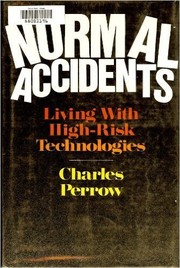
Normal Accidents
Perrow looks at high risk systems and argues that complex, tightly linked technology can produce accidents that are hard to prevent. It is more about systems and organizations than beams and bolts. It suits readers interested in management, safety policy and how small faults combine.

Design paradigms
Petroski uses historical cases to show patterns of error and judgment in engineering design. The focus is on how success can breed overconfidence and how old lessons get forgotten. It rewards students and practicing engineers who already know the basics and want a way to question designs.

Beyond failure
Delatte presents forensic case studies written for civil engineers, linking each failure to the technical subjects students learn, such as mechanics, structures and soils. It suits engineering students, teachers and professionals who want more technical detail and a clear lesson from each case.
Questions readers ask
What is the most common reason structures fail?
There is no single answer for every kind of structure. It depends on the type, age and setting. For US bridges, the Geological Survey identifies streambed scour as the leading cause of failure. In other cases, design errors, construction changes, overload, fatigue or corrosion may matter most, often in combination.
What is the difference between fatigue and overload?
Overload means a force is greater than a part can resist, so it may yield or break at once. Fatigue is gradual. Repeated loads, each smaller than the breaking load, start and grow a crack until the remaining material can no longer carry the force.
Can a small design change really cause a collapse?
Yes. At the Kansas City Hyatt Regency, the hanger rod arrangement was changed during construction and the walkway connection became much weaker than in an original design that was already inadequate. That is why any change to a structural detail needs fresh calculation and careful review before it is built.
Why is redundancy important in engineering?
Redundancy means a structure has other ways to carry load if one part fails. It can limit damage and give people time to respond. The Silver Bridge lacked it in its eyebar chain, so a single fractured link left the remaining parts unable to hold the bridge together.
Did wind alone destroy the Tacoma Narrows Bridge?
Not by its strength alone. The wind was about 42 miles per hour. The problem was how that wind interacted with a light, shallow, narrow and flexible deck. The leading explanation is a self-feeding twisting motion called torsional flutter, which grew until the bridge broke apart.
Sources
- NIST Releases Technical Findings on What Caused the 2021 Partial Collapse of Champlain Towers South. National Institute of Standards and Technology. Accessed 2026-11-29.
- Walkway Collapse, Kansas City, Missouri, 1981. National Institute of Standards and Technology. Accessed 2026-11-29.
- Investigation of the Kansas City Hyatt Regency Walkways Collapse (NBSIR 82-2465). National Bureau of Standards. Accessed 2026-11-29.
- Collapse of I-35W Highway Bridge, Minneapolis (HWY07MH024). National Transportation Safety Board. Accessed 2026-11-29.
- Quebec Bridge, The First Failure, 1907. STRUCTURE magazine. Accessed 2026-11-29.
- Lessons Learned: De Havilland DH-106 Comet 1. Federal Aviation Administration. Accessed 2026-11-29.
- FHWA Marks 50th Anniversary of Silver Bridge Collapse. Federal Highway Administration. Accessed 2026-11-29.
- FHWA bridge research report on the Silver Bridge eyebar fracture. Federal Highway Administration. Accessed 2026-11-29.
- Tacoma Narrows Bridge. Encyclopaedia Britannica. Accessed 2026-11-29.
- Tacoma Narrows Bridge History: Lessons from Failure. Washington State Department of Transportation. Accessed 2026-11-29.
- Streambed Scour at Bridges in Alaska. US Geological Survey. Accessed 2026-11-29.