Engineering
How was the Hoover Dam built?
Workers first sent the Colorado River through four tunnels cut into the canyon walls. Cofferdams kept the site dry while crews stripped loose rock and dug to bedrock. They then built the dam as interlocking concrete columns, cooled by water pipes and sealed with grout. The last concrete was placed in May 1935.
By BookPounce | Updated
Why was the Hoover Dam built, and who built it?
The Colorado River could flood badly, and the American Southwest wanted to store and use its water. The dam was designed to control floods, supply water for irrigation and other uses, and generate hydroelectric power [6]. Arthur P. Davis, director and chief engineer of the U.S. Reclamation Service, proposed a dam in 1918 [6].
Approval took another decade. On December 21, 1928, President Calvin Coolidge signed the act that authorized the Boulder Canyon Project [5]. The first money for construction was approved in July 1930 [5].
The job was too large and risky for most builders to take on alone. Six contracting firms joined forces as Six Companies Inc. Their low bid of nearly 49 million dollars won the contract in March 1931 [5]. Frank T. Crowe served as the construction superintendent [6][9].
The site was Black Canyon, on the line between Nevada and Arizona. It offered a narrow gap with high rock walls. It was also remote and fiercely hot. Before the main work could begin, people needed places to live, and a new town called Boulder City was built for dam workers [9].
How did engineers move the Colorado River out of the way?
You cannot pour a dam in a flowing river. So the first big task was to give the Colorado another route.
Crews drove four tunnels through the walls of Black Canyon, two on the Nevada side and two on the Arizona side. Each was 56 feet across, and together they ran nearly 16,000 feet [2]. Tunneling began in May 1931. Workers used drilling rigs called jumbos, which held several drills against the rock face at once. About one ton of dynamite was used for every 14 feet of tunnel [2].
The conditions were punishing. Temperatures in the summer of 1931 reached 140 degrees Fahrenheit [2].
Next, the tunnels were lined with concrete 3 feet thick, which left a finished width of 50 feet [2]. In November 1932, the river was turned into the tunnels [2][5].
The tunnels were temporary in purpose but not wasted. In 1934, huge concrete plugs closed two of them, and another was plugged later with openings fitted with valves. On February 1, 1935, a steel gate was lowered at the fourth tunnel, and Lake Mead began to fill [2].
How did crews keep the site dry and reach solid rock?
Diverting the river was only half the answer. Water could still back into the work area or spill over during a flood. To prevent this, builders made two temporary dams, called cofferdams, one above the site and one below it.
The upper cofferdam stood 98 feet high and was 750 feet thick at its base [3]. The lower one was 66 feet high [3]. A rock barrier farther downstream softened the backwash from the tunnel outlets [3]. All of this was finished before the spring floods of 1933 [3].
Meanwhile, the canyon walls had to be cleaned. Workers called high scalers climbed down on ropes and removed loose rock with jackhammers and dynamite [7]. Each jackhammer weighed 44 pounds [7]. This mattered for two reasons. Loose rock could fall on people below, and the dam needed to press against sound stone.
Falling objects were the most common cause of death during construction. Some men coated cloth hats with coal tar to make hard hats. Six Companies later issued manufactured hard hats to every worker [7]. On the canyon floor, crews cleared mud, sand and gravel until they reached bedrock that could carry the dam [5].
How was the concrete poured and cooled?
The first concrete went in on June 6, 1933, and the last on May 29, 1935 [1]. The dam was not poured as one giant block. It rose as a set of separate columns, shaped like trapezoids, in layers 5 feet high [4].
Heat was the reason. Cement gives off heat as it hardens. Engineers calculated that a dam poured all at once would have taken 125 years to cool, and it would have cracked [4].
To draw the heat out, workers set thin steel pipes into the concrete. River water ran through them first. Chilled water from a refrigeration plant then finished the job [4]. More than 582 miles of 1-inch pipe were embedded, and cooling was completed in March 1935 [1].
Once a block had cooled, its pipes were cut off and filled with grout, a thin cement mix pumped under pressure [4]. Grooves on the sides of the columns interlocked, and grout forced into the joints bonded them together [4].
Buckets holding 4 or 8 cubic yards delivered the concrete [4]. The dam itself holds about 3.25 million cubic yards. With the power plant and related works, the total is about 4.36 million [1].
Why does the shape of the Hoover Dam hold back so much water?
Hoover Dam is an arch-gravity dam [5][6]. The name describes two ways of resisting the same push.
The push comes from water pressure, which grows with depth. In plain text, pressure = water density x gravity x depth. The water near the bottom of a reservoir presses much harder than the water near the top.
The gravity part of the design uses weight. A very heavy, wide wall resists sliding and tipping, and carries load down into the foundation. The arch part uses shape. The dam curves upstream, into the reservoir. Water pushing on the curve squeezes the concrete and passes part of the load sideways into the canyon walls. Concrete is strong when squeezed, so this suits the material well.
The numbers show how the form follows the pressure. The dam is 726.4 feet high from foundation rock to the roadway on top [1]. It is 660 feet thick at the base but only 45 feet thick at the crest, and 1,244 feet long across the canyon [6]. It weighs more than 6.6 million tons [1].
That is why the joint grouting mattered so much. The separate columns had to act together as one structure [4].
What was it like to work on the dam, and how many died?
The dam went up during the Great Depression, and thousands of people came to Black Canyon looking for work [9]. At the peak, 5,218 men were employed in a single month [5].
Before Boulder City was ready, many families lived in makeshift settlements [9]. The new town later offered cottages, dormitories and a large mess hall [9]. Summer temperatures in the canyon often reached 120 degrees Fahrenheit [9].
Opportunity was not shared equally. African American, Native American and Hispanic dam workers were not allowed to live in Boulder City. In 1933, only 24 African Americans were among about 4,000 workers on the site [9].
The official count of deaths is 96. These were people who died at the dam site from causes such as drowning, blasting and falling rock [8]. The figure leaves out deaths from heat, pneumonia and heart trouble, and the Bureau of Reclamation says the record is not entirely clear [8].
You may have heard that workers are buried inside the concrete. They are not. The dam was built in blocks, in a way that made this virtually impossible [8]. The dam was finished in 1935, ahead of schedule, and President Franklin D. Roosevelt dedicated it that September [6].
Books to read

Colossus
A journalist's full account of the dam, from the long fight over the Colorado River to the construction itself. It suits you if you want one readable narrative that links politics, money, engineering and the lives of workers, without needing any technical background first.

Hoover Dam
A detailed history subtitled An American Adventure. It follows the building of the dam closely, including the contractors, the work in Black Canyon and daily life around the site. Choose it if you want to understand how the job was organized and carried out, stage by stage.
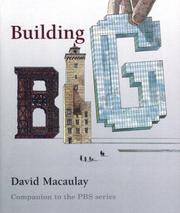
Building Big
An illustrated introduction to large structures, including bridges, tunnels and dams. Macaulay's drawings show why engineers choose one shape over another. It is a good first stop for curious teenagers, families and adults who understand ideas faster when they can see them.

Cadillac desert
A forceful, critical history of water development in the American West. It helps you see Hoover Dam as part of a much larger push to move and store water, with costs as well as benefits. Best for readers who want argument along with history.

Rivers of Empire
An environmental historian examines how control of water shaped power and society in the American West. It is more analytical than a construction story. Read it if you want to ask who gained from big water projects and what kind of society they helped create.
Questions readers ask
How long did it take to build the Hoover Dam?
The whole project took less than five years. Work on the diversion tunnels began in 1931, and the river was turned into them in November 1932. Concrete for the dam itself was placed from June 6, 1933, to May 29, 1935. President Franklin D. Roosevelt dedicated the finished dam on September 30, 1935.
Are there bodies buried in the Hoover Dam?
No. The Bureau of Reclamation states that no one is buried in Hoover Dam. The concrete was placed in separate blocks, raised a little at a time, which made it virtually impossible for a person to be buried inside. Many workers did die during construction, but their bodies were not left in the concrete.
Is the concrete in the Hoover Dam still curing?
Concrete can keep gaining strength slowly for a very long time as the cement continues to react with water. The famous cooling problem is a different matter. Builders removed the excess heat with water pipes embedded in the blocks, and Reclamation reports that this cooling was completed in March 1935.
Why did the builders put pipes inside the concrete?
Hardening cement releases heat. In a structure this large, that heat would escape very slowly and uneven cooling could crack the concrete. River water and then chilled water flowed through thin steel pipes to carry heat away. After each block cooled, the pipes were cut off and filled with grout.
What type of dam is the Hoover Dam?
It is a concrete arch-gravity dam. Its great weight helps it resist the push of the reservoir, while its curve passes part of that load into the walls of Black Canyon. It is much thicker at the bottom, where water pressure is greatest, than at the top.
Sources
- Hoover Dam: Frequently Asked Questions, The Dam. U.S. Bureau of Reclamation. Accessed 2026-11-29.
- Hoover Dam History Essays: Diversion Tunnels. U.S. Bureau of Reclamation. Accessed 2026-11-29.
- Hoover Dam History Essays: Cofferdams. U.S. Bureau of Reclamation. Accessed 2026-11-29.
- Hoover Dam History Essays: Concrete. U.S. Bureau of Reclamation. Accessed 2026-11-29.
- Nevada and Arizona: Hoover Dam. U.S. National Park Service. Accessed 2026-11-29.
- Hoover Dam, Historic Civil Engineering Landmark. American Society of Civil Engineers. Accessed 2026-11-29.
- Hoover Dam History Essays: High Scalers. U.S. Bureau of Reclamation. Accessed 2026-11-29.
- Hoover Dam History Essays: Fatalities. U.S. Bureau of Reclamation. Accessed 2026-11-29.
- The Men Who Built the Dam. PBS American Experience. Accessed 2026-11-29.