Engineering
How was the Panama Canal built?
The United States built the Panama Canal from 1904 to 1914, after a French attempt failed. Crews controlled mosquito-borne disease, rebuilt the railway, dammed the Chagres River to form Gatun Lake, cut through the Continental Divide, and built concrete locks that use gravity to raise ships 85 feet and lower them again.
By BookPounce | Updated
Why did the French attempt to build the canal fail?
The first big attempt was French. Ferdinand de Lesseps, who had built the Suez Canal, became president of the French canal company in 1879. He was not an engineer [2]. He insisted on a sea-level canal, a channel with no locks at all [2].
That choice made a hard job much harder. A sea-level route meant digging all the way down through the hills of central Panama. Crews faced heavy rain, floods, landslides, extreme heat and equipment that was not good enough for the task [2]. Malaria and yellow fever swept through the workforce [2].
Money ran short too. The company was liquidated in 1889, and investors were badly hurt. An estimated 20,000 workers had died [2]. Estimates of this toll vary, so treat any single figure with care.
The French work was not all wasted. They had excavated more than 75 million cubic yards of material [2], and part of their digging was useful to the Americans later [10]. In 1902 the United States Senate approved the Panama route and the purchase of the French company's assets for 40 million dollars [2].
The lesson for engineers is simple. A design has to fit the land, the water and the people who must build it.
How did the United States take over the project?
In 1903, Panama was a province of Colombia. Colombia's congress rejected a canal treaty with the United States. Panama declared independence on November 3, 1903, and President Theodore Roosevelt sent warships in support [1]. The new treaty gave the United States a strip of land 10 miles wide. In return, Panama received 10 million dollars and an annual payment of 250,000 dollars [1].
American work began in May 1904 [3]. The first year was difficult. The first chief engineer, John Wallace, resigned in 1905 [4]. His successor, John F. Stevens, largely paused the digging. He rebuilt the Panama Railroad, improved housing, brought in equipment and tripled the labor force [10].
Stevens also pushed for the most important design decision: use locks instead of digging to sea level. He estimated that a lock canal could be finished by January 1914, while a sea-level canal would take at least 18 years [3]. The Senate voted 36 to 31 for the lock plan in June 1906, and the House agreed [3].
Stevens resigned in 1907. Army officer George W. Goethals replaced him and led the work to completion [3][4].
How did workers deal with disease and harsh conditions?
You cannot build anything large if your workers are too sick to stand. Only a few years before, scientists had shown that mosquitoes spread yellow fever and malaria [9]. Colonel William C. Gorgas, the chief sanitation officer, used that knowledge. His teams drained standing water, applied larvicides to kill young mosquitoes and screened windows [9].
The scale was huge. Sanitation crews drained more than 100 square miles of swamp and built about 1,000 miles of earth ditches [3]. The last yellow fever case on the isthmus was reported in November 1905 [3]. Malaria did not vanish, but it fell sharply. Among employees, the malaria death rate dropped from 11.59 per 1,000 in November 1906 to 1.23 per 1,000 in December 1909 [9].
The workforce came from many places. Barbados alone supplied 19,900 recruits, and about 7,500 came from Martinique and Guadeloupe [3]. At its peak in March 1913, 44,733 people were on the job [3].
The work stayed dangerous. Hospital records show 5,609 deaths from disease and accidents during the American years [8]. In one accident in December 1908, a dynamite explosion in the Culebra Cut killed 26 people [4].
How did engineers cut through the Continental Divide?
The hardest digging was the Culebra Cut, a channel of 8.75 miles through the Continental Divide [5]. Workers drilled holes, packed them with explosives and blasted the rock loose [5]. Steam shovels then loaded the broken material, called spoil, onto railway cars [10].
Think of it as a moving factory. About 160 trains a day carried spoil away [10]. A machine called an unloader could clear a 20 car train in about 10 minutes [10]. Track shifting machines moved whole sections of rail as the dumping and digging sites changed [5][10].
The ground kept fighting back. Wet soil and weak rock slid into the channel. The Cucaracha slide began in October 1907, after heavy rain, and sent about 500,000 cubic yards into the Cut [5]. Because of slides, the estimate for total digging there rose from 53.8 million cubic yards in 1906 to about 100 million in 1913 [5].
The spoil had uses. Some of it helped build Gatun Dam, a breakwater and new land on the Pacific side [10]. Digging in the Cut was declared complete in May 1913, though more slides meant extra months of removal [4].
How do Gatun Dam and the locks lift ships over Panama?
Instead of lowering the land to the sea, the engineers raised the water. Gatun Dam, begun in 1907, holds back the Chagres River [4]. This tamed a flood-prone river and created Gatun Lake, which ships cross at 85 feet above sea level [4][7].
Locks work like water elevators. A ship enters a chamber and the gates close behind it. Water flows in from the higher side, and the ship floats upward. No pumps are needed, because gravity does the work [7]. To go down, valves let the water out [6].
There are three steps at Gatun, one at Pedro Miguel and two at Miraflores, each built in pairs [7]. Every chamber is 110 feet wide and 1,000 feet long [6]. The three sites took about 4.5 million cubic yards of concrete [6]. The steel gates are hollow and watertight, which helps them float and reduces the load on their hinges as the chambers fill [6]. Electric locomotives guided ships through [6].
The canal officially opened on August 15, 1914, when the ship Ancon made the first official transit [8]. The American effort cost about 375 million dollars, including payments to Panama and the French company [8].
Books to read
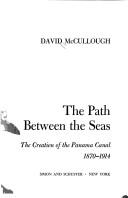
The Path Between the Seas
A long, story-driven history that follows the canal from the French attempt to the American finish. You meet the promoters, doctors, engineers and politicians, and see how their choices shaped the work. It suits readers who want one big, detailed book and enjoy narrative history.

Panama fever
A history of the canal's construction that gives real space to the human cost as well as the politics and engineering. It suits readers who want a lively account of both the French and American efforts, and a closer sense of what life and work on the isthmus were like.
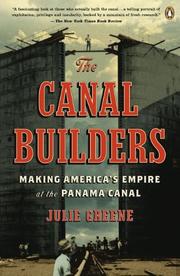
The Canal Builders
This book turns your attention from famous leaders to the workers and families who built the canal and lived in the Canal Zone. It explores labor, race and government control. It suits readers who already know the basic story and want to ask who carried the burden.

The Panama Canal
An illustrated book for young readers that explains the building of the canal in clear, approachable language. Pictures help you grasp the digging, the dam and the locks. It suits children, families reading together, and adults who want a quick visual start before a longer history.

Silver people
A novel in verse for young adults about people who worked on the canal under an unequal system that paid and treated them by race and origin. It is fiction, so read it for feeling and perspective. It suits teens and anyone who wants a short, human way in.
Questions readers ask
How long did it take to build the Panama Canal?
The American construction took about ten years, from May 1904 to the official opening in August 1914. That does not include the earlier French effort, which began around 1880 and ended when the company was liquidated in 1889. The Americans were able to use part of the French excavation.
Who built the Panama Canal?
Tens of thousands of workers built it, many recruited from Caribbean islands such as Barbados, Martinique and Guadeloupe. Americans filled many other roles. John F. Stevens set up the lock plan and support systems, George W. Goethals led the work to completion, and William C. Gorgas directed the campaign against mosquito-borne disease.
How many people died building the Panama Canal?
Hospital records show 5,609 deaths from disease and accidents during the American construction era. The earlier French effort is often estimated at about 20,000 deaths or more. Records from that period are incomplete, so the true total for both efforts is not known, and you will see different figures in different sources.
Why does the Panama Canal use locks instead of being at sea level?
A sea-level canal meant far deeper digging through the central hills and left engineers to cope with the flood-prone Chagres River. Locks let ships climb over the land instead. A dam turned the river into a lake that forms much of the route. The US Congress chose the lock design in 1906.
Does the Panama Canal use pumps to fill its locks?
No. Water moves through the locks by gravity alone. It flows from the higher level into a chamber through culverts built into the walls and openings in the floor, raising the ship. To lower a ship, valves release the water toward the lower level. This is why the supply of fresh water matters so much.
Sources
- Building the Panama Canal, 1903-1914. Office of the Historian, US Department of State. Accessed 2026-11-29.
- The French Attempt. Linda Hall Library. Accessed 2026-11-29.
- American canal construction. Panama Canal Authority. Accessed 2026-11-29.
- Interactive Timeline: The Land Divided, The World United. Linda Hall Library. Accessed 2026-11-29.
- Culebra Cut. Panama Canal Authority. Accessed 2026-11-29.
- The Locks: The Land Divided, The World United. Linda Hall Library. Accessed 2026-11-29.
- Design of the Locks. Panama Canal Authority. Accessed 2026-11-29.
- The end of the construction. Panama Canal Authority. Accessed 2026-11-29.
- Special Wonders of the Canal. Emerging Infectious Diseases, Centers for Disease Control and Prevention. Accessed 2026-11-29.
- Making the Dirt Fly. Linda Hall Library. Accessed 2026-11-29.