Finance and the economy
How do interest rates affect the economy?
Interest rates set the price of borrowing and the reward for saving. When rates go up, households and firms tend to spend less, which can slow growth, hiring and inflation. When rates go down, borrowing gets cheaper and spending tends to grow. The effects also run through asset prices, exchange rates and expectations, and they take time.
By BookPounce | Updated
What is an interest rate, and who sets it?
An interest rate is the price of money over time. If you borrow, it is what you pay for the loan. If you save, it is what you earn on your deposit, shown as a share of the amount [9].
Central banks set a key short-term rate. In the United Kingdom it is called Bank Rate. The Bank of England pays it to banks and similar firms that hold money with it, and those firms then adjust their own lending and savings rates [9]. In the United States, the Federal Reserve sets a target for the federal funds rate, and other short-term rates usually move closely with it [1].
The central bank does not set every rate you see. Longer-term rates also depend on what people expect short-term rates to be in the future [1]. That is why a central bank's words can matter alongside its decisions. A clear signal about what may come next can move borrowing costs before any formal change happens. Your own rate also reflects the lender's view of risk and the length of the loan.
How do higher rates change spending and saving?
The most direct effect is on your budget. If you have a loan or mortgage whose rate moves with the market, higher rates can raise your repayments. That leaves less to spend on other things. Saving also starts to look more attractive, because deposits can earn more [3].
Businesses face a similar choice. A new factory, shop or machine often depends on borrowed money. When financing costs more, some projects no longer look worthwhile and may be delayed. Households may also put off large purchases such as cars and appliances [4].
Banks are part of the story too. When rates are high, some borrowers are more likely to struggle with payments, so banks may become more careful about lending [2]. Credit then gets both dearer and harder to obtain.
Lower rates generally work the other way. Cheaper credit encourages spending on goods and services, especially long-lasting ones, and makes more business projects attractive [1]. Not everyone feels this equally. A saver and a borrower can experience the same rate change very differently, and someone on a fixed-rate loan may notice nothing until that deal ends.
How do interest rates affect inflation and jobs?
Inflation is a general rise in prices over time. When people and firms spend less, businesses find it harder to raise prices, so inflation tends to slow [3]. The same slowdown in demand can also push unemployment up [1]. This is the central trade-off that rate setters weigh.
When the economy is weak, lower rates can support spending and job creation [1]. If demand grows faster than the economy can supply goods and services, price pressure can build [2].
The Federal Reserve has two main goals set out in its mandate that shape these choices: maximum employment and stable prices. Its rate setting committee judges that inflation of 2 percent a year fits the price goal. It also notes that the highest sustainable level of employment depends largely on factors outside monetary policy [1].
Expectations matter as well. If people trust the central bank to keep inflation in check, they are less likely to build fast price rises into wages and contracts [2][4]. Rates cannot fix every cause of inflation directly. A poor harvest or an energy shortage raises costs, and a rate change does not create more food or fuel.
What happens to bonds, shares, houses and currencies?
Rate changes ripple into the prices of assets. Existing bonds with fixed payments usually lose market value when market rates go up, because newer bonds can offer more. The reverse also holds. Bonds with longer to run are generally more sensitive [6].
Share prices can respond too, partly because rate changes alter how appealing shares look compared with other places to hold money [1]. Property and other assets can also be affected. When asset values drop, households may feel less wealthy and have less to offer as security for loans [2].
Currencies are another channel. Higher rates tend to strengthen a country's currency, all else equal [4]. A stronger currency makes imports cheaper, which can ease inflation [3]. It also makes exports more expensive for foreign customers, which can weigh on sales abroad [4].
These links describe tendencies, not promises. Markets often move on what they expect, so a widely expected decision may change little on the day. News about growth, trade or politics can push prices the other way at the same time.
How long do rate changes take to work?
Slowly, and not on a fixed timetable. Some market rates react almost at once [1]. Spending, hiring and prices adjust over a longer stretch. The European Central Bank describes the process as having long, variable and uncertain time lags, which makes the precise effect of any decision hard to predict [2]. The Bank of England has explained that higher rates usually take up to two years to have their effect on inflation [3].
Why the delay? Many loans are fixed for a period. Firms finish projects they have already started. Wages and contracts are renewed only now and then.
This means central banks have to act on forecasts. If they wait until inflation or unemployment has clearly changed, they may be late. If they move too far, the full effect may show up only after the damage is done.
Rates also have limits. After the 2008 financial crisis, several central banks cut rates sharply, in some cases to zero. With little room left, they turned to large purchases of financial assets, often called quantitative easing [4].
What did the Volcker era show about high rates?
The United States offers a well known example. Inflation was a little over 1 percent a year in 1964. It climbed from the mid-1960s and passed 14 percent in 1980 [8].
Paul Volcker became chair of the Federal Reserve in August 1979. Under Volcker, the Fed let the federal funds rate approach 20 percent in late 1980 and early 1981 [7].
The cost was heavy. A recession ran from July 1981 to November 1982, and unemployment reached nearly 11 percent late in 1982. Inflation, meanwhile, had dropped to 5 percent by October 1982, and long-term interest rates began to decline [7].
The episode shows both sides of the tool. Very high rates were part of a successful fight against entrenched inflation, and many people lost work along the way. It is one case from one country and period. Today's debts, labour markets and global links differ, so you should not read it as a script. It is still a useful way to see why rate decisions are argued over so fiercely.
Books to read

Economics in One Lesson
A short, argumentative primer that asks you to look past the first effect of a policy to its wider and later effects. That habit helps with interest rates. Hazlitt writes from a strongly free-market view, so it suits readers who want a clear position to test against other books.

21st Century Monetary Policy
A former Federal Reserve chair explains how the Fed's approach changed from the era of high inflation to recent crises. You get the reasoning behind rate decisions and other tools. It suits readers who know the basics and want an insider's account, told from a policymaker's point of view.

The great inflation and its aftermath
A journalist's account of how American inflation took hold in the 1960s and 1970s, how it was brought down, and what followed. It connects economic policy with politics and daily life. Choose it if you want the story behind the Volcker example and one writer's clear interpretation of it.
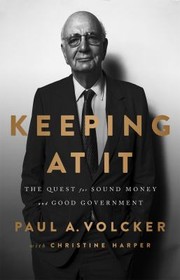
Keeping at it
Volcker's memoir looks back on a long career in public service, including the fight against inflation as Federal Reserve chair. You see how hard choices looked to the person making them. It suits readers who learn best through biography. Remember that it is a participant's own account.
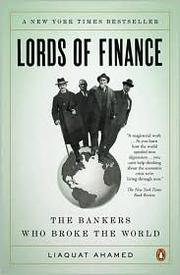
Lords of finance
A narrative history of four central bankers in the years leading to the Great Depression. It shows how decisions about money, gold and interest rates can spread across borders. Pick it if you enjoy character-driven history and want to understand why central banking mistakes can matter so much.
Secrets of the temple
A long and detailed study of the Federal Reserve during the Volcker years. It asks who gains and who pays when money is tightened, and takes a critical view of the institution. Best for patient readers who want politics, history and economics together, alongside accounts written by central bankers.
Questions readers ask
Why do central banks raise interest rates?
Central banks usually raise rates to bring down inflation or to stop it building. Higher rates make borrowing dearer and saving more rewarding, so spending tends to slow. With weaker demand, businesses find it harder to raise prices. The trade-off is that growth and hiring can slow too, so policymakers weigh both risks.
What happens to the economy when interest rates are cut?
Lower rates make many kinds of borrowing cheaper. Households may spend more, especially on long-lasting goods, and firms may find more projects worthwhile. This can support jobs and growth. If demand outpaces what the economy can supply, inflation may pick up. The effects arrive gradually and vary from one downturn to another.
What is the difference between nominal and real interest rates?
The nominal rate is the one actually agreed and paid. The real rate adjusts for inflation, and you can estimate it by subtracting inflation from the nominal rate. For example, if savings earn 2.5 percent while prices rise 3 percent, the real return is about minus 0.5 percent, so your money buys less.
Do higher interest rates always reduce inflation?
Not quickly or with certainty. Higher rates work mainly by cooling demand, and the effect arrives with long and uncertain delays. Inflation can also come from supply problems, such as energy or food shortages, which rates cannot directly solve. Expectations, government budgets, exchange rates and events abroad can all strengthen or weaken the result.
How do interest rates affect exchange rates?
All else equal, higher rates tend to strengthen a country's currency because holding assets in it can look more rewarding. A stronger currency makes imports cheaper and exports more expensive abroad. In practice, other forces such as growth prospects, trade, risk and expected policy elsewhere can outweigh the effect of one rate change.
Sources
- Monetary Policy: What Are Its Goals? How Does It Work?. Board of Governors of the Federal Reserve System. Accessed 2026-11-29.
- Transmission mechanism of monetary policy. European Central Bank. Accessed 2026-11-29.
- How do higher interest rates help to lower inflation?. Bank of England. Accessed 2026-11-29.
- Monetary Policy: Stabilizing Prices and Output. International Monetary Fund. Accessed 2026-11-29.
- What is the difference between nominal and real interest rates?. European Central Bank. Accessed 2026-11-29.
- Interest Rate Risk: When Interest Rates Go Up, Prices of Fixed-Rate Bonds Fall. U.S. Securities and Exchange Commission, Investor.gov. Accessed 2026-11-29.
- Recession of 1981-82. Federal Reserve History. Accessed 2026-11-29.
- The Great Inflation. Federal Reserve History. Accessed 2026-11-29.
- What are interest rates?. Bank of England. Accessed 2026-11-29.