Finance and the economy
Why do countries trade with each other?
Countries trade because each can get more by specialising in what it does relatively well and buying other things from abroad. This is called comparative advantage. Trade also gives buyers more variety and lets producers work at larger scale. The country as a whole can gain, while some workers and firms lose.
By BookPounce | Updated
What is comparative advantage?
Comparative advantage is the idea at the centre of trade economics. It is usually traced to David Ricardo, an economist writing in the early nineteenth century. His point was that trade depends on relative costs, not only on who is best at making something [1].
Think about your own life. You might be able to cook, fix a tap and do your accounts. But every hour spent on one job is an hour not spent on another. What you give up is called the opportunity cost.
Countries face the same choice. They have limited workers, land, machines and time. A country has a comparative advantage in a good when it gives up less than others do to make it. It can then make more of that good, sell some abroad, and buy the things that would have cost it more to produce at home.
The World Trade Organization sums up the surprising part this way: "A country does not have to be best at anything to gain from trade." [2] The same logic applies to services, such as software and financial products [1].
How can both countries gain if one is better at everything?
A small example from an International Monetary Fund article makes this clear [1]. In one hour of work, Country A can make 3 kilograms of steel or 2 shirts. Country B can make 1 kilogram of steel or 1 shirt. Country A is better at both.
Now look at what each one gives up. In Country A, one shirt costs 1.5 kilograms of steel that could have been made instead. In Country B, one shirt costs only 1 kilogram. So shirts are relatively cheap to make in Country B, and steel is relatively cheap to make in Country A.
Suppose A makes more steel and B makes more shirts. They then swap 2 shirts for 2.5 kilograms of steel. The article shows that this can leave total shirt output unchanged while adding 1 kilogram of steel [1]. That extra steel is the gain from trade.
The price matters. A swap works for both sides when one shirt trades for something between 1 and 1.5 kilograms of steel. Inside that range, each country gets a better deal than it could manage alone. Where the price settles decides how the gain is shared.
Where does a country's advantage come from?
Some reasons are easy to see. Climate, farmland and minerals differ from place to place. A country with the right weather can grow coffee at far lower cost than a cold one.
Economists also look at what a country has plenty of. The Heckscher-Ohlin approach says countries tend to export goods that use a lot of their abundant resource. A country with many machines and much investment may export goods that need heavy capital. A country with many workers may export goods that need much labour. This is an important influence, though not the only one [1].
Advantages also change over time. A country may lose its edge in one industry when wages rise or natural resources run down. An open economy can become competitive in other goods or services, and the WTO describes this shift as normally gradual [2].
So comparative advantage is not a fixed label. Skills, technology, roads, ports and institutions can all shape what a country is relatively good at. You can think of it as a snapshot of current costs, which later choices and events may change.
Why do similar countries sell each other similar things?
Differences do not explain everything. Many countries with similar incomes and skills trade heavily with one another, often in the same kind of product. Sweden, for example, both exports and imports cars [3].
Paul Krugman's work helps explain this, and it was recognised with the 2008 prize in economic sciences. Many goods become cheaper to make in long production runs. Economists call this economies of scale. At the same time, buyers want variety [3].
Put those two facts together. One firm can specialise in one kind of car and sell it to the world. A firm in another country can do the same with a different kind. Each reaches a large market, costs can fall, and you get more choice in the showroom [3].
Variety matters beyond shop shelves. The IMF article reports that the United States came to import four times as many varieties of goods as it did in the 1970s. It also notes that access to a wider range of inputs can support investment and innovation [1]. A manufacturer with more parts to choose from can often build a better product.
How do global supply chains change trade?
Trade is not only about finished goods moving from one country to another. A single product may cross several borders before you buy it. One country designs it, others make the parts, and another puts them together. These networks are called global value chains.
The World Bank's 2020 World Development Report found that they accounted for almost half of world trade. It also found that they had helped poorer countries grow faster, and that their expansion had stalled after the 2008 financial crisis [4].
This changes how comparative advantage works in practice. A country does not need to build a whole car or phone to take part. It can specialise in one task or one component and join a larger chain.
The overall scale is large. According to the WTO, world trade in goods and commercial services reached 34.89 trillion US dollars in 2025, on a balance of payments basis [6]. That figure includes services as well as goods, so it covers far more than what travels in shipping containers.
If trade helps, why do some people oppose it?
The gains from trade are not shared evenly. Firms and workers who compete with imports can lose sales and jobs, especially if they cannot move easily into other work [1].
A well known study by David Autor, David Dorn and Gordon Hanson looked at rising imports from China into the United States between 1990 and 2007. Local areas more exposed to that competition saw higher unemployment, lower wages and fewer people in the labour force. The authors estimated that it explained about a quarter of the fall in US manufacturing employment over the period [5].
Politics adds another layer. The benefits of cheaper and more varied goods are spread across many people, who may hardly notice them. The losses are concentrated, so those affected have a strong reason to ask for protection [1].
Governments can respond with tariffs, which are taxes on imports, or with other barriers. The WTO argues that protection can leave producers less efficient and shrink markets if many countries follow suit [2]. The IMF article suggests targeted help for workers and firms that need to adjust [1]. How to balance these concerns remains a live public debate.
Books to read
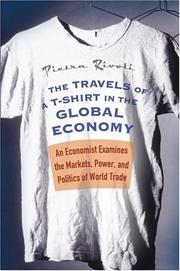
The Travels of a T-Shirt in the Global Economy
Rivoli follows one cheap T-shirt from cotton field to factory to used clothing market. You see how markets, politics and history shape each step. It suits beginners who learn best through a story and want to meet the people and rules behind a product they already own.
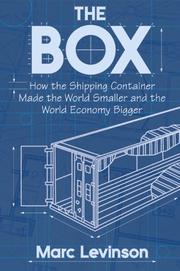
The Box
This history of the shipping container shows how a plain steel box changed the cost of moving goods, and with it ports, jobs and factory locations. It suits readers who want to understand the practical side of trade, beyond theory, through a clear business and technology story.

A splendid exchange
Bernstein traces how trade shaped the world from ancient routes to modern globalisation. You get the long view, including the conflicts and the people who lost out as well as those who gained. It suits history lovers who want context for today's arguments about open markets.

Free Trade under Fire
Irwin, an economist, explains the case for open trade and tests common objections about jobs, deficits and trade rules against evidence. It suits readers who want the economics in plain language. Look for a recent edition, and read it knowing the author argues in favour of free trade.

Against the tide
This is an intellectual history of free trade. It follows how thinkers built the idea and how critics challenged it over the centuries. You will get most from it if you already know the basics of comparative advantage and want to see where the arguments came from.
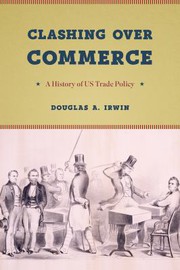
Clashing over commerce
A detailed history of United States trade policy, showing how regions, industries and political parties fought over tariffs and agreements. It is long and thorough, so it suits committed readers, students and anyone who wants to understand why trade policy stays politically heated.
Questions readers ask
What is the difference between absolute and comparative advantage?
Absolute advantage means you can make something using fewer resources than someone else. Comparative advantage means you give up less of other things to make it. A country can lack any absolute advantage and still have a comparative advantage in some goods, which gives it a basis for trading profitably with others.
Why not make everything at home?
A country could try, but it would have to move workers and money into things it makes at relatively high cost. That leaves less for the things it does relatively well. You would likely face higher prices or less choice. Some countries still protect certain industries for security, political or social reasons.
Does everyone benefit from international trade?
No. A country as a whole can gain while particular workers, firms and towns lose. Import competition can reduce jobs and wages in exposed areas, and moving to new work can be hard. This is why trade debates often turn on how gains are shared and what help is offered to those affected.
What is a tariff?
A tariff is a tax a government charges on imported goods. It usually makes the imported item more expensive, which can help domestic producers that compete with it. The cost can fall on buyers, including firms that use imported parts. Other countries may also respond with barriers of their own.
Do countries trade services as well as goods?
Yes. Services such as transport, travel, software and finance are traded across borders too. The logic of comparative advantage applies to them as it does to physical goods. Services often face significant barriers, because rules on who may operate in a market can be harder to change than a simple import tax.
Sources
- International Trade: Commerce among Nations. International Monetary Fund, Finance and Development. Accessed 2026-11-29.
- Understanding the WTO: The case for open trade. World Trade Organization. Accessed 2026-11-29.
- The Prize in Economic Sciences 2008. Royal Swedish Academy of Sciences. Accessed 2026-11-29.
- World Development Report 2020: Trading for Development in the Age of Global Value Chains. World Bank. Accessed 2026-11-29.
- The China Syndrome: Local Labor Market Effects of Import Competition in the United States. National Bureau of Economic Research, Working Paper 18054. Accessed 2026-11-29.
- World Trade Statistics. World Trade Organization. Accessed 2026-11-29.