Finance and the economy
What causes inflation?
Inflation is a general rise in prices over time. It usually happens when demand outruns what an economy can produce, when production costs jump, or when people expect prices to keep climbing and act on that belief. Sustained high inflation is also linked to money growing too fast. Often several causes work together.
By BookPounce | Updated
What is inflation, and how is it measured?
Inflation is the rate at which prices rise over a period, usually a year [2]. One expensive item is not inflation on its own. The idea is about prices across the economy, so your money covers less than it did before.
The most common measure is the consumer price index, or CPI. It tracks the cost of a basket of goods and services that households commonly pay for [2]. In the United Kingdom, the statistics office follows about 700 items in its basket [7]. If inflation is 2%, a basket that cost £100 a year ago costs £102 today [7].
Economists also look at core inflation. This leaves out volatile items such as food and energy, which can make the underlying trend easier to see [2].
Why does it matter to you? If your income grows more slowly than prices, your real income falls. You can afford less, even if the number on your payslip is higher [2].
A slower inflation rate does not mean prices are going down. It means they are still rising, only less quickly. A general fall in prices is called deflation, and central banks try to avoid that too [7].
How do demand and costs push prices up?
Economists often start with two forces: demand-pull and cost-push.
Demand-pull inflation happens when total spending is greater than what the economy can sustainably produce [1]. Households, businesses, governments or overseas customers may all be spending more. Firms see strong orders and have room to charge more. They also compete for workers, which can lift wages. Higher wages add to costs and to spending, so the pressure can feed on itself [1]. Lower interest rates or higher government spending can be sources of this extra demand [2].
Cost-push inflation starts on the supply side. Producing things becomes more expensive or more difficult, so supply shrinks and prices rise [1]. Costlier oil is a classic case. Fuel gets dearer, then transport, then the goods that travel by truck, including groceries [1]. Floods or cyclones that damage crops can raise food and restaurant prices for a while [1].
The difference matters. With demand-pull inflation, the economy is often busy and hiring. With cost-push inflation, you can face higher prices while production is weaker. In real life the two can arrive together, and it takes careful work to tell how much each one contributes.
Why do expectations matter so much?
What people think prices will do can shape what prices actually do. These beliefs are called inflation expectations [1].
Imagine you run a small firm and you expect your suppliers to charge much more next year. You might raise your own prices early. Your staff, expecting higher bills, might ask for a bigger pay rise. If many firms and workers do the same, the expected inflation shows up [1]. Wage deals and contracts can build it in, and past inflation can carry forward into the future [2].
Economists say expectations are anchored when people trust inflation to return to the central bank's target. In that case, a short shock such as a jump in costs is less likely to change behaviour, and inflation tends to settle again [1]. When expectations come loose, high inflation can become entrenched [1].
This is one reason central banks publish clear targets. The US Federal Reserve aims for 2% inflation over the longer run, measured by the price index for personal consumption expenditures [9]. The Bank of England has a 2% target set by the government, measured by CPI [7]. A target only helps if people believe the bank will act on it.
Does printing money cause inflation?
Money is an important part of the story, especially when inflation stays high for years. If the money supply grows too large compared with the size of the economy, each unit of currency loses value [2]. This link is at the heart of the quantity theory of money, one of the oldest ideas in economics [2].
It helps to know where money comes from. Most money in a modern economy is not printed notes. It is created when commercial banks make loans, which adds deposits to borrowers' accounts [8]. The central bank still has great influence, mainly by setting interest rates that affect how much people and firms borrow [8]. It can also buy assets, a policy known as quantitative easing [8].
So the phrase "printing money" is a shortcut. What matters is whether money and spending grow much faster than the economy's ability to supply goods and services.
The most extreme case is hyperinflation, often described as inflation of 1,000% or more in a year. Zimbabwe in 2008 is a well-known example, where recovery involved giving up the national currency [2]. Episodes like this are far from the ordinary inflation most countries experience.
What caused the big inflation episodes of the 1970s and 2020s?
In the United States, inflation was about 1% in 1964 and more than 14% in 1980 [3]. A Federal Reserve history essay traces its source to central bank policies that let the money supply grow too much [3]. Government spending pressures, the end of the dollar's link to gold, and poor real-time data played a part. Oil shocks in 1973 and 1979 added to the strain [3]. Under Paul Volcker, the Federal Reserve tightened policy. Deep recessions followed, and inflation dropped below 5% by the end of the 1981 to 1982 downturn [3].
The pandemic era looked different at first. US consumer price inflation went from 1.7% in February 2021 to a peak of about 9% in June 2022 [5]. Olivier Blanchard and Ben Bernanke found that the early surge came mostly from price shocks, including commodities and shortages in particular sectors, rather than from an overheated job market [4]. Strong demand helped drive some of those commodity prices [4]. Labour market pressure had a longer-lasting effect [4].
Their later study of 11 economies also found supply disruptions and food and energy prices were the main early drivers in most of them [6].
How do central banks try to control inflation?
The main tool is a short-term interest rate. In the UK it is called Bank Rate, and it influences other interest rates across the economy [7].
When the central bank raises rates, borrowing costs more and saving pays more. People and businesses tend to spend less, which slows price rises. Lower rates work the other way and encourage spending [7].
The effect takes time. A 1999 Bank of England paper estimated that rate decisions have their fullest effect on output after about one year, and on inflation after about two years [10]. Estimates like this are rough, and the timing can differ from one period to another. That is why central banks try to look ahead instead of reacting only to the latest figure.
Rates also have limits. They work mainly through spending. They cannot repair a damaged harvest or reopen a closed factory. When inflation comes from supply, policymakers face a hard trade-off between steadying prices and protecting jobs. Blanchard and Bernanke concluded that returning inflation to target after the pandemic might require somewhat higher unemployment in several countries [6].
Governments matter too, since their spending and tax choices change total demand [2].
Books to read

We Need to Talk about Inflation
Written after the post-pandemic price surge, this book draws on history to explain why inflation returns and why it is hard to shake off. It suits readers who want a current, readable argument about what policymakers can miss when prices start to climb.

The great inflation and its aftermath
A journalist's account of American inflation from the 1960s to the early 1980s and what followed. You see how economic ideas, politics and public mood shaped prices. It suits readers who learn best through history and want context for today's debates.
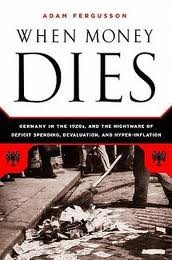
When money dies
This history of hyperinflation in Weimar Germany, with Austria and Hungary, shows what happens when a currency collapses. It focuses on how people lived through it. Choose it if you want to feel the human stakes behind the economic terms.
Money mischief
Friedman uses episodes from monetary history to show why he saw money growth as central to inflation. It suits readers who want the monetarist case from one of its best-known voices. Read it alongside accounts that give more weight to supply shocks.

21st Century Monetary Policy
A former Federal Reserve chair explains how the central bank's thinking and tools changed from the high inflation of the 1960s and 1970s to the pandemic. It suits readers who want to understand why central banks act as they do.
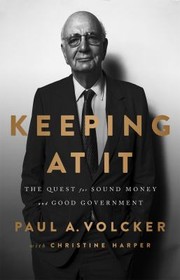
Keeping at it
Volcker's memoir includes his years leading the Federal Reserve during the fight against double-digit inflation. You get a first-hand view of difficult choices and the political pressure around them. It suits intermediate readers who like economics told through the life of a public servant.
Questions readers ask
What are the three main causes of inflation?
The three usually named are demand-pull, cost-push and expectations. Demand-pull means spending outruns what the economy can produce. Cost-push means production gets more expensive or supply falls. Expectations mean people set prices and wages based on the inflation they think is coming. Several can act at once.
Is inflation always bad?
Not at low, steady levels. Many central banks aim for about 2% a year. The Bank of England describes this as low enough to keep price rises small while helping to avoid deflation. High or unpredictable inflation is harder, because it erodes purchasing power and makes planning difficult.
Why do higher interest rates reduce inflation?
Higher rates make borrowing more expensive and saving more rewarding. Households and businesses then tend to spend less. With weaker demand, firms find it harder to raise prices. The effect is not instant. It can take a year or more to work through the economy.
Do wage increases cause inflation?
They can add to it. If firms pass higher pay costs on through prices, and workers then seek more pay to keep up, a loop can form. Research on the pandemic era found price shocks drove the early surge, while tight labour markets had a more persistent effect later.
What is the difference between inflation and hyperinflation?
Inflation is any general rise in prices over time, including a mild 2% a year. Hyperinflation is extreme, often described as 1,000% or more in a year. Money loses value so quickly that daily life and business are badly disrupted, and recovery usually needs drastic policy changes.
Sources
- Causes of Inflation. Reserve Bank of Australia. Accessed 2026-11-29.
- Back to Basics: What Is Inflation?. International Monetary Fund, Finance and Development. Accessed 2026-11-29.
- The Great Inflation. Federal Reserve History. Accessed 2026-11-29.
- What Caused the US Pandemic-Era Inflation? (Working Paper 31417). National Bureau of Economic Research. Accessed 2026-11-29.
- Unpacking the Causes of Pandemic-Era Inflation in the US. NBER Digest. Accessed 2026-11-29.
- An Analysis of Pandemic-Era Inflation in 11 Economies (Working Paper 32532). National Bureau of Economic Research. Accessed 2026-11-29.
- What is inflation?. Bank of England. Accessed 2026-11-29.
- Money creation in the modern economy. Bank of England Quarterly Bulletin. Accessed 2026-11-29.
- Why does the Federal Reserve aim for inflation of 2 percent over the longer run?. Board of Governors of the Federal Reserve System. Accessed 2026-11-29.
- The transmission mechanism of monetary policy. Bank of England Quarterly Bulletin. Accessed 2026-11-29.