Finance and the economy
What is money, and why does it have value?
Money is anything people widely accept to pay, to price things and to save for later. Modern money is mostly not backed by gold. It has value because people trust that others will accept it, supported by law, taxes, banks and a central bank that works to keep prices stable.
By BookPounce | Updated
What does money actually do?
Economists usually describe money by three jobs [1].
First, it is a medium of exchange. You use it to buy and sell. Second, it is a unit of account. It gives everyone a common way to state prices, so you can compare a bus ticket with a bag of rice. Third, it is a store of value. You can set it aside today and spend it later [1].
Picture life without it. In a barter economy, a baker who needs shoes must find a shoemaker who wants bread right now. That is hard to arrange. It also makes it difficult for people to specialise in one kind of work [1].
Money removes that matching problem. You sell your work or your goods to one person and buy what you need from someone else.
The three jobs do not always work equally well. When prices climb quickly, money still changes hands, but it becomes a poor place to keep savings. Its future buying power also gets harder to guess [3]. A useful way to judge any kind of money is to ask how well it does all three.
What has been used as money in the past?
Money has taken many forms. People have used cowry shells, barley and peppercorns [1]. The best choices lasted well. Something that spoils quickly, like fresh fruit, makes poor money [1].
Gold and silver became important because they were durable, scarce, easy to divide and easy to carry compared with many goods [1]. This is often called commodity money. The material itself has value [2].
Later, people left metal with banks and traded paper claims on it. The paper was easier to move than the metal. In time, the notes were separated from the metal altogether [1].
Britain shows the change clearly. The Bank of England has issued banknotes for more than 300 years. You could once exchange them for gold on demand, but that ended in 1931 [2].
The United States followed its own path. Gold redemption of Federal Reserve notes at home ended in 1934 [5]. Foreign governments could still exchange dollars for gold under the Bretton Woods system, at a fixed price of 35 dollars an ounce. On 15 August 1971, President Nixon announced that this window was closing [6].
Why does money have value if it is not backed by gold?
Today's notes and bank balances are called fiat money. They are not backed by gold or another commodity [2]. A Federal Reserve note cannot be redeemed for gold or silver [5].
So where does the value come from? The short answer is trust. You accept money for your work because you expect the shop, your landlord and your neighbour to accept it too. The IMF puts it simply: money works because people believe that it will [1].
That belief has supports. One is law. In the United States, coins and currency are legal tender for all debts, public charges, taxes and dues [7]. Because taxes can be settled in the national currency, people have a standing reason to want it.
Legal tender has limits, though. The Federal Reserve says no federal law requires a private business to accept cash, although state laws may differ [8].
Another support is good management. The Bank of England links the value of fiat money to public trust in the government and how it manages the economy [2]. Notes also carry security features, because widespread fakes would damage confidence [3].
Who creates money today?
Many people picture a printing press. Cash is real, but it is a small part of the story. In the United Kingdom, about 96% of the money people hold is in bank deposits, and about 4% is notes and coins [2].
Most new money appears when commercial banks lend. Suppose a bank lends you 100 pounds and adds it to your account. Your balance goes up, and new money now exists. When you repay the loan, that money disappears again [4].
This does not make anyone richer by itself. You have more money in your account, but you also owe a debt [4].
Banks cannot lend without limit. Rules require them to hold capital that can absorb losses if borrowers do not repay. They also need enough reserves, a form of electronic money held at the central bank, to settle payments with other banks [4].
Central banks sit at the centre of this system. They issue banknotes and hold the reserves that banks use to pay each other [3][4]. So the money you use every day combines public money from the central bank with deposits at private banks.
How can money lose its value?
Money's value is what it can buy. When prices in general rise, each unit buys less. This is inflation. When prices in general drop, it is called deflation. The amount of money in circulation is one thing that affects prices: too much can feed inflation, and too little can contribute to deflation [1].
Slow and steady change is easier to live with than wild swings. The US Federal Reserve aims for 2 percent inflation over the longer run. Its reasoning is that low, predictable inflation helps households and businesses make decisions about saving and borrowing [9].
Trust can also break. In extreme hyperinflation, such as in Zimbabwe in the 2000s, people refused to use the banknotes [3]. In the 1980s, people in several Latin American countries, including Argentina and Brazil, turned to US dollars after losing confidence in their own currencies [1].
New money can earn trust too. Brazil introduced the real in 1994, and Turkey removed six zeros from the lira in 2005. The IMF notes that both changes succeeded because people accepted the new units [1]. The law can name a currency, but people still have to believe in it.
Books to read
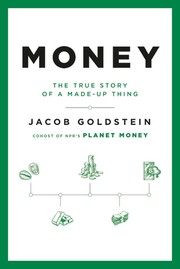
Money
Subtitled The True Story of a Made-Up Thing, this is a lively place to begin. Goldstein tells how people invented and reinvented money, using stories instead of equations. It suits you if you want the big idea of shared trust explained in plain, friendly language before trying heavier books.
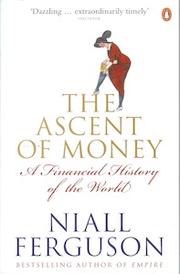
The ascent of money
A broad financial history that moves from early money and credit to banks, bond markets, stock markets and insurance. You get the wider system around money, told through people and events. It suits readers who learn best from history and want to see how the pieces of finance connect.

Money: The Unauthorised Biography
Martin challenges the familiar story that money began as a handy object replacing barter. He argues that it is better understood as a social system of credit and accounts. Read it if you already know the basics and want a thoughtful argument that makes you question them.
Money mischief
Friedman uses episodes from monetary history to show how changes in money can affect whole societies, with close attention to inflation. It offers the view of a leading monetarist economist, so read it as one influential position in a debate. Best for readers comfortable with some economic reasoning.
A history of money
A large, detailed survey of money from ancient times to the modern era. It works well as a reference that you can dip into by period or place. Choose it if you are studying the subject seriously and want far more detail than a popular history can give.
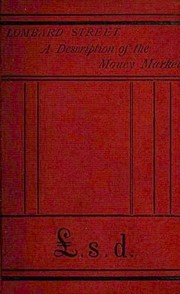
Lombard Street
Bagehot's classic describes the London money market and the Bank of England's role during financial strain. Its ideas about lending in a panic still shape discussion of central banks. The Victorian prose takes patience, so it suits readers who want to meet an original source directly.
Questions readers ask
Is money backed by gold today?
In the United States and the United Kingdom, no. Federal Reserve notes cannot be redeemed for gold or silver, and Bank of England notes have not been exchangeable for gold since 1931. These are fiat currencies. Their value rests on public trust, wide acceptance, the legal system and how well the economy and money supply are managed.
What is the difference between fiat money and commodity money?
Commodity money is made of something that has value of its own, such as gold or silver. Fiat money has little value as a physical object and is not backed by a commodity. A modern banknote is an example. People accept it because they trust that others will accept it, with support from public institutions and law.
Why can't a government just print more money to make everyone rich?
More money does not create more food, homes or skilled work. If the amount of money grows too far beyond what the economy can supply, prices can climb and each unit buys less. In severe cases, people lose confidence and stop wanting the currency. This is one reason many countries give money decisions to independent central banks.
Is money in a bank account the same as cash?
Both work as money, but they are not identical. Cash is a note or coin you hold, issued by a public authority. A bank deposit is an electronic balance that your commercial bank owes to you. You can usually spend it by card or transfer, or withdraw it as cash. In the UK, deposits make up most money.
Does a shop have to accept cash?
It depends on where you are. In the United States, the Federal Reserve says no federal law requires a private business to accept currency or coins as payment for goods or services, though a state law may say otherwise. Legal tender status concerns debts, taxes and dues. Check the rules that apply where you live.
Sources
- What Is Money? (Back to Basics, Finance & Development, September 2012). International Monetary Fund. Accessed 2026-11-29.
- What is money?. Bank of England. Accessed 2026-11-29.
- Why does money depend on trust?. Bank of England. Accessed 2026-11-29.
- How is money created?. Bank of England. Accessed 2026-11-29.
- Is U.S. currency still backed by gold?. Board of Governors of the Federal Reserve System. Accessed 2026-11-29.
- Nixon Ends Convertibility of U.S. Dollars to Gold. Federal Reserve History. Accessed 2026-11-29.
- 31 U.S. Code 5103: Legal tender. Legal Information Institute, Cornell Law School. Accessed 2026-11-29.
- Is it legal for a business in the United States to refuse cash as a form of payment?. Board of Governors of the Federal Reserve System. Accessed 2026-11-29.
- Why does the Federal Reserve aim for inflation of 2 percent over the longer run?. Board of Governors of the Federal Reserve System. Accessed 2026-11-29.