Company stories
How Disney became an entertainment empire
Disney grew by creating characters it owned, then using them again and again. A small 1923 cartoon studio added feature films, television and theme parks. Later leaders bought ABC, Pixar, Marvel, Lucasfilm and much of 21st Century Fox, then launched Disney+ to reach viewers directly. In fiscal 2025, revenue was $94.4 billion.
By BookPounce | Updated
How did the Disney company start?
The company dates its start to October 16, 1923. That day Walt Disney signed a contract with Margaret Winkler, a New York cartoon distributor, for a series called the Alice Comedies [2]. Walt and his brother Roy would produce the films, which put a real girl into a cartoon world. The series ran from 1924 to 1927 and gave the young studio its base [2].
Then came a hard lesson. In 1927 Walt created Oswald the Lucky Rabbit. After 26 cartoons, he lost the character to his distributor, which also signed away most of his animators [1]. From then on, Walt made sure he owned what he produced [1].
He and his chief animator, Ub Iwerks, created Mickey Mouse. Steamboat Willie, a Mickey cartoon with synchronized sound, opened in New York on November 18, 1928 [1].
Mickey soon earned money away from the screen too. A New York manufacturer paid Walt $300 to put the mouse on pencil tablets, which began Disney merchandising. Dolls, dishes and figurines followed [1]. You can already see the pattern: make a character, own it, and let it work in many places.
Why was Snow White such a turning point?
Short cartoons made Disney known. A full-length animated film was a much bigger bet. Walt announced Snow White and the Seven Dwarfs in 1934, and the work took three years [1]. More than 750 artists worked on it [4].
The film premiered on December 21, 1937, in Hollywood. It cost $1.4 million to make and earned $8.5 million worldwide in its original release [4]. For a time it was the highest-grossing film ever made, until Gone with the Wind passed it [4].
The studio had also been pushing its craft in the Silly Symphonies series. One of them, Flowers and Trees, was the first full-color cartoon and won an Academy Award [1].
Success did not make the road smooth. The Second World War cut off foreign markets, and costly films such as Bambi forced the studio to pull back. During the war it made training and propaganda films for the military [1]. In 1950, Treasure Island became Disney's first completely live-action film [1]. That step widened what a Disney movie could be, beyond drawings alone.
How did television and Disneyland change the business?
Walt wanted a park that parents and children could enjoy together [1]. Television helped him pay for it. In 1954 he agreed to make a regular series for the ABC network if ABC helped fund Disneyland. ABC put in $500,000, guaranteed $4.5 million in loans and became a one-third owner of the park [3].
The deal did two jobs at once. The weekly show brought Disney into American homes and promoted the park while it was being built [3]. Disneyland opened in Anaheim, California, on July 17, 1955, with a live broadcast on ABC [1][3]. The Mickey Mouse Club also began that year [1]. In 1960 Disney bought back ABC's share of the park for $7.5 million [3].
Walt died on December 15, 1966 [1]. His brother Roy then oversaw the building and financing of Walt Disney World near Orlando. It opened on October 1, 1971, and Roy died later that year [1].
Parks gave the company something films could not: a place where you could visit the stories in person, and return to them year after year.
What did Michael Eisner and Bob Iger add?
After a period of takeover threats, new leaders arrived. Michael Eisner became chairman and chief executive on September 22, 1984 [5], with Frank Wells as president [1]. Eisner stayed with the company until 2005 [5].
One of the biggest moves of that era was in television. In 1995 Disney agreed to a $19 billion merger with Capital Cities/ABC, completed in February 1996. It brought the ABC network's parent company, local stations and a stake in the sports channel ESPN [3].
Under Bob Iger, Disney bought studios with strong characters and skilled creative teams. It announced a deal for Pixar in 2006, valued at about $7.4 billion in stock. Pixar's Ed Catmull and John Lasseter took leading roles across both animation studios [6].
Marvel came next. The 2009 deal was valued at about $4 billion and brought a library of more than 5,000 characters, including Iron Man and Captain America [7]. In 2012 Disney agreed to buy Lucasfilm, home of Star Wars, for $4.05 billion in cash and stock [8].
Why did Disney buy Fox and launch Disney+?
By the late 2010s, more people were watching through internet services. Disney wanted both a large library and its own way to deliver it.
On March 20, 2019, it completed its purchase of much of 21st Century Fox, a deal Disney valued at about $71 billion [9]. It gained the Twentieth Century Fox film and television studios, FX, National Geographic interests, Star India and a larger interest in the streaming service Hulu [9]. Fox's news, sports and broadcast businesses were spun off into a separate company first, so Disney did not buy them [9].
Later that year came Disney+, with a launch date of November 12, 2019 [10]. It put Disney's films and series in a subscription service under the company's own name.
This was a shift in how the business reached you. For decades, Disney often relied on cinemas, broadcasters, cable companies and shops to get its stories to audiences. With streaming, it could also sell to households directly. The older idea still held: own the characters, then offer them in as many forms as people want.
How does Disney make money today?
Disney reports three main business segments. In fiscal 2025, which ended on September 27, 2025, total revenue was $94.4 billion [11].
Entertainment, which covers film, television and streaming businesses, brought in $42.5 billion. Experiences, which includes the theme parks, brought in $36.2 billion. Sports, led by ESPN, brought in $17.7 billion. These segment figures add up to more than the total because sales between segments are removed [11].
Profit tells a slightly different story. Experiences earned about $10.0 billion in segment operating income, compared with $4.7 billion for Entertainment and $2.9 billion for Sports [11]. So the parks side, which grew from Walt's idea in the 1950s, produced more than half of the segment profit that year.
If you want one takeaway, look at how the parts support each other. A film can introduce a character. A series can keep it in view. A park ride and a toy can give you another way to meet it. That link between businesses explains much of Disney's size, though each part also carries its own costs and risks.
Books to read
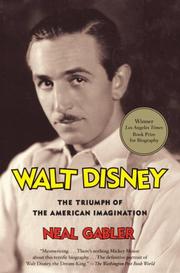
Walt Disney
A long, detailed life of Walt Disney, also sold with the subtitle The Triumph of the American Imagination. It suits you if you want to understand the man behind the studio, his ambitions and his money troubles. Set aside time, because it goes far beyond a quick company summary.

The Animated Man
A biography of Walt Disney by a historian of animation. It is a good choice if you care about how the cartoons were made and how Walt ran his studio. It is more compact than the largest biographies and works well as a second view of the same life.

BUILDING A COMPANY
This is a life of Roy O. Disney, Walt's brother and business partner. Read it to see the side of the story that gets less attention: financing, deals and keeping the studio running. It suits readers who want to know how creative plans were paid for.

Disney's Land
The story of how Disneyland was imagined, financed and built. It is an easy place to start if the theme parks interest you most. You will see why the project looked risky at the time and how many people it took to turn a sketch into a working park.

Storming the Magic Kingdom
An account of the takeover fight over Disney in the 1980s, the crisis that came just before new leadership arrived. It suits readers who enjoy boardroom stories about investors, directors and family interests. It helps explain why 1984 became such a dividing line for the company.
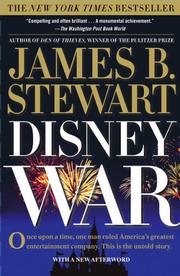
DisneyWar
A reporter's account of the Michael Eisner years, including the revival of the company and the later conflicts at the top. Choose it if you want to learn how leadership, personalities and boards can shape a large business. It reads like a narrative, with plenty of detail.
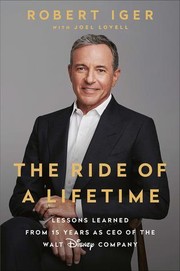
The Ride of a Lifetime
Iger's own account of a career that led to running Disney, including the Pixar, Marvel, Lucasfilm and Fox deals. It is approachable and useful if you want leadership lessons alongside company history. Remember that it is a memoir, so you are hearing one participant's view.
Questions readers ask
Who founded the Disney company?
Walt Disney and his brother Roy built the business together, starting in Los Angeles in 1923. Walt signed the contract for the Alice Comedies on October 16 of that year. Walt is best known for the creative side, while Roy was his business partner and later oversaw the building of Walt Disney World.
What was Disney's first big success?
The Alice Comedies gave the studio its early base. The larger breakthrough was Mickey Mouse, who reached audiences in Steamboat Willie in November 1928. Mickey soon appeared on merchandise, in books and in a comic strip. Snow White and the Seven Dwarfs then proved in 1937 that Disney could succeed with a full-length animated film.
Does Disney own Marvel, Pixar and Star Wars?
Yes. Disney announced its Pixar deal in 2006, its Marvel deal in 2009 and its agreement to buy Lucasfilm, the company behind Star Wars, in 2012. Each brought characters, stories and creative teams that Disney could use across films, television, products and theme parks.
When did Disney buy ABC?
Disney and Capital Cities/ABC announced a $19 billion merger on July 31, 1995, and completed it on February 9, 1996. The two companies already had a shared past. In the 1950s, ABC helped fund Disneyland in return for a regular Disney television series and a share of the park.
Which part of Disney earns the most?
It depends on what you measure. In fiscal 2025, Entertainment had the most revenue at $42.5 billion. Experiences, which includes the theme parks, had the most segment operating income at about $10.0 billion on $36.2 billion of revenue. Sports was the smallest of the three segments on revenue.
Sources
- Disney History. D23, The Official Disney Fan Club. Accessed 2026-11-29.
- Disney100 anniversary: the Disney contract. The Walt Disney Company. Accessed 2026-11-29.
- American Broadcasting Company. D23, The Official Disney Fan Club. Accessed 2026-11-29.
- Snow White and the Seven Dwarfs (film). D23, The Official Disney Fan Club. Accessed 2026-11-29.
- Eisner, Michael D.. D23, The Official Disney Fan Club. Accessed 2026-11-29.
- Joint press release: Disney to acquire Pixar. U.S. Securities and Exchange Commission. Accessed 2026-11-29.
- Press release: Disney to acquire Marvel Entertainment. U.S. Securities and Exchange Commission. Accessed 2026-11-29.
- Press release: Disney to acquire Lucasfilm. U.S. Securities and Exchange Commission. Accessed 2026-11-29.
- Press release: completion of the 21st Century Fox acquisition. U.S. Securities and Exchange Commission. Accessed 2026-11-29.
- The Walt Disney Company fiscal 2019 fourth quarter and full year earnings. U.S. Securities and Exchange Commission. Accessed 2026-11-29.
- The Walt Disney Company fiscal 2025 fourth quarter and full year earnings. U.S. Securities and Exchange Commission. Accessed 2026-11-29.