Company stories
How did Facebook become a social media giant?
Facebook started at Harvard in 2004, spread campus by campus, then opened to the public in 2006. News Feed and an app platform kept people returning. Advertising paid for growth, and buying Instagram and WhatsApp widened its reach. In 2021 the parent company renamed itself Meta.
By BookPounce | Updated
How did Facebook start at Harvard?
Mark Zuckerberg launched a site called thefacebook on February 4, 2004, from a dorm room in Kirkland House [1]. It began as a directory for Harvard undergraduates, and only people with a Harvard email address could join [1]. Britannica names Eduardo Saverin, Dustin Moskovitz and Chris Hughes as co-founders alongside Zuckerberg [2].
There was an earlier experiment. Zuckerberg had built Facemash, which asked visitors to compare photos of students. The photos were used without permission, people objected, and the site was shut down within days [3]. Zuckerberg said the privacy options on the new site were meant to help repair the damage to their reputation [3].
The new site caught on fast. About 650 people registered in the first day [1][3]. By March 2004 it had reached other universities, including Columbia, Stanford and Yale. By May it had spread nationally and was nearing 100,000 users. In June the name became Facebook [1].
The lesson for you is simple. Facebook did not try to reach everyone at once. It started inside a tight community where people already knew each other, then moved to the next one.
Why did opening up and News Feed matter so much?
In September 2006, Facebook made two changes that shaped what came next. First, it launched News Feed, a home page stream of what your friends had been doing. At that point the change affected about 9.5 million users [4]. You no longer had to visit profiles one by one. Updates came to you.
Many users disliked it at first. They felt their activity was suddenly on display, and Facebook added privacy controls within days [5]. The feed stayed.
Second, on September 26, 2006, Facebook opened registration to anyone with a valid email address. Before then, you needed an address from a school or an approved organisation [6]. A college network had become a public one.
Then came outside developers. In May 2007 the company launched Facebook Platform, with more than 65 developer partners offering applications that ran inside the site [7]. Other people were now building reasons for you to visit.
Each step fed the next. More members meant more friends to follow. More friends meant a busier feed. A busier feed and a larger audience made the platform more attractive to developers.
How did Facebook turn users into a business?
Advertising became the engine. Facebook's filing for its public share listing shows revenue of $777 million in 2009, $1,974 million in 2010 and $3,711 million in 2011 [8]. The company listed its shares on Nasdaq in May 2012 at an offering price of $38 [9].
Revenue reached about $5.09 billion in 2012, and advertising supplied 84 percent of it [9]. The audience kept growing too. Facebook passed one billion monthly active users in 2012 [10]. By December of that year, 680 million people a month were using its mobile products, up from 432 million a year earlier [9].
The basic model is easy to follow. You use the service without paying money. Businesses pay to place messages in front of you. The more people who use it, and the more often they return, the more advertising space there is to sell.
The move to phones was a major test. A company born on desktop web pages had to work on a small screen, where people increasingly spent their time. The mobile figures above show how quickly that shift was happening.
Why did Facebook buy Instagram and WhatsApp?
In April 2012, Facebook agreed to buy Instagram, a photo sharing app for phones, for about $1 billion in cash and shares [11]. Zuckerberg said the company planned to keep it running as an independent product [11]. The deal closed in August 2012, when Instagram had more than 100 million registered users [9].
In February 2014 came a much larger agreement. Facebook said it would buy WhatsApp, a messaging service, for about $16 billion in cash and shares, plus $3 billion in restricted stock units for founders and employees [12]. WhatsApp then had over 450 million monthly users [12].
These purchases gave the company strong positions in photos and private messaging, not only in the original social network.
They also drew a legal challenge. The US Federal Trade Commission argued that Meta kept an illegal monopoly partly by buying these two rivals. In November 2025 a federal judge ruled for Meta, finding that the agency had not shown the company held monopoly power [13]. The FTC filed notice of appeal in January 2026 [14]. Check for later developments, since appeals can change the picture.
What trouble came with Facebook's size?
Growth brought hard questions about privacy. The 2006 reaction to News Feed was an early sign [5]. Later the questions moved from angry users to regulators.
In 2012 the Federal Trade Commission issued an order concerning Facebook's privacy practices. In July 2019 the company agreed to pay a $5 billion penalty to settle charges that it had violated that order by deceiving users about their ability to control their personal information [15]. The settlement also required new privacy oversight inside the company [15].
On the same day, the FTC announced separate actions involving Cambridge Analytica, a political consulting firm. The agency alleged that the firm, its former chief executive and an app developer used deceptive tactics to collect personal information from millions of Facebook users [15].
When you read about this period, separate three things: what a regulator alleged, what a company agreed to in a settlement, and what a court decided. They are not the same. Several books below argue strongly about Facebook's choices. Reading more than one helps you weigh the evidence for yourself.
Why did Facebook change its name to Meta?
On October 28, 2021, Zuckerberg introduced Meta as a new company brand covering its apps and technologies. The stated aim was to help build the metaverse, a vision of connected, immersive digital spaces [16]. The Facebook app kept its name. The corporate structure did not change, but the company began reporting two segments: Family of Apps and Reality Labs [16].
Today the Family of Apps includes Facebook, Instagram, Messenger, Meta AI, Threads and WhatsApp. Reality Labs covers products such as Quest headsets and AI glasses [17]. Meta has said it expects Reality Labs to keep operating at a loss for the foreseeable future [17].
The core business remains very large. Meta reported revenue of $200.97 billion for 2025, up 22 percent from the year before [18]. On average, 3.58 billion people used at least one of its family of apps each day in December 2025 [18]. The company says substantially all of its revenue comes from selling advertising [17].
So the name changed, but the pattern is familiar: a huge audience, many connected products and advertising paying for new bets.
Books to read
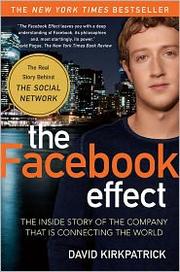
The Facebook Effect
A clear account of the early years, from the Harvard dorm to a global network, written with access to company leaders. Start here if you want the growth story in order. It stops before the Instagram and WhatsApp deals, so pair it with a later book.
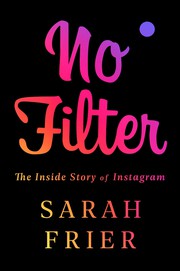
No Filter
The story of Instagram, from its founding to life inside Facebook. It shows what an acquisition can mean for the people and the product being bought. Choose it if you care about design, creators and the tension between a small team and a very large owner.

Zucked
An early investor and former adviser to Zuckerberg explains why they became a critic. The book mixes personal account with argument about attention, advertising and democracy. Read it for a strong point of view, then compare its claims with what other histories report.

Chaos monkeys
A former Facebook product manager describes startup life and the work of building advertising tools around the time of the public listing. The voice is sharp, personal and sometimes provocative. It suits readers curious about how ad targeting became a business from the inside.
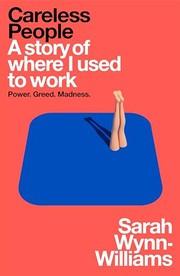
Careless People
A memoir by a former Facebook public policy director about the company's dealings with governments and the conduct of senior leaders. It is one person's account, and Meta has disputed it. Read it for an insider's view of global policy, with that context in mind.
Questions readers ask
Who founded Facebook?
Mark Zuckerberg launched thefacebook at Harvard in February 2004. Britannica also names fellow students Eduardo Saverin, Dustin Moskovitz and Chris Hughes as founders. The site began as a directory for Harvard undergraduates, then spread to other universities before opening to the wider public in 2006.
When did Facebook open to everyone?
Facebook opened registration to anyone with a valid email address on September 26, 2006. Before that, you needed an email address from a school or an approved organisation. The change followed the launch of News Feed earlier that month and turned a mostly closed network into a public one.
How does Facebook make money?
Mainly through advertising. People use the apps without paying money, and businesses pay to show them ads. In 2012, advertising made up 84 percent of Facebook's revenue. In its report on 2025, Meta said substantially all of its revenue still came from selling advertising placements.
Is Facebook the same company as Meta?
Meta is the parent company that used to be called Facebook, Inc. It adopted the new name in October 2021. Facebook is now one of its apps, alongside Instagram, WhatsApp, Messenger, Threads and others. The rename did not change the corporate structure.
Which book should I read first about Facebook?
Start with The Facebook Effect by David Kirkpatrick for a readable account of the early years. Choose Facebook: The Inside Story by Steven Levy if you want a fuller history that continues further. Add No Filter by Sarah Frier to understand Instagram and what happened after the purchase.
Sources
- Ten Years Later, Facebook's First Users Look Back at Site's Earliest Days. The Harvard Crimson. Accessed 2026-11-29.
- Facebook. Britannica. Accessed 2026-11-29.
- Hundreds Register for New Facebook Website. The Harvard Crimson. Accessed 2026-11-29.
- New Facebook Redesign More Than Just Aesthetics. TechCrunch. Accessed 2026-11-29.
- Facebook Retreats in Face of Student Revolt. TechCrunch. Accessed 2026-11-29.
- Facebook Expansion Enables More People to Connect with Friends in a Trusted Environment. Meta Newsroom. Accessed 2026-11-29.
- Facebook Platform Launches with 65 Developer Partners and Over 85 Applications. Meta Newsroom. Accessed 2026-11-29.
- Facebook, Inc. Form S-1/A registration statement, 2012. US Securities and Exchange Commission. Accessed 2026-11-29.
- Facebook, Inc. Form 10-K for 2012. US Securities and Exchange Commission. Accessed 2026-11-29.
- One Billion People on Facebook. Meta Newsroom. Accessed 2026-11-29.
- Facebook to Acquire Instagram. Meta Newsroom. Accessed 2026-11-29.
- Facebook to Acquire WhatsApp, press release filed with Form 8-K. US Securities and Exchange Commission. Accessed 2026-11-29.
- Judge sides with Meta in antitrust trial, will not spin off WhatsApp and Instagram. NPR. Accessed 2026-11-29.
- FTC Appeals Ruling in Meta Monopolization Case. Federal Trade Commission. Accessed 2026-11-29.
- FTC Imposes $5 Billion Penalty and Sweeping New Privacy Restrictions on Facebook. Federal Trade Commission. Accessed 2026-11-29.
- The Facebook Company Is Now Meta. Meta Newsroom. Accessed 2026-11-29.
- Meta Platforms, Inc. Form 10-K for 2025. US Securities and Exchange Commission. Accessed 2026-11-29.
- Meta Reports Fourth Quarter and Full Year 2025 Results. Meta Investor Relations. Accessed 2026-11-29.