Company stories
How did Microsoft come to dominate software?
Microsoft won by supplying the operating system for IBM's PC while keeping the right to license it to other computer makers. As PC clones spread, so did MS-DOS. Windows and Office built on that base, more software drew more users, and courts later ruled that Microsoft had illegally protected its monopoly.
By BookPounce | Updated
How did Microsoft get started?
Microsoft began with a programming language, not an operating system. In 1975, Bill Gates and Paul Allen developed a version of BASIC for the MITS Altair, an early microcomputer, while working in Albuquerque, New Mexico [1].
That first product set a pattern you will see again and again. The two founders did not build computers. They wrote the software that made other companies' machines useful. If a new computer needed a language, Microsoft wanted to supply it.
The company grew from there. Steve Ballmer joined in 1980. In 1981, the business was incorporated as Microsoft and moved to the Seattle area [1].
The timing mattered. Personal computers were still young, and no single standard had taken hold. A small software firm with working products and a habit of moving fast could get in early. The chance that changed everything came from the biggest name in computing at the time: IBM.
Why was the IBM deal so important?
IBM wanted to bring a personal computer to market, and it bought key parts from outside suppliers, including software. Microsoft signed a contract to provide the operating system in November 1980, although it did not yet have one of its own [2].
The answer was close by. Tim Paterson had written a system called 86-DOS at Seattle Computer Products. Microsoft licensed it in December 1980 for $25,000. In the summer of 1981, it bought all rights for another $50,000 [2]. The IBM PC shipped in August 1981 with the system, sold by IBM as PC DOS [2].
The crucial detail is what Microsoft did not give away. It kept the rights and could license the system to other computer makers as MS-DOS [2]. When other firms built IBM-compatible machines, often called clones, they needed that software too. By 1982, Microsoft was supplying MS-DOS for more than fifty of them [1].
So Microsoft did not depend on any one hardware brand winning. It could earn from many of them at once.
How did Windows and Office extend the lead?
MS-DOS asked you to type commands. Windows offered a graphical screen that you could work with more visually. Version 1.0 arrived in 1985, but the big breakthrough was Windows 3.0 in 1990, which was a major success [1]. Windows 3.0 and 3.1 were easier to use than what came before, and Windows took over from plain MS-DOS as the PC standard [3].
Microsoft also pushed into applications, the programs people open to get work done. Office first appeared for Apple's Macintosh in 1989, and a Windows version followed in 1990 [1]. It brought tools such as Word, Excel and PowerPoint together in one package [3].
The company was building for businesses as well. It began work on Windows NT, a sturdier system, in 1988 and released it in 1993 [1]. Microsoft had become a publicly owned company in 1986 [4]. By 1988, it had passed Lotus to become the world's largest software company [1].
In 1995, Windows 95 brought MS-DOS and Windows together in a fully integrated product [4].
Why was Windows so hard to compete with?
Think about how you choose a computer. You want the programs you need to run on it. Software developers think the same way in reverse: they want to write for the system most people already use.
That loop feeds itself. More users attract more programs, and more programs attract more users. In the US antitrust case against Microsoft, the district court called this the applications barrier to entry. It found that the barrier protected Microsoft's position by keeping other systems for Intel-compatible PCs from attracting significant demand [5].
The numbers were striking. The court found that Microsoft's share of the worldwide market for Intel-compatible PC operating systems was then above 95 percent. Even counting Apple's Mac OS, it said the share would be above 80 percent [5].
This helps explain why a rival needed more than a good operating system. It also needed thousands of reasons for people to switch, in the form of software they could actually use. Windows already had them. Anything new started far behind.
What happened in the Microsoft antitrust case?
The case turned largely on the web browser. Netscape Navigator, along with Sun's Java technology, threatened to make the underlying operating system matter less. The district court found that Microsoft acted to protect its barrier against that threat, including by pushing its own Internet Explorer browser at Navigator's expense [5].
In 2000, the district court concluded that Microsoft had broken antitrust law in several ways [5]. The appeal changed the picture. In June 2001, the Court of Appeals agreed that Microsoft had illegally maintained its operating system monopoly. It reversed the finding that Microsoft had illegally attempted to monopolize the browser market, and sent the question of tying the browser to Windows back to the lower court [6].
The appeals court also threw out the original remedy order, which had called for a remedy decided by a judge whose contacts with reporters it criticized [6]. The case moved to a new phase, and a final judgment was entered in November 2002 [7].
The lesson is balanced. Microsoft's success had real business causes, and some of its conduct in defending that success was found unlawful.
How did Microsoft stay powerful after the PC era?
Leading in PCs did not guarantee leading everywhere. Ballmer took over from Gates as chief executive in 2000. During Ballmer's tenure, Microsoft missed the shift to mobile and fell behind in internet services and social media [3].
Some later strengths were also planted then. Microsoft launched Azure, its cloud computing platform, in 2010 [3]. In February 2014, the board named Satya Nadella, who had led the Cloud and Enterprise group, as chief executive [8]. Nadella then refocused the company around the cloud [3].
The results show how far the business has moved from boxed software. In fiscal year 2025, which ended on June 30, 2025, Microsoft reported revenue of $281.7 billion, up 15 percent. Azure passed $75 billion in revenue for the first time, up 34 percent [9].
The thread running through the story is the platform. First it was a language, then an operating system, then a suite of work tools, and then cloud services that other organizations build on.
Books to read

Source Code
Start here if you want the story in a founder's own voice. Gates looks back on childhood, early friendships and the first steps into software. It suits readers who care about how habits and chances form before a company exists. Read it as memoir, and compare it with outside accounts.
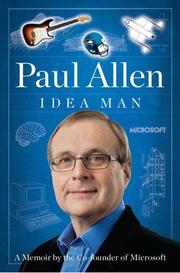
Idea man
The co-founder's memoir gives you a second view of the early Microsoft years, including the partnership with Gates and its strains. It also follows Allen's life after leaving daily work at the company. It suits readers who like to hear more than one side of a founding story.

Accidental empires
This lively, opinionated history places Microsoft among the other companies and personalities of the early personal computer industry. It helps you see why luck, timing and rivals mattered, not only talent. It suits readers who enjoy sharp commentary and want the wider Silicon Valley setting.
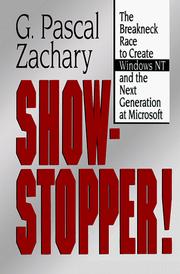
Show-Stopper!
Follow the team that built Windows NT, led by Dave Cutler, as it races to finish a huge piece of software. You see the pressure, the arguments and the human cost of shipping. It suits programmers, project managers and anyone curious about how large products get made.
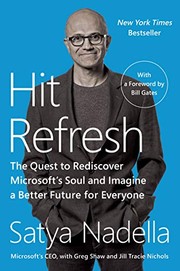
Hit Refresh
Nadella describes the effort to change Microsoft's culture and direction after becoming chief executive, with attention to cloud computing and artificial intelligence. It suits readers interested in leading a large, established company through change. As a sitting leader's account, it is best read alongside independent reporting.
Questions readers ask
Did Microsoft create MS-DOS from scratch?
No. MS-DOS grew out of 86-DOS, a system Tim Paterson wrote at Seattle Computer Products. Microsoft first licensed it in December 1980 and bought all rights in 1981. It then supplied the system to IBM as PC DOS and licensed it to other computer makers under the MS-DOS name.
What was the smartest business move Microsoft made?
Many accounts point to keeping the right to license its operating system beyond IBM. When other companies built IBM-compatible PCs, Microsoft could supply them too. That meant its growth followed the whole PC market rather than one manufacturer. Windows and Office later built on that wide base of users.
Was Microsoft found to be a monopoly?
Yes. In the US case, the district court found that Microsoft held monopoly power in operating systems for Intel-compatible PCs. In 2001, the Court of Appeals upheld liability for illegally maintaining that monopoly. It reversed or sent back other parts of the ruling and set aside the original remedy order.
When did Microsoft Office come out?
The first version of Office was released for Apple's Macintosh in 1989, and the first version for Windows followed in 1990. It bundled productivity programs into one package. This gave Microsoft a strong position in the applications people used at work, alongside its position in operating systems.
Which book should I read first about Microsoft?
Choose by what you want to know. Source Code is a good start for Gates's early life in a personal voice. Hard Drive offers an outside account of the company's rise up to the early 1990s. For the more recent change in direction, read Hit Refresh by Satya Nadella.
Sources
- Microsoft in the 1980s. EBSCO Research Starters. Accessed 2026-11-29.
- Microsoft MS-DOS early source code. Computer History Museum. Accessed 2026-11-29.
- Microsoft at 50: The 7 biggest game changers through five decades. Computerworld. Accessed 2026-11-29.
- Microsoft Corporation. Britannica. Accessed 2026-11-29.
- United States v. Microsoft: Conclusions of Law. US District Court, hosted by Harvard Law School's Berkman Center. Accessed 2026-11-29.
- United States v. Microsoft Corp., 253 F.3d 34 (D.C. Cir. 2001). Justia. Accessed 2026-11-29.
- U.S. v. Microsoft Corporation (Browser and Middleware). US Department of Justice, Antitrust Division. Accessed 2026-11-29.
- Microsoft Board names Satya Nadella as CEO. Microsoft. Accessed 2026-11-29.
- Annual Report 2025. Microsoft. Accessed 2026-11-29.