Company stories
How did Netflix beat Blockbuster?
Netflix beat Blockbuster by building a simpler way to rent: DVDs by mail, a monthly fee and no late fees, followed by streaming in 2007. Blockbuster did fight back online, but it carried thousands of stores, lost late fee income, held heavy debt and changed strategy. It filed for bankruptcy in 2010.
By BookPounce | Updated
What did Blockbuster look like at its peak?
It helps to picture how big Blockbuster was. At the end of 2005 it had 9,042 stores, including 7,158 that the company ran itself and 1,884 run by franchisees [1]. Its revenue was about $6.1 billion in 2004 and $5.9 billion in 2005 [1]. It had also become a fully independent company in October 2004, when it split off from Viacom [1].
The model was familiar. You drove to a store, picked from the shelves and brought the film back on time. If you were late, you paid. Those charges, which the company called extended viewing fees, made up about 14% of its rental revenue in 2004 [1].
That detail matters. A fee that annoys customers can also be one a business depends on. Blockbuster's size gave it a famous brand and a shop in many neighbourhoods. It also gave the company rent, staff and stock to pay for, whether or not customers walked in. A rival without stores did not carry those same costs.
How did Netflix start, and what did it do differently?
Netflix was incorporated in Delaware in August 1997 [2]. Reed Hastings and Marc Randolph are its co-founders [3]. Instead of opening shops, it sent DVDs to customers by post.
The big change was the subscription. In December 1999 the company announced a plan called Marquee. For $15.95 a month, members got four DVD rentals with no due dates and no late fees [4]. They could keep a film as long as they liked and mail it back in a prepaid envelope [4]. When one disc came back, the next one on their list went out [4].
You can see why this felt different. The thing people disliked most about renting simply disappeared.
Netflix also worked on helping people choose. By early 2007 it said its recommendation system drew on about 1.7 billion movie ratings from subscribers [5]. A store shelf tends to push your eye toward new releases. A website with your ratings can point you to older films you might love. The company went public on May 23, 2002 [2].
Did Blockbuster really turn down a chance to buy Netflix?
This is the best known scene in the story. In 2000, Hastings and Randolph travelled to Blockbuster's headquarters in Dallas to meet chief executive John Antioco [3]. They proposed that Blockbuster buy Netflix and that Netflix run the online business while Blockbuster focused on its stores [3]. Asked for a price, Hastings said $50 million [3]. Blockbuster said no.
Randolph later recalled that the Blockbuster team "laughed us out of the room" [6]. At the time, Netflix was not yet making a profit, and Antioco saw it as a niche business [6]. Remember that the vivid details come largely from the Netflix side, told after Netflix had won.
It is tempting to treat this meeting as the moment everything was decided. That is too neat. In 2000, nobody could know how the market would turn out. Blockbuster still had years to respond, and it did. The refusal is a memorable chapter, but the choices made afterwards explain much more about the result.
How did Blockbuster fight back?
Blockbuster did not simply sit still. It launched Blockbuster Online in the United States in mid 2004, and had about 1.2 million online subscribers at the end of 2005 [1].
It also dropped late fees at its company-run US stores from January 1, 2005 [1]. This answered a major customer complaint, but it was costly. Blockbuster reported that the change reduced rental revenue by over $500 million in 2005, and it spent about $60 million on marketing and putting the program in place [1].
Then came Total Access, which let online members swap their mailed DVDs for rentals in a store [5]. This used the one thing Netflix did not have. By the end of 2006, Netflix itself reported that Blockbuster's online service had about 2 million subscribers [5]. That was a serious competitive threat.
The push did not last in the same form. During 2007 Blockbuster moved Total Access to several priced tiers, and in December 2007 it raised prices on all those plans to improve profitability [7]. Its strategy centred again on its stores [7].
Why did Blockbuster collapse?
Money and leadership both played a part. Blockbuster lost $588.1 million in 2005 and ended that year with about $1.16 billion of total debt [1]. Debt narrows your choices. Cash that goes to lenders cannot pay for a new service or a long price fight.
There was also conflict at the top. Investor Carl Icahn bought a large stake and called Antioco in early 2005 [8]. Antioco's time as chief executive ended in 2007 [8].
Competition kept spreading. Netflix's report for 2010 listed rivals that included cable and satellite firms, online video services, retailers and DVD kiosks such as Redbox [9]. Blockbuster was being squeezed from several sides, not only by one company.
On September 23, 2010, Blockbuster filed for Chapter 11 bankruptcy protection [10]. It pointed to increasingly competitive industry conditions that had hurt its results and cash flow [10]. DISH Network bought the business in a sale that closed on April 26, 2011, for about $320 million, subject to adjustments [10].
What role did streaming play, and what can you learn?
On January 16, 2007, Netflix announced instant viewing on personal computers [11]. It began modestly, with about 1,000 films and shows, compared with more than 70,000 DVD titles by mail [11]. It came at no extra charge with monthly memberships, with viewing hours that depended on your plan [11].
By 2010 most Netflix subscribers were watching more by streaming than on DVD [9]. The company ended that year with about 20 million subscribers, $2.16 billion in revenue and $160.9 million in net income [9].
Notice the timing. Netflix was already a strong DVD rival before streaming mattered much. Streaming then widened the gap while Blockbuster was under financial strain.
Three lessons stand out. First, remove the part of your service that customers resent, even when it earns money. Second, start building the next product while the current one still works. Third, keep enough financial room to stick with a change. A good idea that you cannot afford to continue may not save you.
Books to read

That Will Never Work
Netflix's co-founder and first chief executive tells how the idea took shape and how shaky the early company was. It reads like a lively memoir, including the Blockbuster meeting. Start here if you want the human story, and remember it is told from inside Netflix.

Netflixed
A journalist follows the contest between Netflix and Blockbuster, with attention to the people and decisions on both sides. This is the closest match to the question on this page. It suits you if you want a narrative that does not treat the winner as inevitable.
Built to Fail
Payne, who ran Blockbuster franchise stores, looks at the collapse from the rental business itself. You get a view of management choices and store economics that Netflix-centred accounts can miss. Read it alongside Randolph or Keating to test the popular version of events.
The Innovator's Dilemma
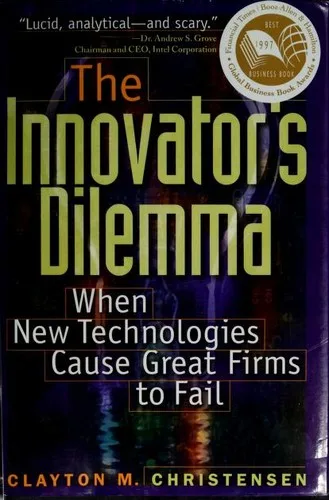
This classic explains why well run companies can struggle when a different kind of product or business model appears. It gives you a framework for thinking about incumbents and newcomers. It suits students and managers who want ideas they can test against the Blockbuster case.

7 Powers
Helmer sets out seven sources of lasting business advantage and uses Netflix among the examples. It is compact but demanding. Pick it if you already know the story and want to ask why a rival could not easily copy a winning position.
Questions readers ask
Could Blockbuster have bought Netflix?
Netflix's founders proposed a sale to Blockbuster in 2000 and named a price of $50 million. Blockbuster declined. Buying Netflix would not have guaranteed the same success, because a different owner might have run it differently, funded it less or folded it into the store business.
Did late fees cause Blockbuster's downfall?
They were part of the problem, not the whole of it. Late fees annoyed customers but brought in meaningful income. Blockbuster dropped them in 2005 and reported a large fall in rental revenue as a result. Debt, competition, store costs and changes in strategy also mattered.
When did Blockbuster go bankrupt?
Blockbuster filed for Chapter 11 bankruptcy protection on September 23, 2010, in New York. It had more than 5,300 company-run and franchised stores worldwide at the start of January 2011. DISH Network then acquired the business in a sale that closed in April 2011.
Was streaming the reason Netflix won?
Streaming widened Netflix's lead, but it was not the start of it. Netflix first competed with DVDs by mail, a monthly fee and no late fees. Its streaming service arrived in 2007 with a small catalogue and grew while Blockbuster was already under pressure.
What is the best book about Netflix and Blockbuster?
Start with Netflixed by Gina Keating if you want the contest between the two companies. Choose That Will Never Work by Marc Randolph for the founder's view of Netflix's early days. Add Built to Fail by Alan Payne to hear from the Blockbuster side of the business.
Sources
- Blockbuster Inc. Form 10-K for fiscal 2005. U.S. Securities and Exchange Commission. Accessed 2026-11-29.
- Netflix, Inc. Form 10-K for fiscal 2009. U.S. Securities and Exchange Commission. Accessed 2026-11-29.
- Blockbuster CEO 'struggled not to laugh' at chance to buy Netflix, new book says. The Independent, via Yahoo News. Accessed 2026-11-29.
- Netflix.com transforms DVD business, eliminating late fees and due dates. Netflix. Accessed 2026-11-29.
- Netflix, Inc. Form 10-K for fiscal 2006. U.S. Securities and Exchange Commission. Accessed 2026-11-29.
- Netflix cofounder Marc Randolph recalls Blockbuster rejecting chance to buy it. Fortune. Accessed 2026-11-29.
- Blockbuster Inc. Form 10-K for fiscal 2007. U.S. Securities and Exchange Commission. Accessed 2026-11-29.
- Blockbuster's Former CEO on Sparring with an Activist Shareholder. Harvard Business Review. Accessed 2026-11-29.
- Netflix, Inc. Form 10-K for fiscal 2010. U.S. Securities and Exchange Commission. Accessed 2026-11-29.
- Blockbuster Inc. Form 10-K for fiscal 2010. U.S. Securities and Exchange Commission. Accessed 2026-11-29.
- Netflix offers subscribers the option of instantly watching movies on their PCs. Netflix. Accessed 2026-11-29.