Company stories
How did Walmart become the world's biggest retailer?
Walmart grew by selling at low prices with thin markups, opening discount stores in small Arkansas towns, and clustering new stores near its own distribution centers. It then invested early in computers and satellite links, added groceries through Supercenters, and expanded abroad. By 1990 it was the leading retailer in the United States.
By BookPounce | Updated
Who started Walmart, and where?
Sam Walton learned retail by running variety stores. On September 1, 1945, Sam and Helen Walton opened a Ben Franklin five-and-dime franchise in Newport, Arkansas. Sales grew from $80,000 to $225,000 in three years. Then the landlord declined to renew the lease and gave the location to his own son [4].
The Waltons moved to Bentonville in 1950 and started again with Walton's 5&10 [4][5]. Walton kept testing a simple idea: cut the price, sell far more, and earn more in total even though you make less on each item. He asked Ben Franklin to cut its own margins to support this approach. The franchiser refused, so he pursued a discount chain of his own [4].
On July 2, 1962, he opened the first Walmart in Rogers, Arkansas [1]. He was 44 [5]. The company incorporated as Wal-Mart Stores, Inc. in 1969 and became publicly traded in 1970 [1]. Money from the public offering helped pay for expansion [5].
The lesson from these early years is plain. Walmart did not begin with a huge budget or a famous name. It began with a merchant who had already spent years learning what small-town shoppers would respond to.
Why did small towns and low prices matter so much?
Walton believed a business could thrive on low prices joined with good customer service, an idea competitors doubted [5]. Much of the early growth came from places that bigger discount chains were not focused on. A large store in a small town could become the main place to shop for miles around.
Growth also followed a map. Economist Thomas Holmes studied the order of Walmart's store openings and found that the chain spread outward from its starting point while keeping stores close together [6]. Nearby stores took some sales from each other. Walmart accepted that cost. Holmes concluded that the benefits of dense store networks were substantial and likely went beyond savings on trucking [6].
Think about what density gives you. A truck can serve several stores on one trip. Managers can visit more locations. Shoppers in the next county may already know the name before a store arrives.
The pace was striking. The Walton family had 24 stores with $12.7 million in sales in 1967 [1]. By the end of 1980, there were 330 Walmart stores [4], and annual sales had reached $1 billion [1].
How did logistics and technology give Walmart an edge?
Low prices last only if costs stay low. Walmart put heavy effort into the part of retail that shoppers rarely see: moving goods from suppliers to shelves.
Its first distribution center and home office opened in Bentonville in the early 1970s [1]. Having its own warehouses let the company supply stores itself instead of relying so much on vendors and wholesalers [8]. In 1975 it leased an IBM computer system that linked store and distribution center inventories [8].
In the 1980s, Walton spent $24 million on a satellite communications system [9]. A private satellite network helped track delivery trucks, process card transactions and send sales data [4]. Bar codes helped automate inventory, so the company could see what was selling and restock it sooner [4].
Suppliers became part of the system too. In 1988 Walmart adopted continuous replenishment with Procter & Gamble, in which restocking follows actual demand. In 1992 it rolled out Retail Link, which gave vendors access to sales trends and inventory levels [8].
A McKinsey Global Institute study of 1995 to 2000 found that Walmart, directly and through its effect on rivals, caused most of the productivity speed-up in US general merchandise retail [10].
What turned a discount chain into a giant?
Walmart kept adding new store formats. The first Sam's Club, a members' warehouse store, opened in 1983 in Midwest City, Oklahoma. The first Supercenter opened in 1988 in Washington, Missouri [1]. Supercenters put a full grocery section beside general merchandise [8]. Food brings people back every week, and while they are there they can pick up other things.
Prices mattered here as well. Economists Jerry Hausman and Ephraim Leibtag studied the effect of supercenters on food shopping. They found large benefits to consumers, with low-income households gaining the most [7].
The milestones came quickly. Walmart was the top US retailer by 1990. It went international in 1991 with a Sam's Club in Mexico City, bought 122 Woolco stores to enter Canada in 1994, and launched Walmart.com in 1996. It passed $100 billion in annual sales in 1997 and topped the Fortune 500 for the first time in 2002 [1].
Walton did not see most of this. He died in April 1992 [4]. The company he left behind continued to grow under new leaders, starting from the habits he had built: watch costs, move goods fast and keep prices low [1][5].
Did Walmart's formula work everywhere, and what did critics say?
No formula travels perfectly. In 2006 Walmart left South Korea and then agreed to sell its 85 German stores to Metro AG. It expected a pretax loss of about $1 billion on the German deal. An executive said it would be difficult to reach the scale and results the company wanted there. An outside analyst pointed to price-focused shoppers and strong local discounters such as Aldi and Lidl [11].
The German case shows how much the model depends on scale. Dense stores, busy warehouses and strong buying power support one another. When one piece is weak, low prices are harder to sustain.
Growth also brought debate at home. Economist Emek Basker's review of the research notes concerns about Walmart's effects on workers, communities and rival businesses. It weighs evidence on local jobs, consumer prices, product variety, competitors and suppliers, and on public policy questions such as wages, zoning and subsidies [12].
So you can hold two ideas at once. Many shoppers paid less. People also disagree about what that growth meant for workers and towns. The better books below let you examine both sides with more detail than a short page can.
Is Walmart still the world's biggest retailer?
It depends on how you count. For its fiscal year ending January 2026, Walmart reported total revenue of $713.2 billion [2]. Amazon reported $716.9 billion for 2025, which put it ahead of Walmart on annual revenue [3].
The two companies earn money in different ways. Amazon's total includes large businesses outside ordinary retail, such as cloud computing. So a comparison of total company revenue is not the same as a comparison of goods sold to shoppers. When you see a "biggest retailer" claim, check which measure and which year it uses.
Walmart's size remains enormous by any ordinary standard. It reports about 280 million customer and member visits each week, more than 10,900 stores in 19 countries and about 2.1 million associates [2].
Its online side has been part of the story for decades. Walmart.com dates to 1996, and the Walmart+ membership program launched in 2020 [1]. In 2018 the company also agreed to pay about $16 billion for a majority stake in Flipkart, an Indian online retailer [13]. The old question of how to move goods cheaply now covers doorsteps as well as store shelves.
Books to read
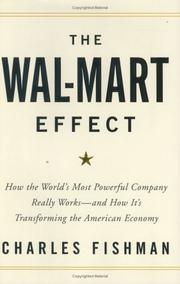
The Wal-Mart effect
A business journalist looks at how Walmart's push for low prices reaches suppliers, workers, shoppers and the wider economy. The stories about particular products make big ideas easy to picture. It suits you if you want a readable account that weighs both the savings and the costs.
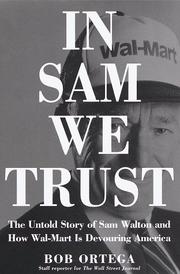
In Sam we trust
A reporter's history of Sam Walton and the company's rise through the 1990s, with a critical eye. It gives you context on discount retailing and on the disputes that followed Walmart's growth. Choose it if the founder's memoir leaves you wanting a view from outside the company.
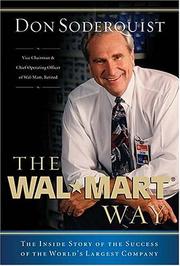
The Wal-Mart Way
Soderquist was a senior Walmart executive, and this book explains the company's culture and values as an insider saw them. It suits managers who want to know how leaders described their own methods. Read it as a sympathetic account, not an independent audit.
The retail revolution
A labor historian explains how Walmart helped shift power from manufacturers to retailers. You get supply chains, management culture, work and politics in one connected argument. It is a strong choice if you want to understand why the company matters beyond its own stores, from a critical standpoint.

To serve God and Wal-Mart
This scholarly history connects Walmart's rise with religion, family life and ideas about free enterprise in the American South and beyond. It asks why the company's culture took root where it did. It suits patient readers who want social history more than a management manual.

Winner Sells All
Del Rey follows the contest between Amazon and Walmart as shopping moved online. You see how a store-based giant tried to answer a digital rival, and where that proved hard. Pick it if you care more about the recent chapters than the founding years.

Still Broke
Wartzman examines Walmart's efforts to change pay and conditions for its workers, and asks how far a single company can go. It is useful if you want to think about wages and the limits of voluntary reform. It works well after a general company history.
Questions readers ask
Why was Walmart so successful?
Walmart joined low prices to low operating costs. It built dense groups of stores, ran its own distribution centers, used computers and satellite links early, and shared sales data with suppliers. Supercenters then added groceries, giving shoppers a reason to visit often. Each part supported the others, which made the system harder to copy than any single tactic.
Where was the first Walmart store?
The first Walmart opened in Rogers, Arkansas, on July 2, 1962. Sam Walton had already run variety stores, first in Newport and then in Bentonville, Arkansas. The company later placed its home office and first distribution center in Bentonville, and the town remains closely linked with Walmart today.
When did Walmart become the biggest retailer in the United States?
According to the company's history, Walmart was the number one retailer in the United States by 1990. That came 28 years after the first store opened. It later passed $100 billion in annual sales in 1997 and topped the Fortune 500 list of America's largest companies for the first time in 2002.
Is Amazon bigger than Walmart now?
On total annual revenue, yes. Amazon reported $716.9 billion for 2025, while Walmart reported $713.2 billion for its fiscal year ending January 2026. The comparison is not purely about retail, because Amazon also earns money from businesses such as cloud computing. Always check the measure behind a ranking.
Which book about Walmart should you read first?
Start with Sam Walton: Made in America if you want the founder's own explanation in plain language. Then read The Wal-Mart Effect by Charles Fishman for an outside look at what low prices mean for suppliers, workers and shoppers. For deeper history, try The Retail Revolution or To Serve God and Wal-Mart.
Sources
- History. Walmart. Accessed 2026-11-29.
- Fiscal 2026 fourth quarter earnings release (Form 8-K). US Securities and Exchange Commission. Accessed 2026-11-29.
- Amazon surpasses Walmart in annual revenue for first time. CNBC. Accessed 2026-11-29.
- Sam Walton (1918-1992). Encyclopedia of Arkansas. Accessed 2026-11-29.
- Sam Walton. Walmart. Accessed 2026-11-29.
- The Diffusion of Wal-Mart and Economies of Density (Working Paper 13783). National Bureau of Economic Research. Accessed 2026-11-29.
- Consumer Benefits from Increased Competition in Shopping Outlets: Measuring the Effect of Wal-Mart (Working Paper 11809). National Bureau of Economic Research. Accessed 2026-11-29.
- Timeline of 50 years of supply chain at Walmart. Supply Chain Digest. Accessed 2026-11-29.
- Wal-Mart at technology's cutting edge. Supermarket News. Accessed 2026-11-29.
- US productivity growth 1995-2000. McKinsey Global Institute. Accessed 2026-11-29.
- Wal-Mart selling its 85 stores in Germany. NBC News (Associated Press). Accessed 2026-11-29.
- The Causes and Consequences of Wal-Mart's Growth. Journal of Economic Perspectives. Accessed 2026-11-29.
- Walmart to invest in Flipkart Group. Walmart. Accessed 2026-11-29.