Company stories
How Starbucks grew from one shop into a global chain
Starbucks began in 1971 as a Seattle shop selling coffee beans. Howard Schultz, a former employee, led investors who bought it in 1987 and built it around espresso bars. A 1992 public listing, rapid US openings, and partnerships and licensing abroad followed. By September 2025 it had 40,990 stores worldwide.
By BookPounce | Updated
Who started Starbucks, and what did the first shop sell?
Jerry Baldwin, Gordon Bowker and Zev Siegl opened the first Starbucks on March 30, 1971, in a rented storefront near Seattle's Pike Place Market. Each founder put in 1,500 dollars, and they added a 5,000 dollar bank loan [1].
The early business was not the café you may picture today. It was mainly a place to get good coffee to brew at home. The first customer bought a pound of Sumatra beans [1].
Growth was modest and not always smooth. A second store opened at University Village the year after the launch. A 1975 freeze in Brazil pushed coffee prices up sharply, and by 1976 the company was leaning on a bank credit line while retail sales fell [1].
The founders kept going. Siegl left in 1980 [1]. In May 1982 the fifth store opened with the company's first coffee bar serving brewed coffee [1]. In 1984 Starbucks bought Peet's, a coffee business with four stores in the San Francisco Bay Area [1].
So before it became a global name, Starbucks spent more than a decade as a small regional coffee company with a strong focus on beans.
How did Howard Schultz change the idea behind Starbucks?
Howard Schultz joined Starbucks in September 1982 as director of marketing [1]. In 1983, on a buying trip to Italy, Schultz was struck by the coffee bar culture of Milan [2]. People did not just collect coffee there. They stopped, talked and came back.
Schultz wanted Starbucks to offer that experience in the United States. A sixth store, opened downtown in 1984, included an espresso bar [1]. But Schultz wanted to go much further than the owners did. In January 1986, Schultz resigned to start a separate coffee bar company called Il Giornale. Starbucks itself put 150,000 dollars into the new venture [1].
The turning point came in 1987. Bowker sold their stake, and Schultz led a group of investors who raised 3.8 million dollars to buy Starbucks [1]. Schultz merged it with Il Giornale and kept the Starbucks name [2].
This is the heart of the story. The company that grew worldwide combined two things: the original owners' care for roasted coffee, and Schultz's belief that the shop itself could be the product. You could now order a drink, stay a while, and make it part of your day.
How did Starbucks expand across the United States?
The new company started small. By August 1987 it had 11 stores and fewer than 100 employees [2]. From there, the plan was to open more company stores, city by city.
The pace picked up quickly. According to HistoryLink, Starbucks opened 30 stores in 1990, 32 in 1991 and 53 in 1992 [1]. In 1992 it also became a public company, with shares first offered at 17 dollars [1]. That year it entered San Francisco, San Diego, Orange County and Denver, and it ended the year with 165 stores [2].
Starbucks also looked beyond its own counters. In 1998 it signed a long-term licensing agreement with Kraft Foods to get its whole bean and ground coffee into grocery and warehouse stores [2].
If you are studying the business, notice the order of events. The company first proved the coffee bar format, then raised public money, then added stores in new regions. Later it let a larger partner carry the brand into supermarkets. Each step used what the previous one had built: a known name, a repeatable shop, and customers who already trusted the coffee.
How did Starbucks become a global chain?
Japan was the first big test far from home. In 1996 Starbucks opened in the Ginza district of Tokyo, its first store outside North America. It did this through a joint venture with Sazaby, a Japanese retail company [3]. Hawaii and Singapore got their first stores the same year [2]. China and South Korea followed in 1999 as part of a wider push around the Pacific Rim [2].
Local partners mattered. Starbucks used joint ventures and licensing deals for early overseas entries [2]. A partner can bring knowledge of property, staff and customers that a foreign company may lack.
Licensing is still a large part of the model. At the end of fiscal 2025, Starbucks reported 21,514 company-operated stores and 19,476 licensed stores [7]. In other words, nearly half of the stores were run by licensees.
China shows how the structure can change over time. In April 2026, Starbucks completed a joint venture in which funds managed by Boyu Capital hold 60 percent of its China retail business and Starbucks keeps 40 percent. Starbucks still owns and licenses the brand, and about 8,000 stores are moving to a licensed model [8].
What setbacks did Starbucks face along the way?
Fast growth brought problems. In January 2008, Schultz returned as chief executive, replacing Jim Donald, as the company faced falling traffic in its US stores [9].
That summer, Starbucks announced it would close about 600 underperforming company-operated stores in the United States. It expected to eliminate up to 12,000 full-time and part-time positions, while hoping to place many affected workers in nearby stores. About 70 percent of the stores chosen had opened since the start of fiscal 2006 [4]. That detail tells you a lot: opening quickly is not the same as opening well.
The company continued to reshape itself. In 2018 it agreed that Nestlé would pay 7.15 billion dollars for a perpetual global license to market Starbucks packaged coffee and tea outside its coffee shops. Ready-to-drink products were excluded [5].
Leadership changed again in 2024, when Brian Niccol became chairman and chief executive on September 9 [6]. In 2025 a restructuring plan led to another round of store closures, mostly in North America [7]. The lesson for readers is simple. A large chain keeps adjusting, and its story is not a straight line upward.
How big is Starbucks now, and what can you learn from it?
Starbucks ended fiscal 2025, on September 28, 2025, with 40,990 stores. The United States had 16,864 and China had 8,011 [7]. Net revenue for the year was about 37.2 billion dollars [7]. Compare that with the 11 stores of August 1987 [2].
You can take a few practical ideas from the record. First, the product and the place worked together. The founders built knowledge of coffee, and Schultz added a reason to sit down with it.
Second, the company used more than one way to grow. It ran its own stores, licensed others, formed joint ventures abroad and let partners sell packaged coffee.
Third, growth needs checking. The 2008 closures show that a popular brand can still open stores that do not pay their way.
Be careful with neat explanations. Books by company leaders give you the inside view, including what they hoped to do. Outside writers often ask harder questions about coffee farmers, local cafés and what a chain does to a neighbourhood. Reading both gives you a fairer picture than either one alone.
Books to read
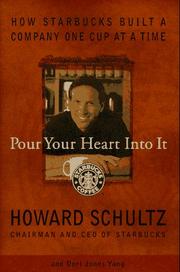
Pour your heart into it
Written with Dori Jones Yang, this is Schultz's own account of joining a small Seattle coffee company and building it into a public business. Start here if you want the founder-era story from the person who drove the expansion, while remembering it is an insider's view.
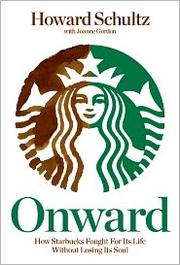
Onward
Schultz, writing with Joanne Gordon, describes returning as chief executive in 2008 and trying to repair a company that had grown fast and lost focus. It suits readers who care about turnarounds, hard choices and how a leader explains them from the inside.

Uncommon grounds
A wide history of coffee, from its origins through trade, advertising and the rise of specialty roasters. It helps you see Starbucks as one chapter in a much longer story. Choose it if you want context about farmers, prices and the industry around the brand.

Starbucked
A journalist's lively look at how Starbucks spread and why it drew both loyal fans and sharp critics. You get business history alongside culture and controversy in an easy style. It suits readers who want an outside view before or after the company's own accounts.
Everything but the coffee
A historian visits many Starbucks stores and asks what people are really paying for: comfort, status, community or something else. It is a thoughtful, critical read for anyone interested in consumer culture, branding and what chain cafés reveal about modern American life.
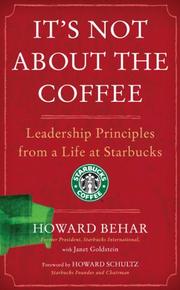
It's Not About the Coffee
Behar, a former senior Starbucks executive, shares leadership principles centred on people. The book is short and practical, with lessons drawn from working life at the company. It suits managers, team leads and new business owners who want ideas they can discuss with staff.

The Starbucks Experience
Michelli sets out principles behind the way Starbucks approaches service, staff and customers. It reads as a management guide more than a history, and its tone is admiring. Pick it up if you run a service business and want examples to test against your own.

From the Ground Up
Part memoir and part reflection on the responsibilities of a company. Schultz connects a childhood in Brooklyn public housing with later decisions at Starbucks. It suits readers who want the personal motives behind the business story and a view on what employers owe people.
Questions readers ask
Did Howard Schultz found Starbucks?
No. Jerry Baldwin, Gordon Bowker and Zev Siegl opened the first store in 1971. Howard Schultz joined in 1982, left to start Il Giornale, and led the investor group that bought Starbucks in 1987. Schultz is best known for turning it into a large coffee bar chain.
When did Starbucks first open outside North America?
Starbucks opened its first store outside North America in 1996, in the Ginza shopping district of Tokyo. It entered Japan through a joint venture with Sazaby, a Japanese retail company. Singapore also received its first Starbucks that year, and China followed in 1999.
Are all Starbucks stores owned by Starbucks?
No. Some are company-operated and others are licensed, which means another business runs them under an agreement. At the end of fiscal 2025, Starbucks reported 21,514 company-operated stores and 19,476 licensed stores. The mix has since shifted in China under the Boyu joint venture.
Why did Starbucks close hundreds of stores in 2008?
Starbucks said the roughly 600 US stores it planned to close were underperforming. It looked at whether each store made money, its expected returns and wider economic trends. About 70 percent of them had opened since the start of fiscal 2006, shortly after a period of quick expansion.
What is the best first book about Starbucks?
For the company's own story, start with Pour Your Heart Into It by Howard Schultz. For an outside view that includes criticism, try Starbucked by Taylor Clark. Reading the two together helps you compare what leaders intended with how others saw the results.
Sources
- Starbucks: The Early Years. HistoryLink.org. Accessed 2026-11-29.
- Starbucks Corporation (company history). Encyclopedia.com. Accessed 2026-11-29.
- Starbucks coffee wafts into Japan. The Spokesman-Review. Accessed 2026-11-29.
- Form 8-K on US store closures, 2008. Starbucks Corporation, US SEC filing. Accessed 2026-11-29.
- Form 8-K exhibit on the Nestlé global coffee alliance, 2018. Starbucks Corporation, US SEC filing. Accessed 2026-11-29.
- Starbucks names Brian Niccol as Chairman and Chief Executive Officer. Starbucks Investor Relations. Accessed 2026-11-29.
- Starbucks Reports Q4 and Full Fiscal Year 2025 Results. Starbucks Investor Relations. Accessed 2026-11-29.
- Starbucks and Boyu Capital Finalize Joint Venture to Accelerate Long Term Growth in China. Starbucks Investor Relations. Accessed 2026-11-29.
- Starbucks replaces CEO Jim Donald with Chairman Howard Schultz, plans to close US stores. The Daily Record. Accessed 2026-11-29.