Engineering
How was the Eiffel Tower built?
The Eiffel Tower was built from 1887 to 1889 using about 18,000 iron parts designed and prepared in a factory near Paris. Workers laid the foundations first, then bolted and riveted the pieces together on site. Steam cranes climbed the structure as it rose, while jacks and sand boxes kept the four legs precisely aligned.
By BookPounce | Updated
Who designed the Eiffel Tower?
The tower carries Gustave Eiffel's name, but the first idea came from two engineers in his company. In June 1884, Maurice Koechlin and Émile Nouguier proposed a very tall tower shaped like a large pylon. It had four lattice columns, joined by girders. [2]
Think of the supports under a railway viaduct, made much taller, with four of them leaning in to meet. The architect Stephen Sauvestre then worked on the look. He added stone-clad pedestals, arches and glazed halls on the levels. [2] In September 1884, Eiffel registered a patent for a new way of building metal supports and pylons that could pass 300 metres. [2]
The chance to build it came with the 1889 Exposition Universelle in Paris, which marked 100 years since the French Revolution. A competition asked entrants to study a 300 metre tower on the Champ de Mars. Eiffel's project was chosen from 107 entries. [2]
So the tower was a team effort. Engineers shaped the structure, an architect refined its appearance, and Eiffel's firm had the means to make and assemble it. Design work involved 50 engineers and draughtsmen. [1]
How were the foundations laid?
Every tall structure starts with a simple problem. Its weight, and the push of the wind, must pass safely into the ground. The Eiffel Tower stands on four legs, so each leg needed a firm base of its own.
Digging began on January 26, 1887, and the foundations took about four months. [1] The ground was not the same everywhere. On the side near the River Seine, two of the pillars had to go below the level of the river. [4]
To work there, builders used watertight metal caissons filled with compressed air. [4] A caisson is like a large open-bottomed box sunk into wet ground. Air pumped into the working chamber pushes the water back. Workers can then dig inside, and the box settles lower as soil comes out. Photographs from May 1887 show these compressed air caissons in use. [1]
The principle is easy to test at home. Push an upside-down glass into a basin of water. The trapped air keeps most of the water out. A caisson uses the same effect on a much bigger scale, with pumps to hold the pressure up as it goes deeper.
How were 18,000 iron parts made and joined?
Much of the tower was built before it reached the site. Eiffel's workshops at Levallois-Perret, just outside Paris, designed and prepared the parts. There were 18,038 of them, supported by 5,300 workshop drawings. [1] Each piece was drawn to an accuracy of a tenth of a millimetre. [1]
Small elements were joined in the factory into larger sections about five metres long. [1] Holes were drilled in advance. If a part was faulty, it went back to the workshop instead of being altered on site. [3]
On site, temporary bolts held the pieces in place. Riveters then replaced them with permanent rivets. [3] A rivet is a metal pin that is heated, pushed through matching holes and hammered to form a second head. As it cools, it shrinks and clamps the plates tightly together.
Each rivet needed a team of four: one to heat it, one to hold it, one to shape the head and one to strike it. [1] The tower has about 2,500,000 rivets, and only about a third were placed on site. [1] The factory employed 150 workers, while 150 to 300 assembled the tower on the Champ de Mars. [1]
How did the builders lift the iron and keep it level?
Assembly of the metal structure began on July 1, 1887. [1] At first, the four legs leaned inward with nothing at the top to tie them together. Wooden scaffolds supported the work. For the first floor, builders used 12 temporary scaffolds 30 metres high and four larger ones 45 metres high. [1]
Steam cranes lifted the parts. As the tower grew, the cranes climbed with it, using the tracks that were meant for the future lifts. [6] This solved a neat problem. You do not need a crane taller than the tower if the crane can ride on the tower.
The hardest moment was joining the legs at the first floor. The big horizontal girders and the four sloping legs had to meet with their holes lined up. Builders used sand boxes and hydraulic jacks to adjust the position of the metalwork to within about a millimetre. [3]
A sand box works like a slow, controllable support. Let some sand run out and the load settles gently. A jack does the opposite and pushes it up. Once everything fitted, permanent wedges took the place of these devices. [3]
Why is the Eiffel Tower shaped to resist the wind?
For a tall, fairly light structure, wind is a major design load. It pushes sideways and tries to bend the tower or tip it over. The higher the force acts, the stronger its turning effect at the base. In plain terms: turning effect = force x height.
The tower answers this in two ways. First, its four legs spread wide at the bottom and curve inward as they rise. A wide base gives the structure more leverage against overturning, much as you stand steadier with your feet apart. Second, the open lattice lets a lot of air pass through, so there is less solid surface for the wind to push.
Eiffel made this point himself. In February 1887, a group of well-known artists and writers published a protest against the tower in the newspaper Le Temps. [5] In his reply, Eiffel said wind resistance was the main condition he had to consider, and argued that the calculated curves of the four edges would also look strong and beautiful. [5]
This is a useful lesson in engineering. The shape you admire is closely tied to the job the structure has to do.
How long did it take, and why is it still standing?
The tower was finished on March 31, 1889. From the start of the foundations, the work took two years, two months and five days. [1] The structure used about 7,300 tonnes of iron. [1]
The speed came largely from preparation. Parts arrived drilled and partly assembled, so the site team could focus on lifting, fitting and riveting. [3] Many of the site leaders had already built large metal viaducts, so they knew this kind of work well. [1]
The tower was not meant to be permanent in the way you might expect. It was due to come down after about 20 years. Its value for scientific work helped save it. [2] Instruments such as barometers and anemometers, which measure air pressure and wind speed, were installed near the top. [2]
The method matters as much as the monument. Accurate drawings, factory-made parts and a planned order of assembly are still central ideas in steel construction today. If you want to go further, the books below cover the people, the fair, the structural thinking and the way the tower became a symbol of Paris.
Books to read

Eiffel's Tower
A lively account of the tower and the 1889 World's Fair around it. You meet Eiffel alongside the performers, artists and visitors who filled Paris that year. Choose this first if you like history told through people, and want the engineering set inside its wider moment.

The tallest tower
A history of Eiffel and his tower set in the Belle Epoque. It follows the project through its construction and shows the city and culture that received it. It suits readers who want a focused tower story and do not mind looking for an older book.

Built
A structural engineer explains how buildings and bridges cope with gravity, wind, water and difficult ground. The personal examples make the ideas easy to picture. It suits curious readers and students who want to connect historic construction methods with the work engineers do now.
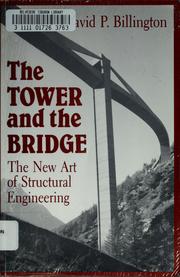
The tower and the bridge
Billington argues that structural engineering can be an art of its own, shaped by efficiency, economy and elegance. Eiffel's work is part of that story. It suits readers who want to compare great engineers and think about why a well-reasoned structure can also look beautiful.

The Eiffel Tower and other mythologies
This essay collection looks at what the tower means rather than how it was riveted together. Barthes considers it as an object you look at and look out from. Pick it up if you enjoy cultural criticism and already know the basic construction story.
Questions readers ask
How long did it take to build the Eiffel Tower?
It took two years, two months and five days. Work on the foundations began on January 26, 1887, and the tower was finished on March 31, 1889. Preparing the iron parts in a factory helped the site team assemble the structure quickly and accurately.
How many people built the Eiffel Tower?
The official figures usually quoted are 150 workers at the Levallois-Perret factory and between 150 and 300 on the construction site. Behind them, 50 engineers and draughtsmen worked on the design and drawings. The numbers were modest because so much preparation happened before parts reached the site.
What is the Eiffel Tower made of?
The tower is an open lattice of iron, using about 7,300 tonnes of metal in its structure. Its parts are held together with about 2,500,000 rivets. The lattice gives stiffness without the weight of a solid wall, and it lets much of the wind pass through.
Did Gustave Eiffel design the Eiffel Tower himself?
Not alone. Maurice Koechlin and Émile Nouguier, two engineers in his company, proposed the original pylon-like idea in 1884. The architect Stephen Sauvestre refined its appearance. Eiffel patented the construction concept, and his company designed the parts in detail and built the tower.
Was the Eiffel Tower meant to be temporary?
Yes. It was built for the 1889 Exposition Universelle and was due to be taken down after about 20 years. Its usefulness for scientific work helped save it. Instruments were installed near the top, and the tower later became an important mast for radio.
Sources
- The construction of the Eiffel Tower (online story with official figures). Google Arts & Culture. Accessed 2026-11-29.
- The design and origins of the Eiffel Tower (online story). Google Arts & Culture. Accessed 2026-11-29.
- The construction of the Eiffel Tower: an exemplary project!. Official Eiffel Tower website. Accessed 2026-11-29.
- The foundations and basements of the Eiffel Tower. Official Eiffel Tower website. Accessed 2026-11-29.
- When the Eiffel Tower was a subject of controversy. Official Eiffel Tower website. Accessed 2026-11-29.
- How did they build the Tower so quickly?. Official Eiffel Tower website. Accessed 2026-11-29.