Engineering
How was the Saturn V rocket built?
The Saturn V was built in pieces by different teams. NASA's Marshall Space Flight Center led the design, while Boeing, North American Aviation and Douglas built its three stages and IBM produced its guidance unit. The huge parts travelled by barge, ship and aircraft to Florida, where crews stacked them upright and tested them before launch.
By BookPounce | Updated
What did engineers need the Saturn V to do?
The goal came first. On May 25, 1961, President Kennedy asked the United States to land a person on the Moon and bring them back safely before the decade ended [3]. That called for a launcher far bigger than a small satellite rocket. NASA Headquarters formally approved development of the design, then called C-5, on January 25, 1962 [2].
The finished rocket stood 363 feet tall and weighed about 6.2 million pounds when fueled. At launch it produced about 7.6 million pounds of thrust [1]. Those two numbers show the basic rule of liftoff: thrust has to be greater than weight, or the rocket stays on the pad.
Engineers split the vehicle into three stages. Each stage had its own tanks and engines. When a stage ran out of propellant, it dropped away, so the engines above no longer had to carry empty tanks. This is called staging.
The route to the Moon shaped the design too. In 1962 NASA chose lunar orbit rendezvous, in which a separate small lander leaves the main spacecraft in orbit around the Moon [2].
Who built each part of the Saturn V?
No single factory made the whole rocket. The Marshall Space Flight Center in Huntsville, Alabama, led by Wernher von Braun, managed the overall development and systems engineering. Boeing built the first stage, called the S-IC. North American Aviation built the second stage, the S-II. Douglas Aircraft built the third, the S-IVB [4].
The first stage had five F-1 engines. The second had five J-2 engines, and the third had one J-2 [2]. Rocketdyne developed the F-1 [5].
The first stage burned RP-1, a refined kerosene, with liquid oxygen [6]. The upper stages burned liquid hydrogen with liquid oxygen. Hydrogen gives more push for each pound burned, but it must be kept extremely cold and it takes up a lot of room.
Above the third stage sat the instrument unit, a ring that held the guidance system. Marshall developed it in house, and IBM produced the flight units and developed the launch vehicle computer [4].
Dividing the work let several large teams build at once. It also meant every joint, cable and pipe between their parts had to match. Making those pieces fit and act as one vehicle was an engineering job of its own.
How did engineers make such large, light fuel tanks?
A rocket is mostly propellant, so every extra pound of metal costs you payload. The tanks had to be thin, strong and leak tight. The second stage shows how hard that was.
The S-II was about 10 meters across and 24.8 meters long. It needed almost a kilometer of welds that had to be clean and flawless, and some joints allowed a mismatch of only 0.33 millimeter or less [7].
Instead of building two separate tank ends with a connecting section between them, designers used one common bulkhead. This single wall divided the liquid oxygen from the much colder liquid hydrogen. It shortened the stage by more than 3 meters and saved about 4 metric tons [7].
Making it took unusual methods. Workers shaped its wedge-shaped metal panels with underwater explosions, then added a honeycomb insulating layer between two metal faces [7].
Problems were real. A bulkhead ruptured during a pressure test in 1964. Early insulation panels also failed, and North American moved to spraying insulation straight onto the tank walls. Welding methods improved too, including a setup where the welding tool stayed still while the huge parts turned beneath it [7].
How did engineers tame the giant F-1 engine?
The F-1 had a dangerous habit during development. Combustion could become unstable, with violent pressure swings inside the chamber that could destroy an engine in a fraction of a second [8].
Part of the challenge was the injector, the plate that sprays fuel and oxygen into the chamber. It was too late to redesign the whole plate. So the team added copper dividers called baffles, which split the face of the injector into smaller zones [8].
Then they needed proof. Waiting for instability to appear by chance would not do. Engineers set off a small bomb inside a firing engine to disturb it on purpose. The baffles damped the vibrations, which gave the team confidence in the fix [8]. From 1967 to 1973, 65 F-1 engines flew on 13 Saturn V launches without combustion instability problems [8].
This is a useful lesson in how engineering often works. Theory alone did not settle the question. The team changed the hardware, attacked it with the worst disturbance they could create, and watched whether it recovered. A design earns trust when you have tried hard to break it and understand what happens.
How were the stages moved, stacked and launched?
The stages were too bulky for railways or public roads. Barges carried them along rivers and coasts, and the largest California-built parts sailed through the Panama Canal and across the Gulf of Mexico [9]. A modified cargo plane, the Super Guppy, could fly a complete S-IVB third stage [9].
Testing happened along the way. Marshall built a large stand to fire the first stage while it was held down, and a site in Mississippi hosted static firings of the first and second stages [4].
At Kennedy Space Center, crews stacked the stages upright inside the Vehicle Assembly Building on a mobile launcher. A crawler transporter then carried the whole assembly to the pad. In 1966 a test vehicle, not meant to fly, rehearsed this process at about one mile per hour [10].
That rehearsal taught practical lessons. The vehicle was rolled back ahead of a hurricane. Engineers also found that black paint on the first stage soaked up sunlight and caused overheating inside, so later stages were repainted white in those areas [10]. Small details like paint can matter as much as engines.
How did NASA know the Saturn V would work?
George Mueller, a senior NASA spaceflight manager, pushed for all-up testing. Instead of adding one live stage at a time over many flights, the first launch would fly all three live stages with a live Apollo spacecraft [9]. Some engineers saw this as risky. Mueller argued that dummy upper stages filled with water would not behave like the real rocket [9].
The first Saturn V flew as Apollo 4, without a crew, on November 9, 1967. It tested all three stages in one flight [11].
The second flight, Apollo 6 in 1968, was rougher. The rocket shook lengthwise, a problem engineers call pogo [12]. Some second stage engines also shut down early [13]. For pogo, a working group filled cavities in the liquid oxygen feed lines with helium before launch. The gas acted like a shock absorber and changed how the system vibrated [12].
That fix helped give NASA the confidence to put a crew on the next Saturn V, Apollo 8, in December 1968 [12]. The rocket went on to support the Moon landings, and its final flight in 1973 launched the Skylab space station [1].
Books to read

Stages to Saturn
This is NASA's technological history of the Saturn launch vehicles. You get engines, tanks, welding, contractors, transport and management in close detail. It suits readers who want to know how problems were actually solved and who do not mind technical language.
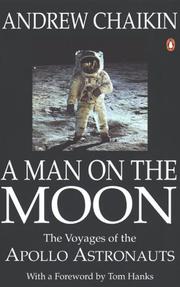
A Man on the Moon
Chaikin follows the Apollo astronauts and their missions in a clear, story-driven way. It shows what the Saturn V was built to do and what riding it led to. Start here if you want the human side before the engineering.

Rocket men
This is the story of Apollo 8, the first crewed Saturn V flight, and the three astronauts aboard. It reads quickly and shows why putting people on the rocket so early was a bold call. A good pick for new readers.

How Apollo Flew to the Moon
Woods walks you through an Apollo flight step by step, from launch to return. It explains what each system did and why. Choose it if you are curious about staging, guidance and orbits and want plain explanations with real mission detail.

The Saturn V F-1 Engine
Young concentrates on the engine that powered the first stage, including its development, manufacture and testing. It suits readers who want more on combustion, hardware and the Rocketdyne teams than a general Apollo history can offer. Pick it up once you know the basic Apollo story.
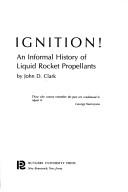
Ignition!
Clark, a chemist, tells the story of liquid rocket propellant research with sharp humor. It is not a Saturn V history. Read it to understand why choosing and handling fuels and oxidizers is such a difficult part of rocket design.
Questions readers ask
Who designed the Saturn V rocket?
It was a team effort. NASA's Marshall Space Flight Center in Huntsville, under director Wernher von Braun, led development. Boeing, North American Aviation and Douglas built the three stages, Rocketdyne developed the F-1 engine, and IBM produced the flight instrument units. No single person designed the whole rocket.
What fuel did the Saturn V use?
The first stage burned RP-1, a refined form of kerosene, with liquid oxygen. The second and third stages burned liquid hydrogen with liquid oxygen. Kerosene is dense and suits the heavy push off the ground. Hydrogen is more efficient, which helps the upper stages reach high speed.
How tall was the Saturn V?
The Saturn V stood 363 feet, or about 111 meters, tall. Fully fueled for a Moon mission, it weighed about 6.2 million pounds, or 2.8 million kilograms. Its engines produced about 7.6 million pounds of thrust at launch, enough to lift that weight off the pad.
How did the Saturn V get to Florida?
Its stages were too large for normal road or rail travel. Barges and ships carried them along rivers, coasts and through the Panama Canal. The Super Guppy cargo plane could fly the third stage. At Kennedy Space Center, crews stacked the parts upright before rolling the rocket to the pad.
When did the Saturn V first and last fly?
The first Saturn V flew without a crew as Apollo 4 on November 9, 1967. The first crewed flight was Apollo 8 in December 1968. The final launch came in 1973, when an uncrewed Saturn V carried the Skylab space station into orbit around Earth.
Sources
- What Was the Saturn V? (Grades 5-8). NASA. Accessed 2026-11-29.
- Stages to Saturn (SP-4206), chapter 3. NASA History. Accessed 2026-11-29.
- The Decision to Go to the Moon. NASA History. Accessed 2026-11-29.
- Apollo Expeditions to the Moon (SP-350), chapter 3.3. NASA History. Accessed 2026-11-29.
- Apollo Expeditions to the Moon (SP-350), chapter 3.1. NASA History. Accessed 2026-11-29.
- Stages to Saturn (SP-4206), chapter 6. NASA History. Accessed 2026-11-29.
- Stages to Saturn (SP-4206), chapter 7. NASA History. Accessed 2026-11-29.
- Solving Combustion Instability and Saving America's First Trips to the Moon. NASA. Accessed 2026-11-29.
- Apollo Expeditions to the Moon (SP-350), chapter 3.4. NASA History. Accessed 2026-11-29.
- 55 Years Ago: The First Saturn V Rolls Out to the Launch Pad. NASA. Accessed 2026-11-29.
- 55 Years Ago: Apollo 4, the First Flight of the Saturn V. NASA. Accessed 2026-11-29.
- 50 Years Ago: Solving the Pogo Effect. NASA. Accessed 2026-11-29.
- Apollo Expeditions to the Moon (SP-350), chapter 9.1. NASA History. Accessed 2026-11-29.