Faith and traditions
What are the best books to learn about Judaism?
Start with Joseph Telushkin's Jewish Literacy or George Robinson's Essential Judaism for a broad view. Add Harold Kushner's To Life! for a warm account of Jewish thinking, and Abraham Joshua Heschel's The Sabbath for spiritual depth. Then read the Hebrew Bible with The Jewish Study Bible, and explore the Talmud with Adin Steinsaltz.
By BookPounce | Updated
Which book on Judaism should you read first?
Choose your first book by how you like to learn.
If you want short entries you can dip into, pick Jewish Literacy by Joseph Telushkin. You can look up a person, an idea or a holiday and read it in a few minutes. It also works well on the shelf as a reference while you read other things.
If you prefer a guided overview, pick Essential Judaism by George Robinson. It walks through belief, practice, texts and the stages of life in a connected way.
If you want to hear why the tradition matters to someone who lives it, pick To Life! by Harold S. Kushner. Kushner writes as a rabbi, in plain and friendly language.
You do not need all three at once. One is enough to give you the basic words, such as Torah, mitzvah (commandment), Shabbat and synagogue. Once those feel familiar, the deeper books become much easier.
Keep in mind that each author writes from a particular place within Jewish life. Reading a second introduction later will show you where thoughtful Jews see things differently.
What are the main Jewish texts you will meet?
The Hebrew Bible, called the Tanakh, has three parts: Torah (Teaching, the Five Books of Moses), Nevi'im (Prophets) and Ketuvim (Writings) [1]. The Torah tells how the family of Abraham and Sarah became the people of Israel, and how Moses led them out of Egypt. It combines this story with the laws of the covenant between the people and God [1].
Jewish tradition also speaks of an Oral Torah that explains and applies the written one. The Mishnah, edited by Rabbi Judah the Prince around the end of the second century CE, arranges this teaching in six orders [2]. Later sages discussed the Mishnah at length. Their discussion is called the Gemara, and the Mishnah and Gemara together form the Talmud [3][4].
There are two Talmuds, one from the Land of Israel and one from Babylonia [3]. The Babylonian Talmud became the standard work of Jewish law [4].
You can read many of these texts yourself. Sefaria, a nonprofit, offers a free online library of Jewish texts in Hebrew and in translation [5]. Keep it open beside your books and check passages as authors mention them.
How can books help you understand Shabbat and the holidays?
Judaism is lived through time as much as through ideas, so read about the calendar early.
Shabbat, the Sabbath, begins just before sundown on Friday and ends after nightfall on Saturday. In Jewish tradition it recalls both God's creation of the world and the rescue of the Israelites from slavery in Egypt [6]. Heschel's short book The Sabbath explores what it means to make a day holy. It is beautiful and dense, so read it slowly, a chapter at a time.
Passover also remembers the Exodus. At the seder, a ceremonial meal, participants eat symbolic foods such as matzah and bitter herbs and use a book called the Haggadah to tell the story [7]. Reading a Haggadah with notes is a lovely way to see how memory, teaching and family come together.
For the wider cycle of holidays and life events, Essential Judaism and Jewish Literacy are handy guides. Customs differ between families and communities. If a Jewish friend invites you to a meal, ask how their household does things. Their answer will add something no book can.
Which books explain Jewish history?
History helps you see how one people carried its texts and practices across many lands.
Simon Schama's The Story of the Jews: Finding the Words is the first part of a larger history. It follows Jewish life from ancient times to 1492, the year of the expulsion from Spain. Schama writes vividly and pays close attention to ordinary people, documents and objects. Choose it if you enjoy narrative and detail.
Paul Johnson's A History of the Jews covers a much longer span in one volume, from biblical times into the twentieth century. It suits you if you want the whole outline in one place. Johnson was not Jewish and offers strong interpretations, so treat them as one historian's view.
It helps to keep two kinds of reading apart. The Bible and rabbinic stories tell sacred history as the tradition understands it. Modern historians ask what documents and archaeology can show. Both are worth reading, and they answer different questions.
If history is your main interest, read one broad introduction to the religion first. Names like Talmud, rabbi and synagogue will then mean more when they appear.
How should you handle the differences between Jewish movements?
No single book speaks for all Jews. In a 2020 Pew Research Center survey of American Jews, 37% of adults identified with Reform Judaism, 17% with Conservative Judaism and 9% with Orthodox Judaism. About 32% named no particular branch [8]. These figures describe the United States only, and the picture differs elsewhere.
Being Jewish is also more than a matter of belief for many people. The same survey found that about 27% of Jewish adults did not identify with the Jewish religion, while still seeing themselves as Jewish in other ways [8].
So notice who is writing. Ask which community the author belongs to, when the book appeared and whom it addresses. Steinsaltz, for example, was a rabbi devoted to opening the Talmud to more readers. A historian like Schama writes with other aims.
A good plan is simple. Read one introduction, then one book on practice or thought, then one on texts or history. Write down your questions as you go. A local synagogue, an adult education class or a rabbi can often help with the ones your books leave open.
Books to read
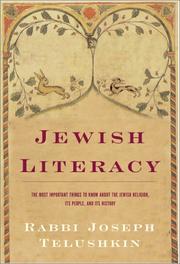
Jewish literacy
A broad reference in short, readable entries on the Bible, history, beliefs, holidays and customs. You can read it straight through or look things up as questions arise. It suits newcomers, students and anyone who wants one handy book to keep beside other reading.

To life!
A rabbi explains Jewish ways of thinking and living in warm, plain language. You get a sense of why practices matter, as well as what they are. It suits interfaith families, curious friends and readers who want a personal voice before a reference book.

Essential Judaism
A wide-ranging guide to beliefs, customs, rituals, texts and the stages of Jewish life. It gives more detail than a short primer and is easy to consult by topic. It suits readers who want one thorough introduction and expect to return to it.
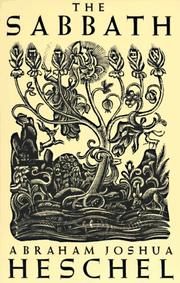
The Sabbath
A short, poetic reflection on the seventh day and the idea of holiness in time. You will understand why Shabbat is treasured, beyond its rules. It suits thoughtful readers of any background who like to read slowly and think about rest, work and meaning.

God in search of man
Heschel's larger work of Jewish philosophy considers wonder, revelation and religious action. It asks demanding questions and rewards patience. It suits readers who already know the basic terms and want to explore how a major twentieth century thinker understood faith and practice.
The essential Talmud
A compact introduction to how the Talmud came to be, what it covers and how its arguments work. It prepares you for the text without assuming you can read Hebrew or Aramaic. It suits readers who keep meeting the word Talmud and want a clear picture.
The Story of the Jews
A lively history from ancient times to 1492, built around people, letters, buildings and other traces of daily life. You see Jewish communities in many settings, not only in moments of crisis. It suits readers who enjoy detailed narrative history and vivid writing.

A History of the Jews
A one volume sweep from biblical times into the twentieth century. It gives you a long outline that helps other books fall into place. It suits readers who want broad political and cultural history and are happy to weigh a historian's confident interpretations.
Questions readers ask
What is the best book on Judaism for a complete beginner?
Jewish Literacy by Joseph Telushkin is a strong first choice if you like short entries you can read in any order. If you prefer a warmer, more personal explanation, start with To Life! by Harold S. Kushner. For one detailed guide to practice and belief, choose Essential Judaism by George Robinson.
What is the difference between the Torah and the Talmud?
The Torah, in its narrow sense, is the Five Books of Moses, the first part of the Hebrew Bible. The Talmud is a later work of rabbinic discussion made of the Mishnah and the Gemara. Jewish tradition also uses the word Torah more broadly for the whole body of sacred teaching.
Can I read the Talmud as a beginner?
Yes, but begin with a guide. The Talmud moves through arguments, stories and side topics, and it can feel confusing without background. Adin Steinsaltz's The Essential Talmud explains its history and methods first. After that, try short passages in translation, ideally with a teacher or study partner.
Which book explains what Shabbat means?
Abraham Joshua Heschel's The Sabbath is a short and much loved reflection on the day as holiness in time. It is more about meaning than step by step practice. For customs, blessings and the shape of the day, pair it with a general guide such as Essential Judaism.
Do I need to know Hebrew to learn about Judaism?
No. All the books listed here are available in English, and good introductions explain Hebrew terms as they go. Learning a few words, such as Shabbat, mitzvah and Torah, will help. If you later study texts closely, some Hebrew will let you notice details that translations can miss.
Sources
- Hebrew Bible. My Jewish Learning. Accessed 2026-11-29.
- What Is the Mishnah?. My Jewish Learning. Accessed 2026-11-29.
- What Is the Talmud?. My Jewish Learning. Accessed 2026-11-29.
- Talmud and Midrash. Encyclopaedia Britannica. Accessed 2026-11-29.
- About Sefaria. Sefaria. Accessed 2026-11-29.
- Shabbat 101. My Jewish Learning. Accessed 2026-11-29.
- Passover 101. My Jewish Learning. Accessed 2026-11-29.
- Jewish Americans in 2020. Pew Research Center. Accessed 2026-11-29.